E-Paper



Illegal Corbett tree felling: SC-appointed panel seeks action against ex-minister
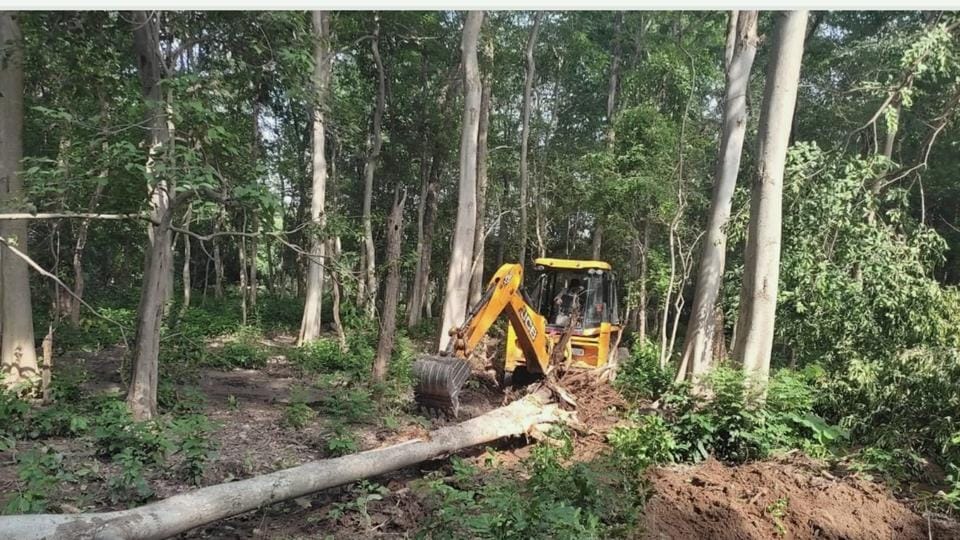
Over 6000 trees were felled for a proposed tiger safari over an area of 16.21 hectares, the Forest Survey of India (FSI) said in a report last year

 Prefer HTon Google


The Supreme Court-appointed Central Empowered Committee (CEC) has recommended “appropriate action” against former Uttarakhand forest minister Harak Singh Rawat after issuing a notice to him in connection with illegal constructions and felling of trees in the Corbett Tiger Reserve.
In a 106-page report submitted to the court on Tuesday, the CEC said Rawat was largely responsible for “the mess” arrested Indian Forest Service Officer (IFS) Kishan Chand created in the reserve. HT has seen a copy of the report.
Chand, who retired last year in July, was arrested in December from Uttar Pradesh after being on the run. In April 2022, the state government suspended him in connection with the case.
Over 6000 trees were felled for a proposed tiger safari over an area of 16.21 hectares, the Forest Survey of India (FSI) said in a report last year on the basis of an analysis of old and new satellite images and field visits.
The CEC report blamed Rawat for being “instrumental” in the planning and execution of illegal and unauthorised roads and buildings within the reserve and in the Lansdowne division, citing his noting in government files. It said Rawat supervised the illegal works Chand executed.
The CEC report said Rawat took a stand against disciplinary proceedings including Chand’s proposed suspension pursuant to a National Tiger Conservation Authority report.
Chand has been described as the principal culprit in the “illegal construction of roads and buildings infrastructure”. Rawat allegedly hand-picked and posted him to Kalagarh forest division without a recommendation from the principal chief conservator of forests and the Civil Services Board.
Chand is accused of committing similar irregularities earlier too.
The CEC report said it is, therefore, no surprise that massive legal and financial fraud has been committed within a short period of posting Chand to Kalagarh Forest Division.
It added the commencement of construction of four buildings at three locations with 16 rooms each were planned without the administrative, financial, and technical approvals from the competent authority, including the Chief Wildlife Warden. The report said this could not have been undertaken without the implicit backing of the senior functionaries in the forest department, the government of Uttarakhand, and more particularly “without the active support of the then Forest Minister”.
The report pointed out that while the high court took serious note of the irregularities, the then-chief wildlife warden and the state government did not act.
Rawat, who joined the opposition Congress before assembly elections in Uttarakhand last year, said as a forest minister, he worked as per the law. “No action was taken against Chand. I posted him as he was an IFS officer. As a forest minister, all officers are equal before me.”
Rawat said as the forest minister he could not have gone to each forest and counted the trees that had to be cut. “These irregularities and illegal activities came to light later when the investigation was conducted in the matter.”
Rawat suggested he was a victim of political vendetta for joining Congress. “When I receive the notice, I will study and submit my reply on all the points,” he said.
Gaurav Bansal, a Supreme Court lawyer who filed a plea in 2021 over the illegal felling of trees and constructions, said it is clear from the CEC report that Chand could not have done it all on his own without the backing of Rawat. “The Supreme Court will hear the matter on February 8.”