E-Paper



Uttarakhand chief minister moves into ‘jinxed’ house after 6 days of ritual worship
No one really remembers when the so-called jinx that occupants of Uttarakhand chief minister’s official residence will not be able to complete their five-year term took root

 Prefer HTon Google


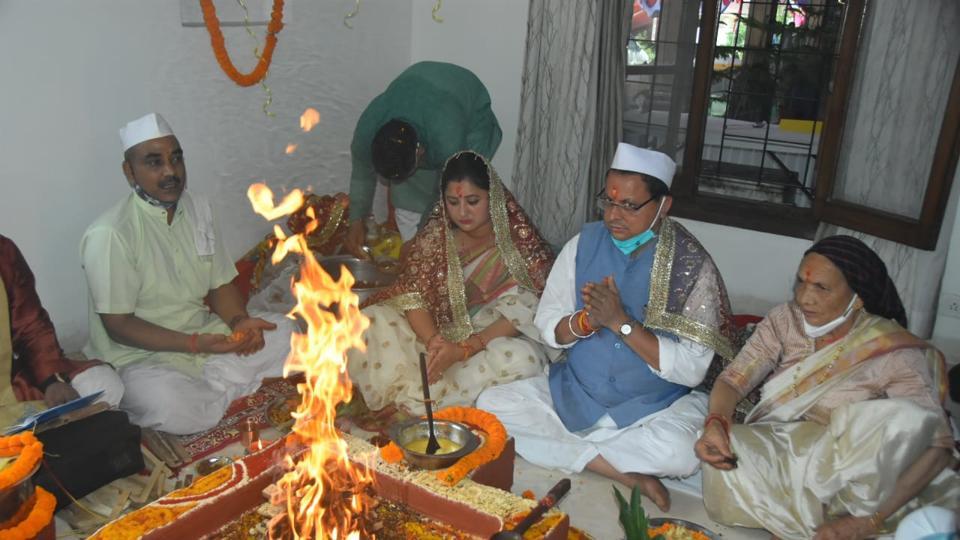
Dehradun: Uttarakhand chief minister Pushkar Singh Dhami moved into his official residence after six days of worship rituals by eight priests on Monday, the fifth chief minister in 20 years to stay in the bungalow in the heart of state capital Dehradun that some of his predecessors considered jinxed.
Trivendra Singh Rawat, the Bharatiya Janata Party’s (BJP) surprise choice for the state’s top post after winning the 2017 state elections, was the last chief minister to live in the official residence. He didn’t complete his term and had to step down in March this year, nine days short of completing four years in office.
Some in Uttarakhand’s political circles had linked Trivendra Singh Rawat’s exit to his 2017 decision to move into the bungalow built in a 10-acre plot of prime land by the government at a cost of ₹16 crore. Many recalled how others such as Ramesh Pokhriyal brushed aside the superstitious belief and stayed in CM House had his term cut short. They appear to ignore that others such as BC Khanduri or Trivendra’s successor Tirath Singh Rawat didn’t last long even though they didn’t live in CM House.
No one really remembers when the so-called jinx that its occupants will not be able to complete their five-year term took root. But it hasn’t helped that no chief minister of Uttarakhand except for its first, Narain Dutt Tiwari, has been able to hold on to the post for the complete five-year term.
When the Congress named Vijay Bahugana as chief minister in March 2012, he went ahead to move into the bungalow. He was replaced by Harish Rawat before he could complete two years.
Senior Congress leader Suryakant Dhasmana said Harish Rawat didn’t live in the CM House for this reason and chose to live in Dehradun’s Bijapur area. He did manage to stay in power for three years but with two short spells of central rule.
Before Pushkar Singh Dhami stepped into the house with his family, Vastu expert Santosh Khanduri said eight priests had been conducting worship rituals since July 21 “to increase the positive vibrations and lessen the impact of Vastu defects in the house”.
Chief minister Dhami first offered prayers at the Shiv Temple on the premises, offered grass to the cows in the cowshed also on the premises and circumnutated around the house before stepping foot, said Santosh Khanduri who was overseeing the rituals.
Prof MM Semwal, a political analyst from Garhwal university said from a scientific point of view, one shouldn’t link political developments to such superstitions. “All these major political changes in the state over the years have political reasons. One house cannot affect or bring such changes”, he said.