E-Paper



Canadian tourist held at Delhi airport with horns found in Ladakh
The 32-year-old tourist, in possession of the horns of an unidentified animal, was apprehended at Indira Gandhi International (IGI) Airport in Delhi.

 Prefer HTon Google


A 32-year-old Canadian tourist, in possession of the horns of an unidentified animal in her luggage, was apprehended at Indira Gandhi International (IGI) Airport in New Delhi by security, police said on Sunday. She told officials that she “found” the horns, which officials said appear to belong to a native bull species, during her trek in Ladakh and decided to take them back to Canada with her.
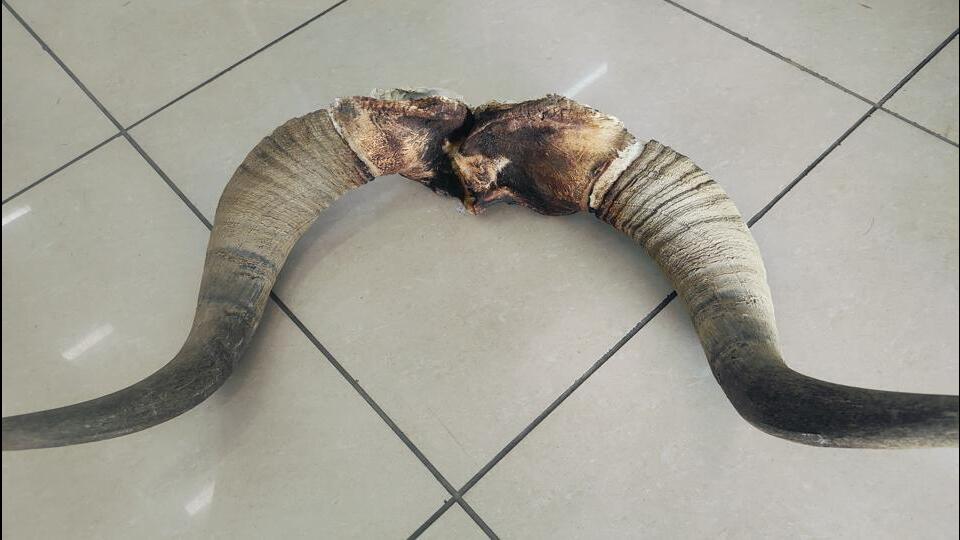
The woman was headed to Montreal in Canada on Friday when a baggage check revealed suspicious images, officials aware of the matter said.
Delhi’s forest and wildlife department said the horns appear to belong to a native bull species, but they will be sent to the Forest Research Institute (FRI) in Dehradun for confirmation. The woman told officials that she did not buy the horns, but found them on a trek and carried them with her.
The woman has been “bound down by law”, meaning that she has not been arrested but is also not flying back to Canada, said police.
“To possess any wildlife items, special documents are required, which she did not possess. Customs were informed and the forest department of Delhi was also called in to inspect them,” said an airport official on condition of anonymity, adding that the woman was unable to produce any documents for the horns.
The incident occurred at 9pm on Friday when the woman was set to board an Air Canada flight to Montreal and checked in her luggage. After airport security found suspicious item during the scanning of her luggage, officials from the Delhi International Airport Limited (DIAL), the airline staff and the Central Industrial Security Force (CISF) carried out a physical inspection of the bag and two horns were recovered.
Rajesh Tandon, deputy range officer (west) of the forest department said that the horns could belong to a bull or Yak species from Ladakh, but the final confirmation will only be done by FRI.
“This is likely an animal that could be part of Schedule 2 of the Wildlife Protection Act. The woman told us she found these horns in Ladakh where she had travelled to recently from Delhi. She says she did not buy them, but simply found them while trekking and decided to bring them with her,” said Tandon, adding that the police will investigate the matter further.
Delhi Police at the IGI airport confirmed that a first information report had been registered against the woman, and she has been “bound down by law”.
“We have initiated legal action against her as part of the Wildlife Protection Act and she will have to appear for a probe as and when asked. At present, she is not flying back to Canada,” said a senior police officer, adding that she was not arrested.
Section 39 of the Wildlife (Protection) Act prohibits the possession and transport of trophies of any scheduled species without proper authorisation. Wildlife trophies, including animal parts such as skulls or skin, are often kept by trophy hunters as souvenirs.
In March, a flier bound for New York was held at the IGI airport after he was caught with an antelope skull. The species are protected under Sections 1 and 2 of the Wildlife Act and a case was registered against the man.