
 E-Paper



East civic body announces 5% property tax relief for rainwater harvesting systems
BJP councillors, who moved the proposal, said this was in line with the Central government’s ‘Jal Shakti Abhiyan’, whereby people are being encouraged to not let rainwater go down drains and instead store them for personal and community use.


The East Delhi Municipal Corporation (EDMC) on Monday passed a resolution stating that Cooperative Group Housing Societies (CGHS) in areas under its jurisdiction will be given a rebate of 5% in property taxes, if they harvest rainwater on their premises.
The resolution, though, will need to be examined and approved by east Delhi commissioner, Dilraj Kaur, before it can be implemented.
BJP councillors, who moved the proposal, said this was in line with the Central government’s ‘Jal Shakti Abhiyan’, whereby people are being encouraged to not let rainwater go down drains and instead store them for personal and community use. The north and east corporations have not implemented any such scheme so far.
Senior officials said that there are about 700-800 CGHS in the trans-Yamuna area under east corporation’s jurisdiction. These are mostly concentrated in IP Extension, Mayur Vihar, Vasundhra Enclave and Dilshad Garden areas. They are well-organised and open to new schemes and reforms, officials added.
“Though close to the Yamuna, the groundwater table of east Delhi has been steadily depleting. We saw media reports of the Central Ground Water Board (CGWB) submitting a study to the Supreme Court that even the Shahdara district is over-exploited,” said Aparna Goel, BJP councillor from IP Extension area, who moved the proposal.
“Of the three tehsils in east district, Preet Vihar and Vivek Vihar are in a critical situation, while Gandhi Nagar is semi-critical. We read that the ‘stage of groundwater development’ (usage versus recharge) in east Delhi area is a shocking 178%,” she said.
“A major reason for this is lack of piped water supply in all the pockets here and people using tubewells,” said Nirmal Jain, leader of east corporation house. “This is why we thought that we must bring this proposal. It’s being introduced as a pilot project and if it succeeds, we will take it to private residential areas,” Jain said.
The bureaucratic wing of east civic body, however, said that the scheme, if approved, will make a dent in the property tax earnings of the cash-strapped corporation. The east corporation earned Rs246 crore in property tax in financial year 2018-19. “But we think it is a good cause for which this money can be sacrificed,” an official said.
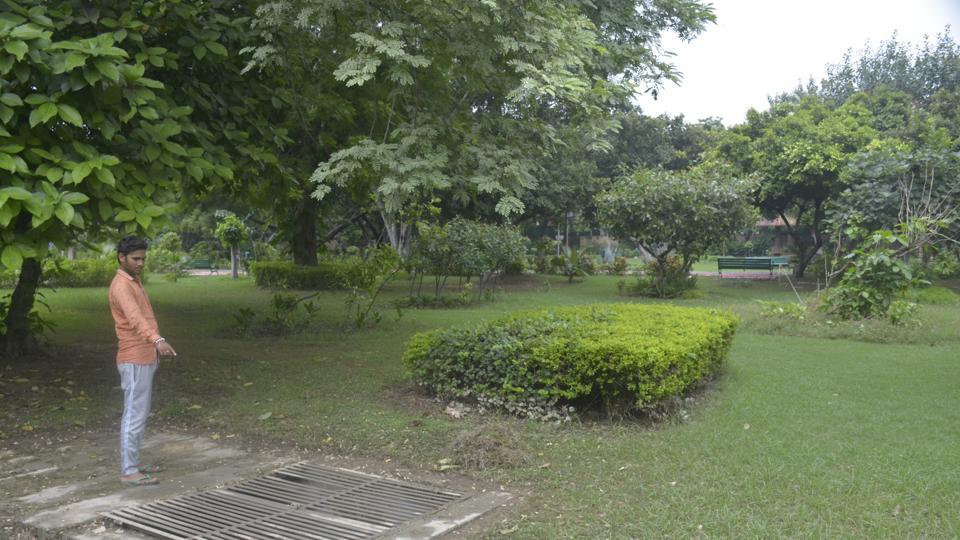
Experts warned that many group housing societies could set up rainwater harvesting structures to avail the rebate, but the civic body must conduct regular “pre-monsoon and post-monsoon checks” on the pits.
“We have seen several instances where hospitals created these pits only to dump their biomedical waste in them. In the rainwater harvesting pits of hotels and railways, sewage was found to be channelled downwards and contaminating the groundwater. The east corporation can consult the Delhi Jal Board or the Central Ground Water Board on this matter and should ensure that the societies only feed clean rainwater into the pits,” said environmental activist Vikrant Tongad of the NGO, SAFE.