
 E-Paper



South-east, north, central districts have highest prevalence of antibodies in Delhi
Chief minister Arvind Kejriwal lauded the ‘Delhi model’ of ‘test, track and treat’ and said the doubling rate of Covid-19 cases in Delhi has gone up to 101.5 days, compared to 28.8 days for rest of India.

 Prefer HTon Google


The southeast, north and central districts of Delhi recorded the highest prevalence rate of antibodies – 33.2%, 31.6% and 31.4% respectively – in Delhi’s latest Covid-19 sero survey, the result of which was shared by the city’s health minister Satyendar Jain on Thursday.
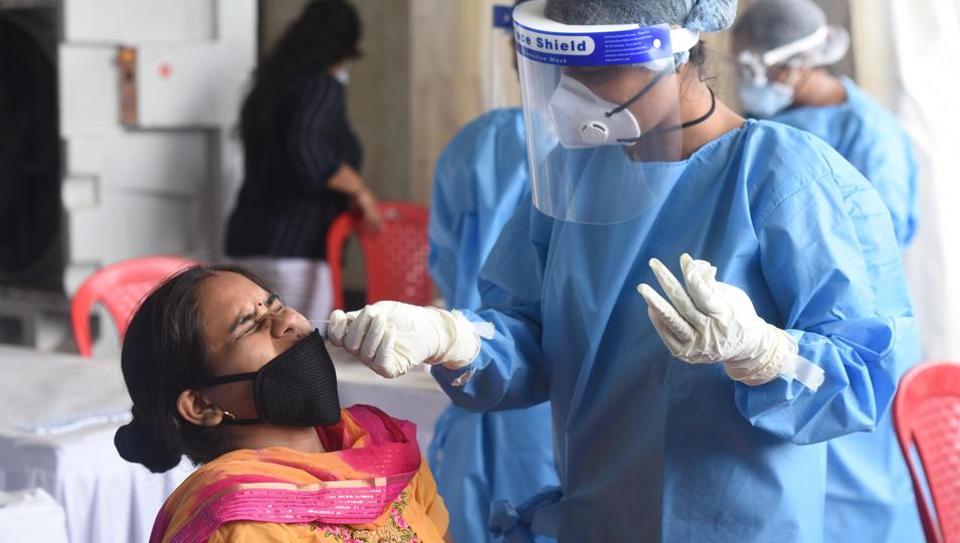
Southeast Delhi also recorded the highest increase (of 11.08 percentage points) when compared with the previous sero-survey for which blood samples were collected between June 27 and July 10 to assess the number of people who have developed antibodies against the coronavirus disease, including those who may have contracted the Sars-CoV-2 infection and overcome it without realising it.
Follow latest updates on coronavirus here
Southwest district was the one which recorded the lowest prevalence rate of the antibodies – 16.3%. And, at 24.6%, New Delhi district recorded the second lowest, according to the data released on Thursday which suggested that around 29.1% of the capital’s population has developed antibodies against the virus.
The sero prevalence rate reflects the number of people out of a given sample size (around 15,000 in this case) who contracted the Sars-Cov-2 virus and recovered from the coronavirus disease (Covid-19). When infected, individuals develop antibodies in their blood. The sample size is calculated by experts to ensure that at any given point it is fit for extrapolation for reflect trends inclusive of the entire population of a state, city or district, explained a senior official in the health department.
Also read| Covid-19: What you need to know today
“Sero survey helps in the analysis of trends and better assessment of asymptomatic population, case detection rate and infection-death ratio. The results can be used by the administration and experts ,” said Dr Lalit Kant, former head of epidemiology and communicable diseases department in the Indian Council of Medical Research (ICMR).
HT on Thursday spoke with several district officials to get a better sense of how they interpreted the data in terms of actions that need to be taken in the days to come. Several of them suggested that both high and low prevalence rate of antibodies found through the sero survey in any district demand more or less the same efforts in testing, isolation and surveillance.
“A high prevalence rate of antibodies means a large number of people were infected but they were not diagnosed, even after testing was scaled up. It means more tests need to be done and they have to cover more asymptomatic individuals. We have to scale up testing, with focus on special surveillance groups (SSGs) and individuals residing in densely populated areas,” said a district surveillance official who did not wish to be identified.
Another district official said, “Low prevalence rate of antibodies means that a larger population in the concerned area are still vulnerable. This also demands that the district should continue with aggressive testing, surveillance and isolation mechanism to protect the population which is yet to contract the virus.”
Also read| 3 in 10 Delhi residents have antibodies for Covid-19: New sero result
Rahul Singh, district magistrate (southwest), which has the lowest prevalence of antibodies (16.3%) said the result means the district has the lowest infection rate in the entire city.
“It’s a good thing. Based on the latest sero survey results, directions have been issued to all officials in the district to continue aggressive testing and strict enforcement. We are focusing on high-risk groups (HRGs) and SSGs and Covid-19 test is available at all dispensaries in the district. Proactive surveillance and additional camps at all markets and public places for testing have been set up,” he said.
In a statement, chief minister Arvind Kejriwal lauded the ‘Delhi model’ of ‘test, track and treat’ and said the doubling rate of Covid-19 cases in Delhi has gone up to 101.5 days, compared to 28.8 days for rest of India. He also said there has been a significant drop in the positivity rate in two months, from 24.59% on June 18 to 5.25% on August 16.
Click here for complete coronavirus coverage
“The positivity rate has dropped for both RT-PCR tests and rapid antigen tests. On June 18, 9,088 RT-PCR tests were conducted of which 2,804 positives emerged — a positivity rate of 30.85%. In comparison, on 16 August, 4,106 RT-PCR tests were conducted of which 434 positives emerged — a positivity rate of 10.57%. Similarly, on June 18, 3,316 rapid tests were conducted in Delhi of which 247 positives emerged - a positivity rate of 7.42%. In comparison, on August 16, 10,882 rapid tests were conducted in Delhi of which 353 positives emerged — a positivity rate of 3.24%,” Kejriwal said.
Delhi’s health minister Jain said: “A few districts witnessed a significant increase in prevalence rate of antibodies in the sero survey because several localities in those districts witnessed a spike in Covid cases in different points in the last one month.”
“In the days to come, we will compare this survey with the previous one thoroughly and decide whether we need to draft new strategies or change our approach in certain aspects concerning Covid-19 management.”
Senior government officials also said the latest finding that those aged less than 18 years were found to have the maximum antibodies compared to other age groups would play a crucial role in the Delhi government’s decisions on opening schools and colleges in the coming months.
Chief minister Arvind Kejriwal, in his Independence Day speech, said the government will not open schools until it is fully convinced the city has put the worst behind it.


