E-Paper



In pics: 50 years on, reliving the ‘most controversial’ goal in football history
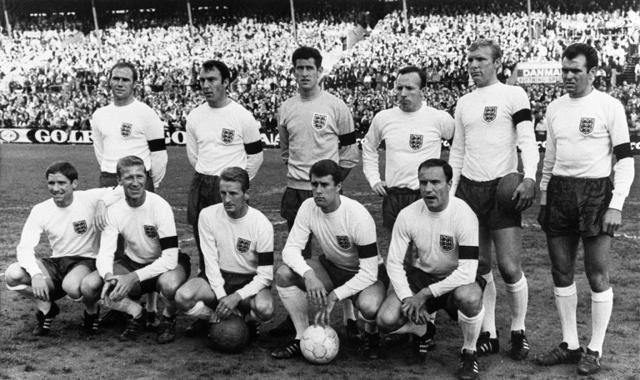
This Saturday marks 50 years since English football’s finest hour, when Alf Ramsey’s side beat West Germany 4-2 in an incident-packed 1966 World Cup final at Wembley.


This Saturday marks 50 years since English football’s finest hour, when Alf Ramsey’s side beat West Germany 4-2 in an incident-packed 1966 World Cup final at Wembley.
It was England’s first and only World Cup triumph and, not surprisingly, is still recalled with passion and fondness.
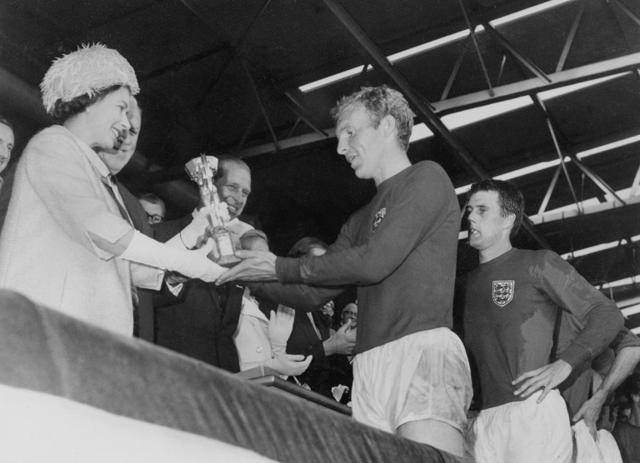
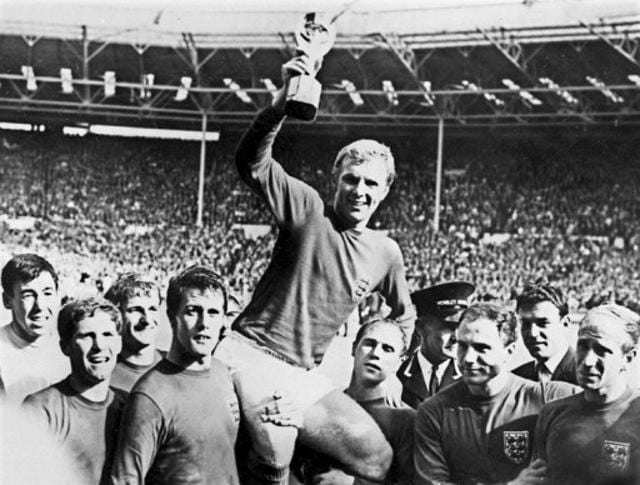
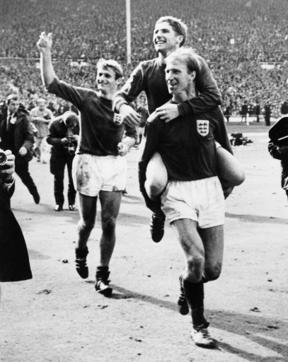
The late Bobby Moore lifted the trophy, while Geoff Hurst became the only player to score a hat-trick in a World Cup final which was full of incident and controversy, some of which still burns to this day.
When England started the 1966 tournament, the prospect of winning the title appeared a long way off.
An opening goalless draw with Uruguay saw the team widely criticised, and their matches did not start to be sold out until the knockout stages.
Comfortable victories over Mexico and France saw England safely through to the quarter-finals, where Hurst’s late header saw off 10-man Argentina in a bruising encounter at Wembley.
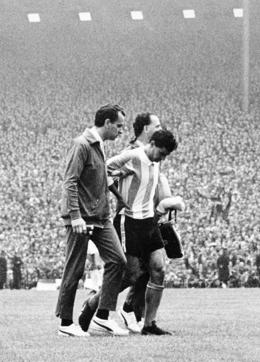
The South Americans’ skipper Antonio Rattin was sent off for “violence of the tongue”. Ramsey described Argentina as “animals”.
Bobby Charlton’s stunning brace then helped the hosts past a Eusebio-inspired Portugal 2-1 in the semis, before the thrilling final at Wembley on July 30, 1966.
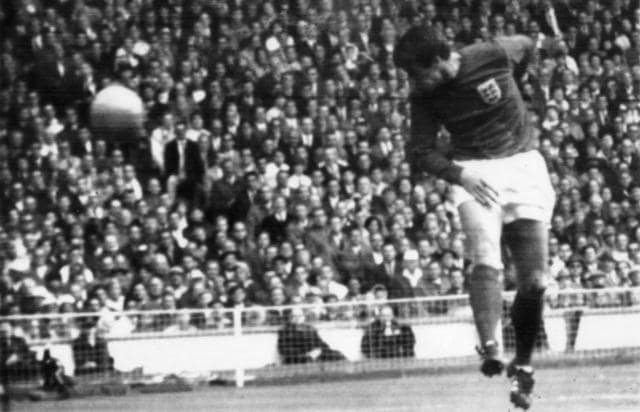
In front of 96,000 fans, Hurst was imperious in the air once more against West Germany to cancel out Helmut Haller’s early opener, and Martin Peters’ 78th-minute volley appeared to have won it for England.
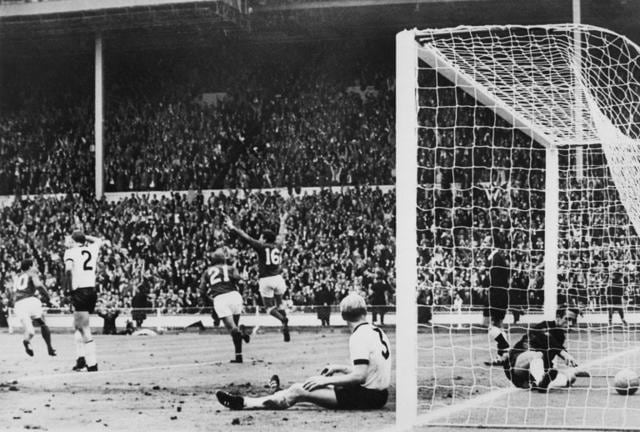
And even though Wolfgang Weber stabbed in at the back post to force extra-time, Hurst grabbed what proved to be the winner.
Goal 1

Goal 2
Goal 3
Goal 4
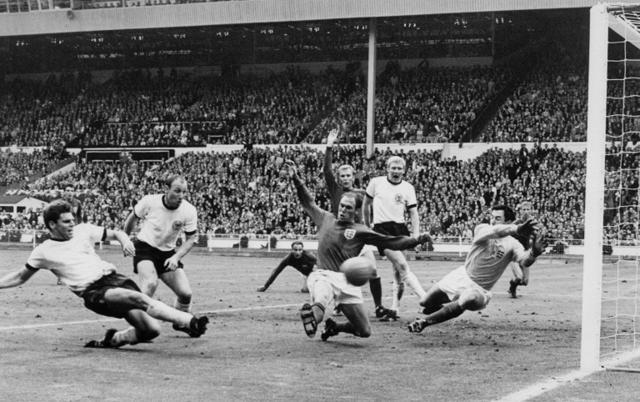
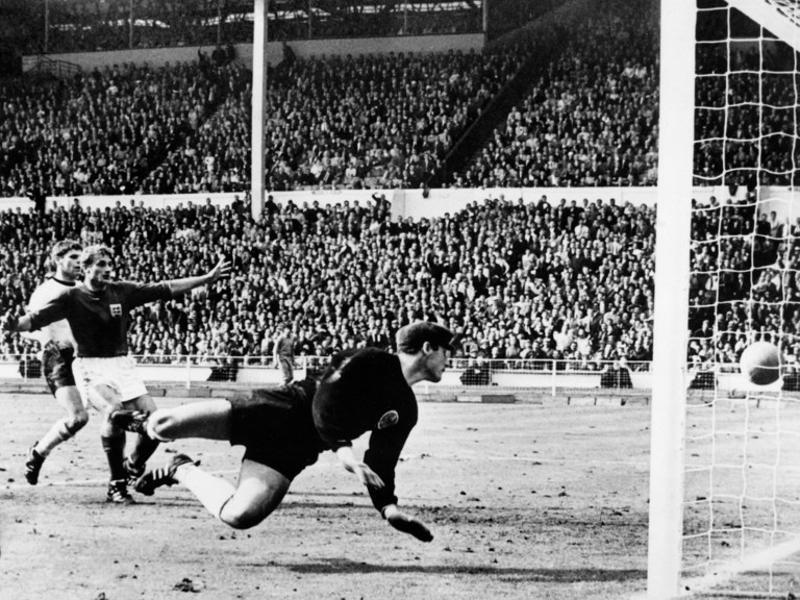
The West Ham United striker’s shot hit the underside of the crossbar and didn’t appear to cross the line, but the Swiss referee Gottfried Dienst consulted with the linesman Tofiq Bahramov and awarded one of the most hotly-contested goals in history.
And the most controversial goal...
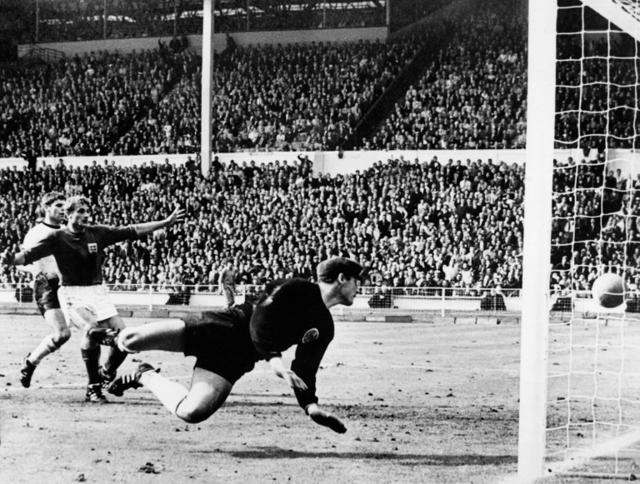
In Hurst’s mind though, he still has no doubt that it was the right decision.
“I turned away to celebrate but it wasn’t kidology. It was 2-2, in the World Cup final,” he wrote in the Mail on Sunday last week.
“For me the clinching piece of evidence is Roger Hunt, wheeling away, instinctively, to celebrate. If you’re not sure, you try to put it in and Roger didn’t. It might have saved all this debate if he had, but I’m glad he didn’t.”
Hurst added his third in the dying moments, and the game, watched by an estimated 32 million television viewers, went down in English sporting folklore.
THAT goal
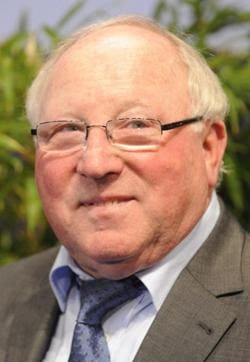
Fifty years after THAT goal at Wembley, West Germany captain Uwe Seeler still insists England’s Geoff Hurst’s controversial shot never crossed the line.
Some modern studies, using film analysis and computer simulation, suggest the ball never crossed the line, something Seeler has been insisting on for half a century.
“I was standing at the back of the box and saw exactly that the ball didn’t cross the line,” said the 79-year-old Seeler.
Hurst’s shot beat West Germany goalkeeper Hans Tilkowski, the ball hit the underside of the crossbar, bounced on the line before being headed away by defender Wolfgang Weber.
But Dienst’s decision has always baffled the Germans and their skipper Seeler.
“We were all in a state of commotion, none of us knew what was going on,” said Seeler.
“No one (in the West Germany team) could understand why the goal was given.”
While the 1966 final remains England’s only World Cup triumph, the Germans’ victory at the 2014 Brazil finals was their fourth world title and Seeler says it is time to put the 1966 controversy to bed.
“I believe all the players have now well digested the events,” he said.
“Even if it was a defining moment, sport is sometimes like that. You have to absorb it and put it away.”
Up until his death in 1998, Dienst admitted he had no idea whether the ball ever fully crossed the line and, in his autobiography “1966 And All That”, even Geoff Hurst has said the Germans were probably right.
And Seeler joked about the incident whenever he met members of England’s 1966 side.
“When Geoff or Bobby (Moore) or Jackie (Charlton) were here, we’d have a laugh together about it,” said Seeler.
“They knew alright that the ball wasn’t in. They saw it.”
And Seeler said he is pleased goal-line technology in the modern game means there will be no such repeat of the events 50 years ago.
“Today football has become pure business,” said Seeler.
“So it’s necessary to under take certain measures to prevent such decisions.
“Of course, there are mistakes from time to time, but that’s just part of football.”
The match and THAT goal is even the subject of a special exhibition at the German Football Museum in Dortmund under the title “50 years Wembley -- the myths in snapshots” which runs from Saturday until January 15.
Glory, undefeated
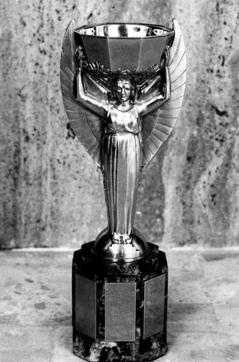
Despite controversies both in the final and throughout the competition helping them on their way to glory, England have not had as good a team since.
The best chance they had of repeating the feat was probably four years later in Mexico with largely the same side, but they blew a 2-0 half-time lead to lose to West Germany in the quarter-finals.
There were the 1990 World Cup and Euro 96 heartbreaks to German teams in semi-final penalty shoot-outs.
1966 remains the only time England have played in a major final.
Earlier this month Sam Allardyce became the 12th manager since Ramsey was sacked in 1974 to be tasked with leading England to international triumph, after Roy Hodgson was the latest to come unstuck in an embarrassing Euro 2016 exit to minnows Iceland.
Perhaps all the failures in the last half a century have helped keep the 1966 final so vividly recalled.
Few are more poignant than those of Tina Moore, the wife of the England captain who died from cancer in 1993 at the age of 51.
“I can still see Bobby climbing the steps, wiping his hands so as not to soil the Queen’s white gloved hand. I recall laughing and thinking only Bobby would do such a thing, forever the gentleman,” she recalled.