E-Paper



Gorakhpur tragedy: Centre sends a team to assess situation on ground


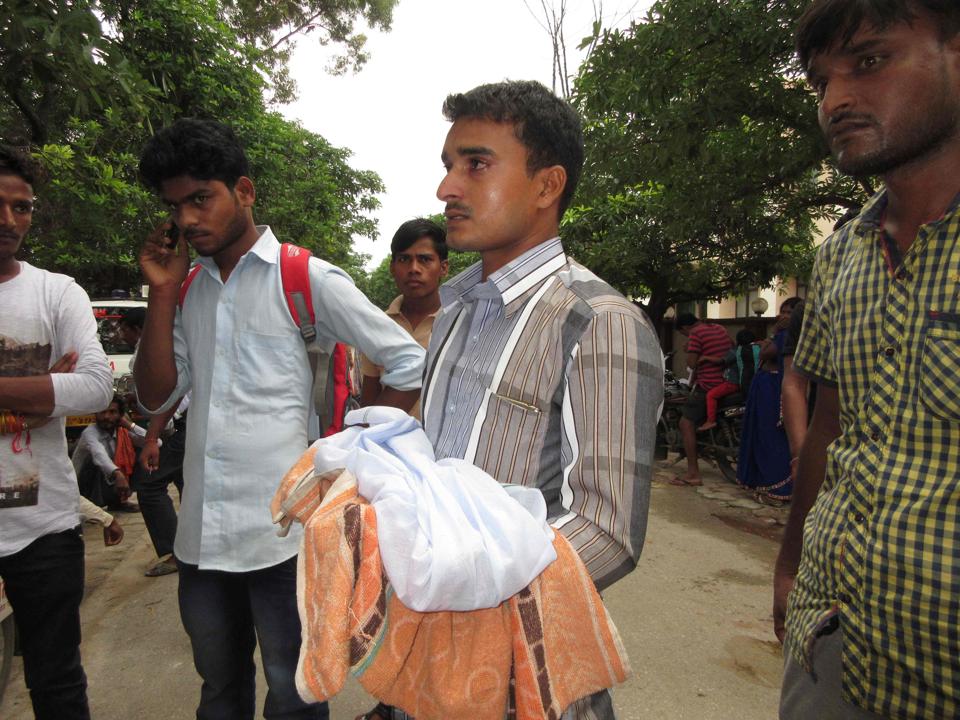
More than 60 infants have reportedly died at the BRD Hospital in Gorakhpur (UP) over a few days.
Minister of State (health) Anupriya Patel and secretary (health) CK Mishra, along with a team of doctors are a part of the Union health ministry delegation that left for Gorakhpur (UP) on Saturday afternoon, after 63 children suffering from Japanese Encephalitis (JE) died over a few days.
“The team has three specialist doctors that will make an assessment of the situation at the ground level and submit a report to the ministry. We don’t have exact details of the incident as of now,” said a senior health ministry official, requesting anonymity.
The team of child specialists will also provide necessary help in treating children admitted at a Gorakhpur hospital, if required.
Japanese Encephalitis is a mosquito-borne fatal infection that is common in the eastern UP belt.
Most deaths were reported from the neonatal and encephalitis wards at the Baba Raghav Das (BRD) Hospital.
“We had a team of paediatricians ready from Safdarjung Hospital, Ram Manohar Lohia Hospital and our own experts from the ministry. They were on a standby and have been sent to help the state government,” said Dr Jagdish Prasad, Director General Health Services (DGHS), health ministry.
“They are doing their best in the circumstances, and we are ready to help them.”
“This area has sanitation issues and cases of other diseases such as malaria and scrub typhus are also high,” he said.
More than 3,000 children have reportedly died at the government-run hospital since 2012, official data show.
To put things to perspective, the 3,000-odd deaths are among 50,000 children killed in eastern Uttar Pradesh over the past three decades, most of them due to JE and acute encephalitis syndrome (AES).
The first recorded outbreak of the disease in the Gorakhpur and six surrounding districts was in 1978.
In 2005, JE devastated Gorakhpur and seven surrounding districts, affecting 6,061 and killing 1,123. This was followed outbreaks in 2006 that infected 2,320 and killed 528, and again in 2007, when 3,024 cases and 645 deaths were reported.
According to sources in the health ministry, centre had sanctioned about Rs 4000 crore few years ago to upgrade infrastructure in high risk areas where people fall prey to infections.
“A group of five ministries took steps for improving sanitary conditions, build clean toilets, provide nutritious meals, clean drinking water and setting up intensive care units (ICUs) among other facilities,” an official said, requesting anonymity.
Secretary Mishra, who spoke to HT while boarding the flight, said, “We will assess the situation and provide all necessary help.”
Union health minister JP Nadda retweeted reports that he had spoken to UP CM Yogi Adityanath,and assured him of assistance/expertise from the Centre.