
 E-Paper



HTLS 2019| Enlightened humanism will light up India’s path
In the progress of South Asia lies our prosperity. To start with, we must break down barriers to the free movement of goods, services and ideas

 Prefer HTon Google


No conversation for a better tomorrow can commence without a reality check. India inhabits 2.4% of the total land area of the world, but is home to roughly 18% of the world population. As many as one billion people in India live in areas of physical water scarcity, of which 600 million are in areas of high to extreme water stress. India is currently ranked 120 among 122 countries in the water quality index. We are also home to 14 of the 15 most polluted cities in the world in terms of air quality. The per capita monthly income of an Indian is Rs 10,533 making India a low income country. Even if India was to reach $5 trillion in Gross Domestic Product (GDP) by 2024-25, a target that seems highly unlikely at the moment, it would still be a lower middle-income country at best.
India’s demographic dividend is on the wane and by 2050, India will be home to 32.4 crore people above 60 years of age.
India’s economy has slowed down. With 12 million young Indians entering the job market every year, the economy is not growing fast enough to even absorb half that number. India is home to 24% of world’s malnourished and 30% of stunted children under five years of age.
Moreover, the country has not achieved the physical, emotional and even political integration that it should have after seven decades of independence. Jammu & Kashmir is more unsettled today than it has ever been in many tens of years. The problems of the Northeast have been compounded by the National Register of Citizenship exercise. It then begs an obvious question: what have we achieved in the past 72 years, and where do we go from here?
What we have achieved is that we have evolved into a constitutional democracy, notwithstanding an odd aberration or two along the way.
However, today the essence of constitutionalism that rests on the principle of protecting, preserving and upholding the liberty of an individual and the right to a life of dignity, is under sustained assault. While we may have achieved some form of political equity, we are far from economic egalitarianism.
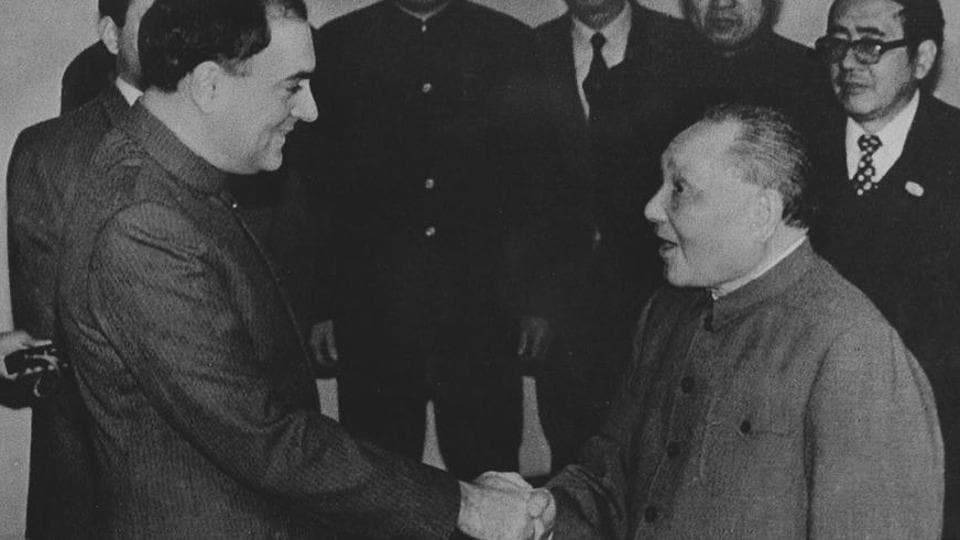
Where do we go from here over the next three decades? India must take a leaf out of the Chinese book given our congruent demographics, but do it in our own way. From 1949 to 1976, China was devastated economically, intellectually and emotionally. The Great Leap Forward and the Cultural Revolution had taken their toll. Deng Xiaoping, who succeeded Mao Zedong, was clear headed about the extent of damage that had been done in those 27 years. He knew that China needed a miracle to pull itself out of the morass.
He did four things. First, he decided that China must internally consolidate and for that it needed peace on its periphery for at least three decades — a period that seems to have been extended interminably at least for the time being. Second, he declared, “It doesn’t matter whether a cat is black or white, as long as it catches mice.”A contradiction between socialism and the market economy does not exist. Third, Deng declared that to get rich is glorious. Deng explained, “According to Marxism, communist society is based on material abundance. Only when there is material abundance can the principle of a communist society, that is, ‘from each according to his ability, to each according to his needs’ be applied.” Fourth, China stabilised its population.
India similarly requires three decades of sustained internal consolidation. To control population, we need to evolve a national consensus on a one-child policy.From 1945 onwards, while capital flows globalised progressively, barriers to physical movement kept going higher. We must engage with all multilateral institutions for a global work visa that allows young people to move and work freely anywhere in the world.
India needs to tear down the fences and walls that divide South Asia, thus allowing the free movement of goods, services and ideas. Rather than narrow nationalism, it requires enlightened humanism premised on the realisation that, in the progress of South Asia, lies the prosperity of India. Towards that end, India must make an active bid to resolve its land boundary and maritime disputes with its neighbours.
It must engage in a trilateral nuclear dialogue with Pakistan and China to remove the existential threat of nuclear annihilation by moving from tense to relaxed nuclear force postures. The current rulers of India must realise that the genius of India lies in its ability to absorb, assimilate and internalise rather than exclude. That is how we defeated the waves of invasions from Muhammad Bin Qasim to the East India Company and their progeny.
Any democracy is as strong or weak as the institutions that underpin it. A systematic attempt to dismantle institutions in the quest for political power would ultimately weaken India. You cannot and should not replace institutions with an individual. Last but not least, India’s politicians should agree on one goal — to make India a Middle Income Country by 2050. India fortuitously had a Nehru in its nascent years. Now it needs a Deng.


