E-Paper



12-hr bandh in Assam over likely creation of UTC as part of new Bodo Accord
The protesters opposing the Bodo deal blocked roads at several places in the BTAD districts and some other places since early morning. The strike didn’t have much impact in Kokrajhar town where Bodo groups are celebrating the deal.

 Prefer HTon Google


Several non-Bodo organizations have called a 12-hour general strike in Assam on Monday to protest against the likely creation of a Union Territorial Council as part of Centre’s new peace accord with Bodo rebel outfits.
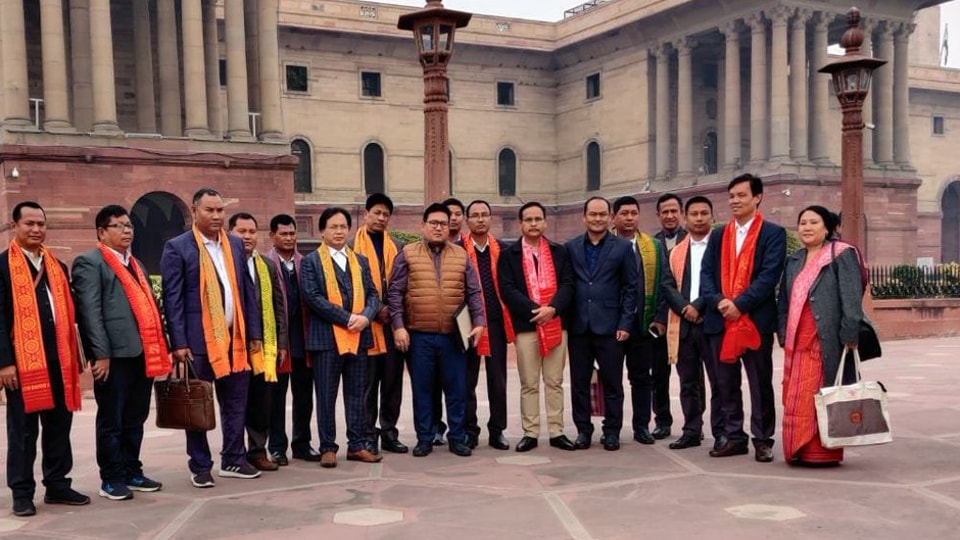
The Centre is slated to sign a peace accord with all four factions of National Democratic Front of Bodoland (NDFB) in New Delhi on Monday. All Bodo Students Union (ABSU) will also be a signatory to this deal expected to bring lasting peace to the Bodo-dominated areas in Assam.
“Today at 1:30 with blessings of PM Narendra Modi GoI under the leadership of HM Amit Shah will sign a historic Bodo Accord by bringing four groups of NDFB together. All Bodo Students Union will be a key signatory in this accord,” senior Assam minister Himanta Biswa Sarma tweeted on Monday morning.
“The Bodo Accord shall reaffirm the territorial integrity of Assam and at the same time usher us into a new hope of peace and progress in Bodoland. My best wishes,” he added.
The deal accord was signed on Monday afternoon in the presence of Union home minister Amit Shah and Assam chief minister Sarbananda Sonowal.
Though the details of the accord are not yet clear and there have been assertions that the deal won’t lead to creation of a new state or UTC, speculations about it are rife.
While Bodo groups have welcomed the deal, several non-Bodo organizations like All Koch Rajbongshi Students Union, All Bodo Minority Students Union, All Adivasi Students Union, Kalita Janagosthi Students Union etc have opposed creation of a new UTC.
There are speculations that the deal might lead to extension of authority of the Bodoland Territorial Council (BTC) beyond the four districts under Bodoland Territorial Area Districts (BTAD)—Chirang, Baksa, Kokrajhar and Udalguri—and include portions of Biswanath, Lakhimpur and Sonitpur districts.
On Monday, protesters opposing the Bodo deal blocked roads at several places in the BTAD districts and some other places since early morning. The strike didn’t have much impact in Kokrajhar town where Bodo groups are celebrating the deal.
Monday’s deal will be the third Bodo accord signed in the past 27 years since the movement for a separate Bodoland for the state’s largest tribe started over four decades ago. The violent separatist movement has claimed hundreds of lives, injured many more and affected peace and development in Assam.
The first one signed with ABSU in 1993 led to creation of Bodoland Autonomous Council (BAC). Ten years later the second deal was signed with Bodo Liberation Tigers and led to formation of Bodoland Territorial Council (BTC), which included Kokrajhar, Baksa, Chirang and Udalguri districts (collectively called BTAD).