
 E-Paper



Amit Shah reiterates call for pan-India National Register of Citizens: All you need to know
NRC is a verified digital register having names and basic demographic information about all Indian citizens in a digital format.

 Prefer HTon Google


Home minister Amit Shah, while replying to the debate on Citizenship Amendment Bill (CAB) in the Lok Sabha on Monday, said that there would soon be a pan-India National Citizenship Register. Although he did not elaborate on the contours of the NRC, people would need certain set of documents to prove their citizenship.
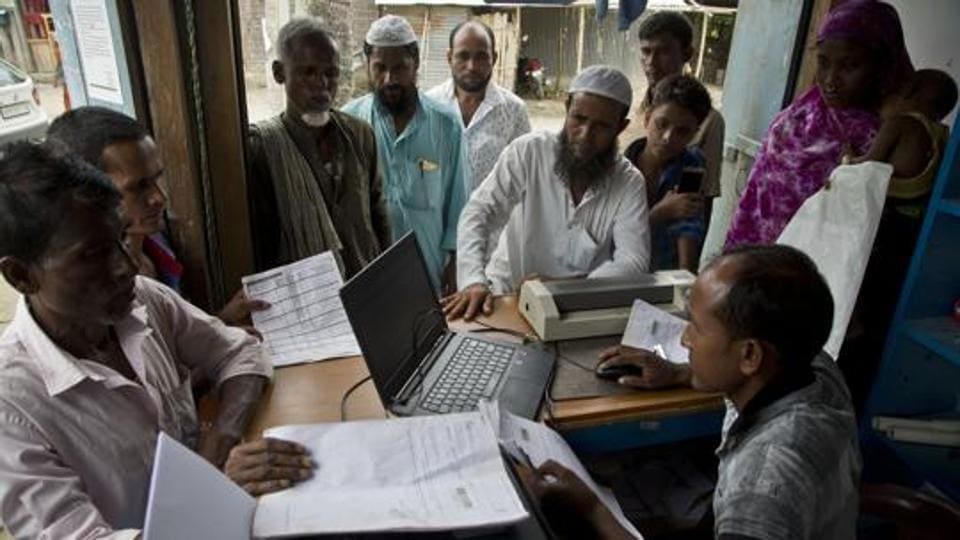
What does this mean for you? Here is a ready primer:
What is NRC?
It is a verified digital register having names and basic demographic information about all Indian citizens in a digital format. Under the Citizenship Act, 1955, a person born in India or having Indian parentage or having resided in India for at least 11 years (being amended to five years), is eligible for Indian citizenship. NRC would be India’s first such database of citizens.
How was it done in Assam?
The NRC in Assam was mandated and monitored by the Supreme Court in 2014 and was based on the 1951 NRC done in Assam and voters’ lists of 1961, 1966 and 1971 — together bunched as legacy documents. The claim of every Assam resident was verified with these legacy documents. Close to 33 million people applied and the final list published on August 31 excluded 1.9 million people. The nationwide NRC will be implemented and monitored by the central government and documents required to prove one’s citizenship may not be similar to those accepted in Assam. The government is yet to specify the documents that would be needed.
How will an all-India NRC be different?
The government has not prescribed any cut-off date for the nation-wise NRC even though the Citizen Amendment Bill (CAB) passed in the Lok Sabha allows automatic citizenship to Hindus, Buddhists, Christians, Parsis, Sikhs and Jains who came from Pakistan, Afghanistan and Bangladesh before December 31, 2014.
Who are natural citizens?
According to Indian Citizenship Act, 1955, every person born in India on or after the 26.01.1950, but before 01.07.1987, is a citizen of India by birth irrespective of the nationality of his/her parents. Every person born in India between 01.07.1987 to 02.12.2004 is a citizen of India provided either of his/her parents is a citizen of India at the time of his/ her birth. Every person born in India on or after 03.12.2004, shall be citizen of India provided both of his/her parents are citizens of India or one of whose parents is a citizen of India and the other is not an illegal migrant at the time of his/ her birth.
What is citizenship by registration?
A person of Indian origin who is ordinarily resident in India for seven years can apply for citizenship or a person married to an Indian citizen and residing in the country for seven years or a person whose both parents are Indian citizens can apply for citizenship. A district magistrate is authorised to decide on their application.
What would a pan-India NRC process entail?
Once the National Population Register (NPR) is complete, the government could start identifying illegal immigrants. Since the Census commissioner will have documents related to birth, residency and voter identity cards of every resident, the government may use it for the first round of screening. It may then issue notices to certain people to appear before a requisite body with documents to prove citizenship.
What documents will one need to qualify for the NRC?
The government has not specified any documents for NRC so far. Going by the Citizenship Act, nativity certificate issued by government, land records, voter identity card, birth certificates of oneself and patents, panchayat certificate verifying residency and ration card are some be the documents that maye needed to prove one’s citizenship.
Will Aadhaar card be a valid document for NRC?
As Aadhaar is just identity proof and not residency proof, and applies to all residents (not just citizens), it will not be a valid document for NRC. The Permanent Account Number (PAN) for filing Income Tax returns and educational certificate are also not valid to prove citizenship.
Does one have to prove that one has been an India citizen for generations?
Going by NRC in Assam, legacy documents — land record document or name in electoral rolls, birth certificates — providing that one has been living for generations in India would be important for NRC. However, the government has not specified the cut-off year for nation-wide NRC and therefore, it would be difficult to specify the timeframe of the documents needed. For Assam, the cut-off date was 1971.
What is the relationship between CAB and NRC?
The CAB makes it easier for non-Muslims residing in India to get citizenship. Muslims may have to prove that they have been residing in India for generations and, for that, they will need legacy documents, which the government is yet to prescribe.


