
 E-Paper



At 5,360 meters above sea level, Bilaspur-Manali-Leh rail line to be world’s highest
The project will include 74 tunnels, 124 major bridges and 396 minor bridges, according to the first phase of the survey done for the project.

 Prefer HTon Google


The proposed Bilaspur-Manali-Leh rail line will have many firsts to its credit. At 5,360 meters above the sea level, it will be the world’s highest railway line. The 465-km line, to be built at a cost of ₹83,360 crore, will include India’s first underground railway station in Keylong. The proposed alignment passes through the Shivaliks, Himalayas and the Zanskar range and four mountain passess - Rohtang La, Barlacha La, Lachung La and Tangla La.
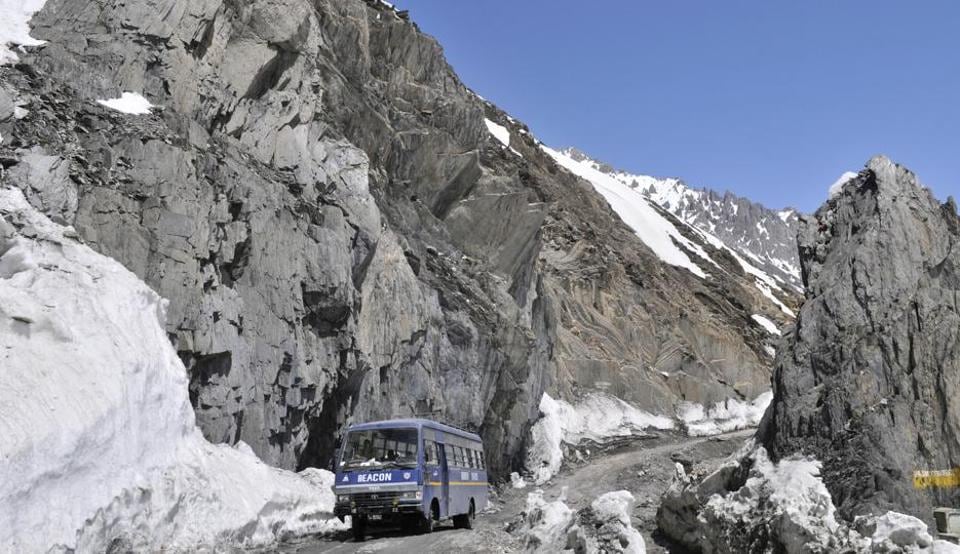
The project will include 74 tunnels, 124 major bridges and 396 minor bridges, according to the first phase of the survey done for the project. The only project comparable to the railway line is the Qinghai-Tibet line in China, which is at a height of around 2,000 metres above sea level.
The railways wants the strategic line, to be completed by 2022, along the Indo-China border to be declared a national project. The railways is also seeking the help of the US for satellite imagery to survey the route and will also use the Lidar method for an understanding of the geology of the entire route.
“We can start construction to showcase Indian Railway’s presence in the valley. The railway line will provide relief for locals as well as Army personnel living there,” said Alok Kumar, who is overseeing the project.
The line will connect Sundernagar, Mandi, Manali, Keylong, Koksar, Darcha, Upshi and Karu and other important towns of Himachal Pradesh and Jammu & Kashmir enroute.
The railway line’s elevation will begin from Bilaspur at a height of 500 metre and culminate in Leh at an elevation of 3,215 metre. The highest road point (Tanglangla Pass) enroute at 5,360 meters will be the highest of any railway in the world. Over 50% of the line will be underground with 27-km long tunnel near Manali.
Currently, the final location survey of 465-km line is on and considering the difficult terrain, it will take at least two years to complete it, after which the project will be sent for approval.
The railway has sought Central funding for 51-km stretch between Upshi and Leh. Lok Sabha MP Thupstan Chhewang also wrote to Railway minister Piyush Goyal on September 6 demanding the project to be declared as national project.
“The line is strategically important and will provide all-weather surface connectivity to far-flung areas of Ladakh region. It will also boost tourist inflow, which will be beneficial for local population. Travel time will reduce by half, the rail project will be executed in a way that it need not close during extreme weather,” said Desh Ratan, chief engineer of the project.


