E-Paper



Baby rhino gets separated from mom in Assam’s Kaziranga; efforts underway to reunite both
The one-month-old calf got separated from its mother around Sunday in the Deopani area near the park


Amid the ongoing coronavirus lockdown across the country, authorities at Assam’s Kaziranga National Park are on a mission to reunite a baby rhino with its mother.
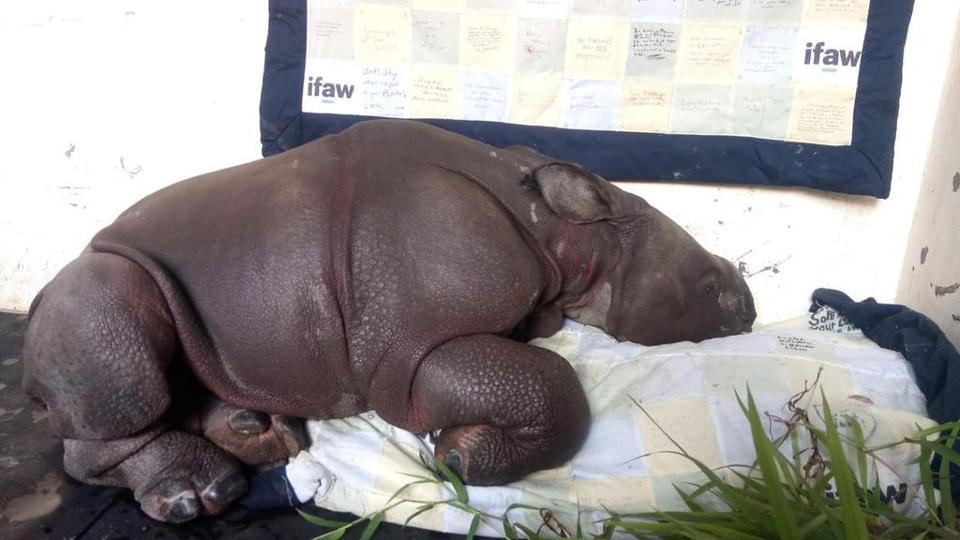
The one-month-old calf got separated from its mother around Sunday in the Deopani area near the park which is spread across 430 sqare kilometres. Kaziranga is the biggest habitat of one-horned rhinos in the world and is home to around 2,400 members of the species.
“The calf got separated from the mother and was found roaming around Deopani area close to the national highway. When we got the information from the nearby villagers, we went and rescued it around 11:00 am on Sunday,” said P Sivakumar, park’s director.
“We tried to locate the mother but weren’t successful. Since there was a threat to the calf from tigers or other animals, we sent it to the Centre for Wildlife Rehabilitation and Conservation (CWRC),” he added.
Located at Borjuri village near the national park, the CWRC is the only facility in India where orphaned or injured wild animals are hand-raised or treated before returning them to the wild.
Every year, the centre handles several baby rhinos, elephants etc. that are rescued during the annual floods that submerge most areas of the park.
In the meantime, officials at Kaziranga have started looking for the mother who could be searching for her missing calf.
“We have engaged our people in the Deopani area to trace the mother as she should be in that particular location. There are around 50 rhinos in that area. Without knowing the exact mother, we can’t release the calf into the herd as there is a possibility of an adult rhino attacking it,” said Sivakumar.
Baby rhinos are extremely attached to their mothers who are very protective of them. The babies stay with their mothers for around three years before venturing on their own.
“Since the baby is very small, it must have been suckling. As there is a threat to it if it’s left in the wild, it is better for it to stay at the CWRC till the mother is found. It’s a challenging task, but personnel at the centre are experienced and well-equipped to handle such babies,” said Bibhab Talukdar, founder of Guwahati-based wildlife NGO Aaranyak.
Though the exact reason for the calf’s separation is not known, Talukdar said as a survival tactic. Sometimes mothers ‘run away’ from the baby to protect it when an adult male in heat approaches her, he said.
“The calf is a male weighing around 70 kilograms. It was very dehydrated and weak. Its treatment and care are underway. Hopefully, we will be to feed it prepared milk using a bottle from Tuesday,” said Rathin Barman, in-charge of CWRC.
Usually, the CWRC deals with orphaned or separated baby rhinos during the annual floods, but it rarely deals with such cases during the rest of the year. Last year, the centre had taken care of 5 rhino calves during floods.