E-Paper



Civic polls: Nagaland to seek central ordinance on women’s quota amid protest
In the light of tribal bodies agitating against attempts to holding urban local body polls with 33% reservation for women, the Nagaland government has decided to ask the Centre to keep the state outside the purview of a certain part of the Constitution that deals with the matter.


In the light of tribal bodies agitating against attempts to holding the urban local body polls with 33% reservation for women, the Nagaland government has decided to ask the Centre to keep the state outside the purview of a certain part of the Constitution that deals with the matter.
The portion under contention – Part IX-A of the Constitution – deals with the composition of municipalities, and rules that “not less than one-third” of its total seats should be reserved for women.
In an emergency meeting held at Kohima late on Saturday night, the state cabinet decided to “submit a memorandum to the Prime Minister, asking him to amend the Constitution through an ordinance”. It was attended by MLAs from all the 16 major tribes in Nagaland.
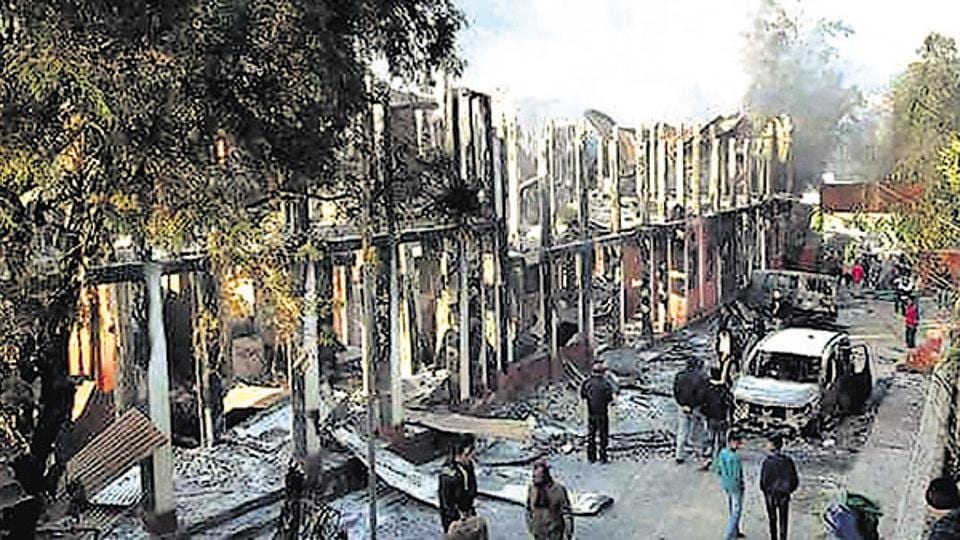
Two people were killed at Dimapur and more than 21 government buildings burnt down in the state capital in the last five days, after violence erupted over the administration’s decision to go ahead with the local body polls despite widespread opposition to the move.
“All 60 legislators of the state, both MPs, the chairman and vice-chairman of the (ruling) Democratic Alliance of Nagaland are to submit the memorandum jointly. An early appointment with the Prime Minister has been sought,” said a communiqué issued by chief minister TR Zeliang’s media cell.
Tribal bodies opposing reservation for women in the local body polls have been demanding that Zeliang and his cabinet submit their resignations for trying to hold the elections on February 1 despite conceding to a Church-brokered deal to postpone it by two months.
Government offices in Kohima were shut down by volunteers of tribal organisations on Saturday, and the movement of government vehicles was banned. However, Dimapur – the commercial hub of the state – remained unaffected.
KT Vilie, convener of the newly formed Nagaland Tribes Action Committee, said no bandh would be held on Sunday to ensure that church-goers aren’t inconvenienced. “But we will paralyse the government machinery from Monday onwards, until the cabinet steps down,” he added.