E-Paper



Committee set up on UCC implementation in Uttarakhand
The committee, led by retired Supreme Court judge Ranjana Desai, will comprise Pramod Kohli (retd judge), social activist Manu Gaur, retired IAS Shatrughan Singh and Doon University vice-chancellor Surekha Dangwal, according to an order issued by the home department.

 Prefer HTon Google


The Uttarakhand government on Friday formed a five-member committee headed by a retired Supreme Court judge to prepare a draft on implementation of Uniform Civil Code (UCC) in the state.
The committee, led by retired Supreme Court judge Ranjana Desai, will comprise Pramod Kohli (retd judge), social activist Manu Gaur, retired IAS Shatrughan Singh and Doon University vice-chancellor Surekha Dangwal, according to an order issued by the home department.
The committee will examine all relevant laws governing civil affairs of people living in the state and prepare a report on all applicable laws related to marriage, divorce, property rights, succession and adoption among others, people familiar with the matter said.
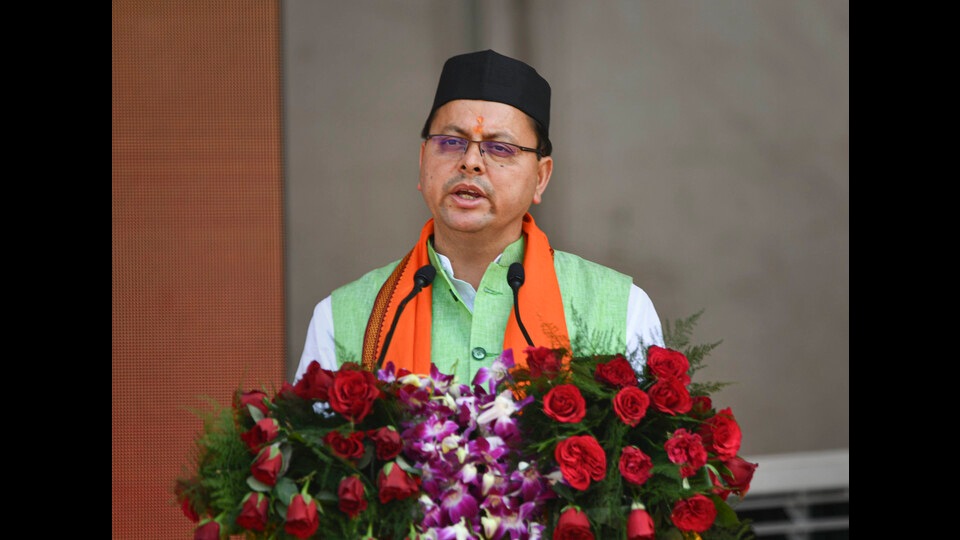
Announcing the formation of the panel in a Facebook post, chief minister Pushkar Singh Dhami said: “To provide uniformity (in law) to all religious communities and to preserve the culture of Devbhoomi, the land of Gods, an expert committee has been constituted for the implementation of Uniform Civil Code under the chairmanship of Justice Supreme Court (Retd) Ranjana Prakash Desai, as had been promised in our Sankalp Patra (manifesto) at the time of elections”.
During his campaign for the February 14 assembly elections, Dhami had promised the implementation of UCC if the Bharatiya Janata Party (BJP) was voted to power.
In its first cabinet meeting on March 24, after returning to power with a remarkable victory in the polls, the BJP government had passed a proposal to implement UCC and announced the formation of an expert panel for its implementation.
“This decision has been taken so that the law is same for everyone here,” Dhami had said, adding that Article 44 of the Constitution empowered the state to implement UCC.
According to Article 44, “the State shall endeavor to secure for the citizens a uniform civil code throughout the territory of India.”
The Congress hit out at the state government for deflecting public attention from issues like unemployment, inflation and hill migration.
“The government’s priority should have been to create employment avenues for the youth in the state and stop migration but they are busy pushing UCC, which is really sad. It shows what their priorities are,” Congress state general secretary Mathura Dutt Joshi said.
Hitting back, the BJP asked if the Congress wanted equality in law.
“UCC is meant to bring equality in law for religious communities and as such, the Congress should also welcome it. Don’t they want equality in law for all? They should rise above their appeasement politics and think about equality and security concerns,” Manveer Singh Chauhan, media-in-charge of the state BJP, said.
Political analyst SMA Kazmi said the formation of the panel is the first step of the BJP to implement UCC across the country.
“They have started with Uttarakhand which has a Muslim population of over 13%. They want to experiment here and then implement UCC in other states and ultimately across the country. Many states have already started saying they will implement UCC. But it will create a Pandora’s box. What will happen in case Muslims from the state go to other states for jobs or Muslims from other states who come here. Will it still be applicable to them? How will they bring Muslim Personal Law or family law code under this remains ambiguous?” Kazmi said.