E-Paper



Covid-19: Health ministry advisory against spraying disinfectant on people
Covid-19: Health ministry advisory added, “Spraying of chlorine on individuals can lead to irritation of eyes and skin and potentially gastrointestinal effects such as nausea and vomiting.

 Prefer HTon Google


The Union health ministry has issued an advisory against spraying disinfectant – sodium hypochlorite – on people for Covid-19 management, saying such measures could “lead to a false sense of disinfection and safety”.
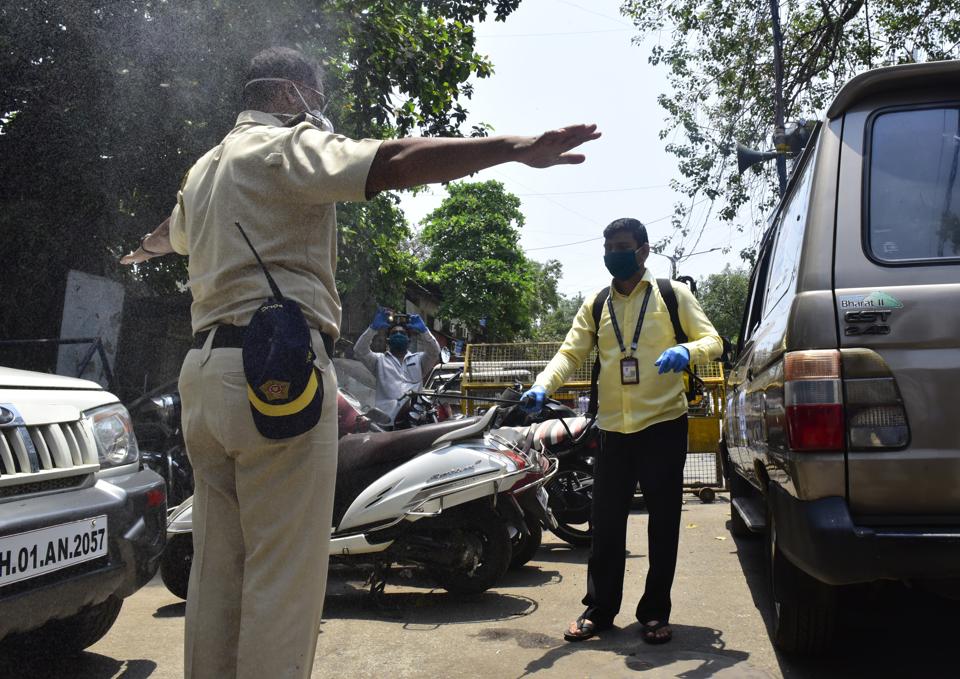
“We had been hearing about people being sprayed with disinfectants and getting queries on how effective it is in killing the Coronavirus. An expert committee was asked to look into it and they are of the opinion that there isn’t enough scientific evidence against it,” said a health ministry official, requesting anonymity.
The technical team extensively went through available evidence on the use of disinfectant as a spray.
“In view of the above, the following advisory is issued: spraying of individuals or groups is NOT recommended under any circumstances. Spraying an individual or group with chemical disinfectants is physically and psychologically harmful,” the health ministry’s advisory stated.
“Even if a person is potentially exposed [to] the Covid-19 virus, spraying the external part of the body does not kill the virus that has entered your body. Also there is no scientific evidence to suggest that they are effective even in disinfecting the outer clothing/body in an effective manner.”
The advisory added, “Spraying of chlorine on individuals can lead to irritation of eyes and skin and potentially gastrointestinal effects such as nausea and vomiting. Inhalation of sodium hypochlorite can lead to irritation of mucous membranes to the nose, throat [and] respiratory tract and may also cause bronchospasm.
“Additionally, use of such measures may in fact lead to a false sense of disinfection and safety and actually hamper public observance to hand washing and social distancing measures.”
The advisory further stated: “The strategy seems to have gained of lot of media attention and is also being reportedly used at local levels in certain districts/local bodies. Purpose of the document was to examine the merit of using disinfectants as spray over human body to disinfect them from Covid-19, and to provide appropriate advisory.”
Disinfectants are chemicals that destroy disease-causing pathogens or other harmful micro-organisms. The term refers to substances applied on inanimate objects owing to their strong chemical properties.
Chemical disinfectants are recommended for cleaning and disinfection only of areas and surfaces frequently touched by those who are suspected or confirmed to have Covid-19.
Precautionary measures are recommended, such as wearing gloves while using disinfectants for cleaning.