
 E-Paper



Haryana assembly elections 2019: Jat consolidation and anti-incumbency helps Cong-JJP in Haryana
The Jats decide the outcome in 29 of the 90 assembly seats in Haryana and are influential in another 18 seats where their population is around 8-10%.

 Prefer HTon Google


The Congress, led by former chief minister Bhupinder Singh Hooda, and the Jannayak Janata Party (JJP), led by Dushayant Chautala, have done much better than expected in the Haryana assembly elections primarily due to the consolidation of votes in their favour in the Jat heartland and because of anti-incumbency against the Manohar Lal Kattar-led Bharatiya Janata Party (BJP) government.
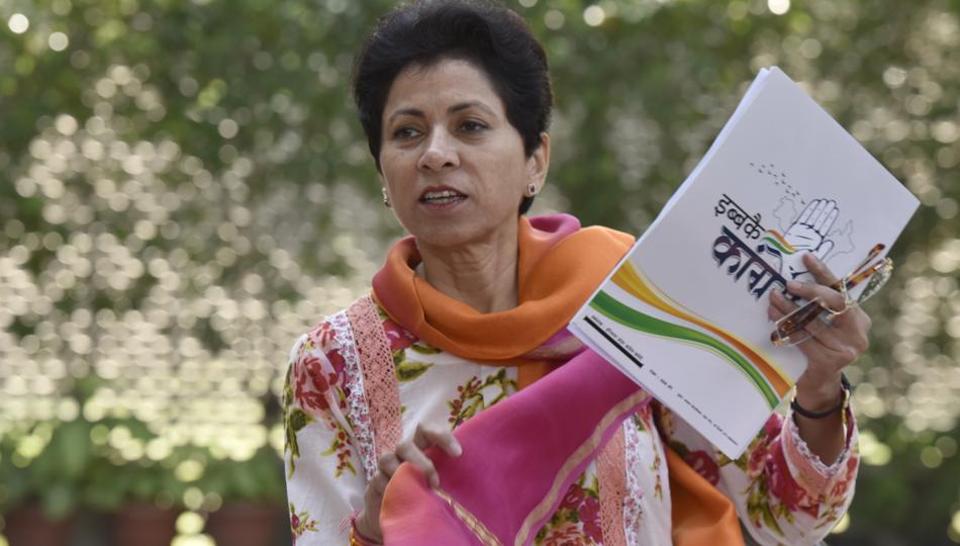
The Jats decide the outcome in 29 of the 90 assembly seats in Haryana and are influential in another 18 seats where their population is around 8-10%. The early trends show that the Congress is doing well in the Jat-dominated Deshwali belt of southern Haryana, which includes former chief minister and Congress leader Bhupinder Singh Hooda’s strongholds, the Rohtak and Sonipat districts. All four ministers in the Haryana government from the belt were trailing till the end of the fourth round of polling.
The two districts were the epicentre of the 2016 Jat agitation in which 31 people, including 18 Jats, were killed.
On the other hand, the JJP has performed well in former chief minister Devi Lal’s bastion of Hisar, Jind and Bhiwani districts in western Haryana. In some seats in the region, such as Bhadra in Charkhi Dadri district and Tosham in Bhiwani district, the JJP is in a direct contest with the Congress and the BJP is in third position after four rounds of polling. In rural Jind, the JJP is leading in all the four seats.
Although the Jat agitation, seeking reservation for the community in jobs and admissions in higher education institutions, was not a major issue in the assembly elections, there was a simmering discontent among the Jat voters on how the ruling BJP government had treated them.
In addition to the Jat agitation, the agrarian crisis in the Jat heartland was also a major concern, with farmers complaining that the minimum support price for various crops were not adequately increased in the past few years and a new quota system for procurement of the produce was introduced, which made them vulnerable to commission agents in local grain markets.
Here, the BJP’s campaign, pivoting around the nullification of Article 370, created little impact. Voters felt that Kashmir had no implication on their lives. The common refrain was that they have voted for prime minister Narendra Modi in May 2019 and now it was time to judge chief minister Manohar Lal Khattar.
The Congress also appears to be doing well in the constituencies reserved for Scheduled Castes. Of the six reserved constituencies, the Congress was leading in four.
The BJP was ahead in most of the Punjabi-Bania (trader)-dominated urban and semi-urban constituencies of the state with chief minister Manohar Lal Khattar leading by over 10,000 votes from Karnal. The BJP was also leading in Panchukla, Ambala city, Ambala cantonment and Jind.
Ramji Lal, former principal of Dyal Singh College in Karnal, said the vote in Haryana was clearly on local issues and national issues had not had much impact. “The voters judged the performance of local MLAs and that of the Khattar government. This is as it should be in the assembly elections. The BJP’s focus on Article 370 and the image of prime minister Narendra Modi did not work much as it showed that the Khattar government does not have much to say about its own achievements,” he said.


