
 E-Paper



India needs to talk about 2nd-gen steps against poverty
Leaked findings of the 2017-18 Consumption Expenditure Survey (CES) showed a fall in average monthly per capita expenditure (MPCE) for the first time and triggered a political storm. Logically speaking, poverty should have increased with a fall in average MPCE in the 2017-18 CES.

 Prefer HTon Google


There are no official statistics on the number of poor in India after 2011-12. The Consumption Expenditure Survey (CES) of 2017-18, which would have given the latest numbers on poverty, was scrapped by the government. Leaked findings of the 2017-18 CES showed a fall in average monthly per capita expenditure (MPCE) for the first time and triggered a political storm. Logically speaking, poverty should have increased with a fall in average MPCE in the 2017-18 CES.
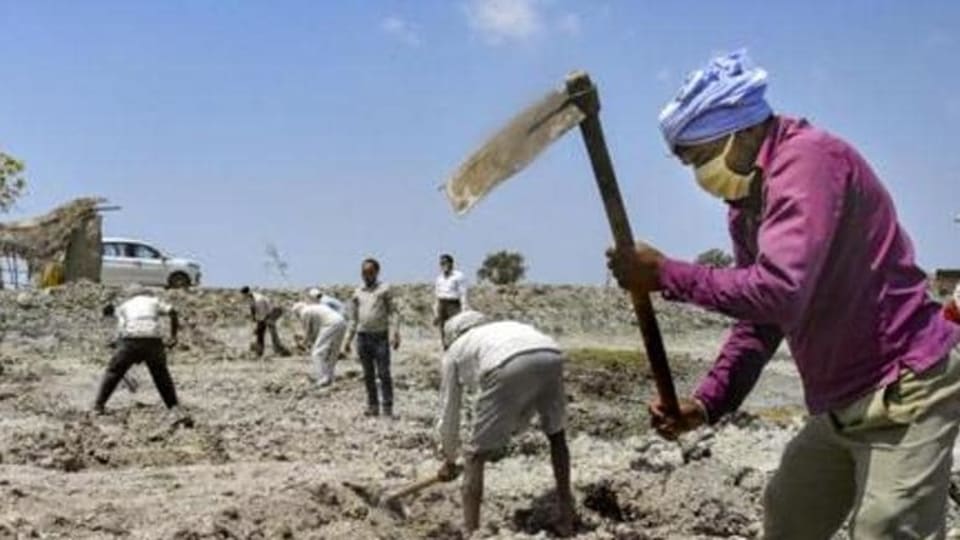
While the controversy around the scraping of 2017-18 CES led to polarisation, with the government and its supporters dismissing fears of a rise in poverty, the pandemic’s shock has made such differences redundant.
Since the Indian economy has suffered its highest ever contraction of 7.3% in 2020-21 and the post-pandemic recovery is biased in favour of profits (in the wage-profit binary) and the formal sector (in the formal-informal binary), an increase in poverty is almost certain now. The fact that the government has been extending the Pradhan Mantri Garib Kalyan Yojna (PMGKY) – it offers 5kg wheat or rice and 1kg preferred pulses for free to 800 million people – speaks volumes about the kind of kind of economic precarity that affects most Indians at the moment.
India’s largest ever economic contraction in 2020-21, followed by the second Covid wave’s disruption to the sequential economic recovery, has made restoration of growth the focal point of economic commentary at the moment. While growth is a necessary condition for poverty reduction, it is not a sufficient condition, as the post-pandemic economy can put itself in a trajectory with higher levels of inequality, and therefore poverty.
The situation calls for reopening the debate on anti-poverty programmes, which were popular at the time when the United Progressive Alliance (UPA) assumed office in 2004. Whether or not such programmes are adopted, is not, as is often believed, merely a function of the fiscal headroom available to a government. There are deeper political economy processes at play behind such decisions. Here are five charts which put this in perspective.
The difference between asset-generating programmes and anti-poverty programmes
Whether or not a person is poor is not a function of their asset endowments, but income. India calculates its poverty by deciding on an MPCE level below which a person is deemed to be poor. This also means one-time asset generating programmes -- the mainstay of the current government’s welfare push -- are not anti-poverty programmes. The government could have given money to a household to build a toilet or even a house, and it could provide LPG cylinders and piped water supply to their houses, but none of these guarantee that the household in question will continue to earn enough to stay above the designated poverty line.
The only income enhancement programme that the Narendra Modi government has started is the PM-KISAN scheme, which offers ₹6,000 a year to farmers. Other examples of anti-poverty programmes would be Mahatma Gandhi Rural Employment Guarantee Scheme (MGNREGS) and the Public Distribution System (PDS), or the PMGKY, which was discussed above.
PDS and MGNREGS have been game changers in the fight against poverty
Food items have a 39% share in India’s Consumer Price Index (CPI) basket. Cereals alone have a share of almost 10%. This one statistic makes it clear why the subsidised provisioning of rice and wheat through PDS matters in fighting poverty in India. India’s PDS in its current avatar offers almost free food to at least two-thirds of the population.
Interestingly, PDS first contracted and then expanded in scope during the post-reform period in India. This is because the universal PDS was first made into a targeted PDS in 1997. Its scope was first expanded under the Atal Bihari Bajpayee government, which launched the Antyodaya Anna Yojna in 2000, reducing issue price of cereals to the really poor. A 2013 EPW paper by Himanshu and Abhijit Sen shows how PDS’s reach first fell and then expanded during the reform period. The National Food Security Act (NFSA) of 2013 further expanded the reach of PDS in India. The expansion in coverage was especially high among poorer households.
MGNREGS is essentially a counter-cylical demand driven cushion for unskilled workers in rural areas. Wages under it are generally lower than market wages, and payments are often delayed. Despite this, MGNREGS has been a game-changer in India’s rural political-economy landscape. This is because, the unskilled rural workforce, the most vulnerable among India’s workers, now has a backup while bargaining for wages in the open market. In other words, the rural employer cannot wield the threat of work or starve ( PDS has helped here as well) to the rural labourer. This is best seen from the fact that rural wages have increased in the post-MGNREGS phase in India.
The political fallout of anti-poverty programmes can be counter-intuitive
At the macro-level, fall in poverty is good news. As income levels increase, so does demand, boosting future growth, kick-starting a virtuous cycle. However,a fall in poverty -- especially rise in bargaining power of the poor -- need not be a welcome development for all stakeholders in an economy. Consider rural landowners. With MGNREGS and PDS providing an important income cushion to the rural proletariat, the bargaining power of the have-nots went up, putting a squeeze on incomes of the propertied classes. This can be seen in an increase in the share of cost on account of casual workers (hired workers) in the value of output of crops such as rice and wheat in the years following the roll-out of MGNREGS.
While the anger of the rural rich is unlikely to have been the biggest factor behind the BJP’s 2014 victory, it was not an insignificant factor. An analysis of vote shares of the Congress and the BJP by class in the 2009 and 2014 Lok Sabha elections makes this clear. The Congress’s losses and the BJP’s gains held across class divide, but they were the biggest among the rich and the smallest among the poor.
When seen in this context, the BJP’s preference for asset-transfer based welfare programmes rather than income-enhancement schemes appears to be a conscious strategy to not tilt the tables against the propertied classes, especially in rural areas, any further. Even the PM-KISAN scheme is class agnostic because it does not differentiate between rich and poor farmers, and excludes the poorest, i.e. the rural landless.
This strategy may have been alright, had the economy not entered a slowdown followed by a contraction. But, at the current moment, when a rise in inequality and poverty threatens to damage India’s long-term growth prospects, it will not help. Any economic strategy to counter these will have to navigate the waters of not just fiscal ability , but also the potential backlash from the BJP’s support-base among the relatively privileged.


