
 E-Paper



Law of torts only remedy to fight malicious propaganda, says Supreme Court
A five-judge bench led by justice Arun Mishra blamed the legal fraternity for the poor implementation of law of torts in India.


The Supreme Court remarked on Wednesday that the law of torts is the remedy to fight “malicious propaganda” and attempts “made to tarnish reputations.”
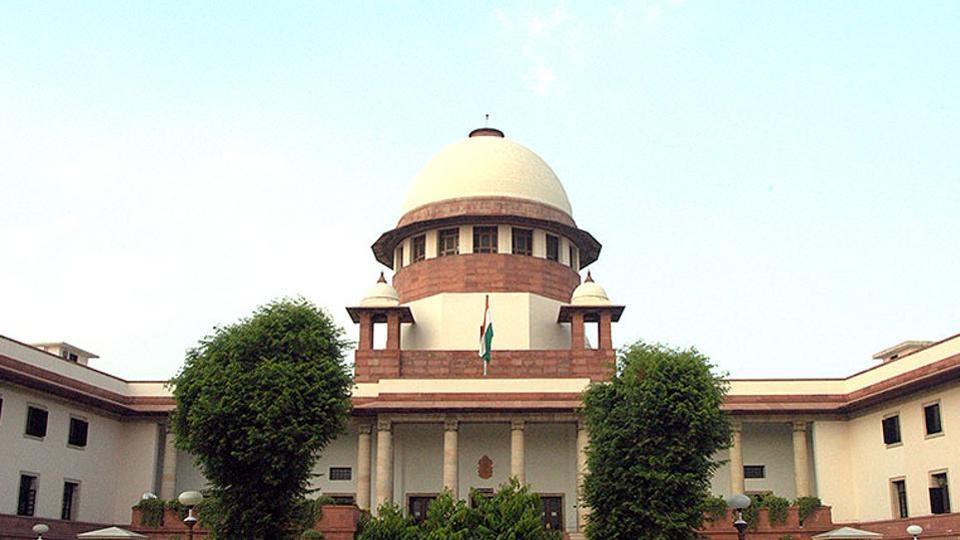
A five-judge bench led by justice Arun Mishra blamed the legal fraternity for the poor implementation of law of torts in India.
The court is examining whether there can be any restrictions on the right to free speech of constitutional functionaries. The other members of the bench are justices Vineet Sharan, Indira Banerjee, MR Shah and Ravindra Bhat.
A tort is a civil wrong that causes a person to suffer loss or harm, resulting in legal liability for the person who commits the offence.
Senior advocate Harish Salve, assisting the bench as amicus curiae (friend of the court), drew the court’s attention to false and motivated reports targeting people holding high office, only to be withdrawn or proved wrong subsequently.
At this, justice Bhat remarked: “The legal community is also at fault. We never developed the law of torts to claim damages.”
Salve continued: “Just because you are in an important office doesn’t mean that you are open to any nonsense.Reputations are tarnished with complete impunity. Government has a duty to do something about this.”
Democracy was based on the people’s faith in the system and the courts as an institution drew its power from such faith, which cannot be allowed to be undermined.
The senior counsel cited the Puttaswamy judgement (right to privacy) on the facet of positive and negative rights. He said the state has the duty of enforcing human rights of a person and providing for fair trial. It cannot say “we cannot do anything,” the senior advocate told the bench. “State has a duty to create an ecosystem to create this protection,” he argued.
At this, justice Shah asked Salve about the remedies available to a private individual when certain rights under Article 21 (right to life and liberty), as recognized by the courts, are violated. These rights are not covered under Article 19(2) (free speech subject to restrictions).
“Can we ask the legislature to make laws on this,” the judge wondered.
At this, Salve said court can recommend a law and like it did d in the Vishakha guidelines, propose a model. “Or else the courts will become mute spectators when fundamental rights are violated,” justice Shah replied.
Salve insisted on the need to reinvent and reform jurisprudence to take into account the present situation, after India came out of the feudal system. Justice Mishra was quick to ask him: “But have we come out of it? We have adopted the British system when it comes to English language.” Salve said: “That is the only non-dividing language these days.”