
 E-Paper



Police trek 12 km to take injured Maoist to hospital in Chattisgarh
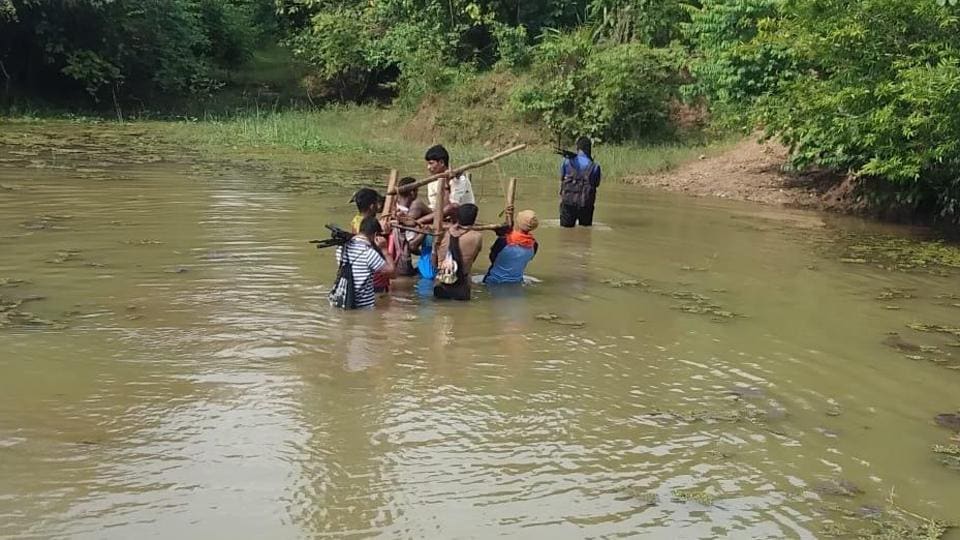
He said a team of 35 constables had been dispatched to bring the Maoist commander from a village in the jungle where he was being treated. The team carried Hidma for 12 km crossing rivers and rough terrain.

 Prefer HTon Google


A Chhattisgarh police team trekked 12 km through jungles to carry an injured Maoist commander to a hospital in Dantewada on Sunday, a police officer said on Monday. Madkam Hidma, who carried a bounty of Rs 5 lakh on his head, is now undergoing treatment for gangrene. He developed gangrene after he was injured about a fortnight ago when he fell while laying an improvised explosive device (IED).
“It is heartening that police personnel even after knowing that he had fallen while laying the IED carried him on a cot and admitted him to the district hospital,” said Dantewada’s police superintendent Abhishek Pallava.
He said a team of 35 constables had been dispatched to bring the Maoist commander from a village in the jungle where he was being treated. The team carried Hidma for 12 km crossing rivers and rough terrain. There were no other Maoist in the village.
“I instructed the force to bring the injured Maoist commander to hospital and did not waste time in interrogating him. Hidma developed gangrene and the infection could have been life-threatening,” said Pallava.
A member of the Maoists’ Malangir Area Committee, Hidma has over 10 cases registered against him for attacks on security forces in Sukma and Dantewada districts of Bastar region.
Pallava said that Hidma was injured in the forests near Nagarguda village in Sukma district.
“He was being given faith healing and local treatment. Despite the swelling and blackening of limbs, he was not allowed to get allopathic treatment,” Pallava said.
Police had been tipped off about an injured man whom they later identified as Hidma.
Pallava said the police could consider recruiting Hidma.
“First, we treat all Maoists as citizens of the country and they have a right to medical treatment. If they have committed any crimes, courts will later try and punish them. Secondly, it sends a positive signal to villagers that policemen are there to help them and thus boosts the perception of police and thirdly, Hidma can be an asset for future Naxal operations if he surrenders and joins the police force,” he said.
-kW0H-U20214218012MgB-250x250%40HT-Web.jpg)


