
 E-Paper



‘CJI first among equals’: SC dismisses plea to change rules on case allocation
The Supreme Court bench led by the Chief Justice of India Dipak Misra held that the CJI has been entrusted the power to constitute benches and allocate work.


The Supreme Court on Wednesday refused to spell out guidelines for the setting up of judicial benches and allocation of work at the apex court and high courts, holding that this is the exclusive prerogative of the Chief Justice of India (CJI) , as the “first among equals,” to decide on both. The court’s stand reaffirms its current position — already reinforced in a November 2017 ruling — which is at the core of differences between the CJI and four senior judges of the court.
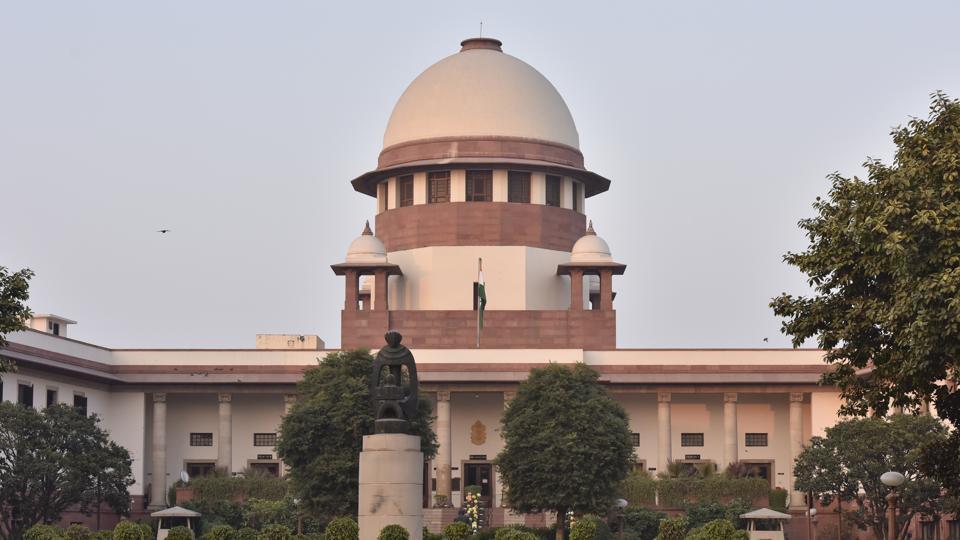
“The Constitution puts a CJI at the helm of affairs of the top court. CJI is the head of institution, authority vested with him is to ensure smooth administrative and judicial functioning of the court,” ruled a bench comprising CJI Dipak Misra and justices AM Khanwilkar and DY Chandrachud
The top court dismissed a public interest litigation (PIL) that sought guidelines for rational and transparent allocation of cases and constitution of benches to hear them. It said in its judgement that the current system ensures the independence of the court and that any move to allocate cases to judges on the basis of expertise or seniority would only end up questioning the competence of all SC judges.
According to Supreme Court rules, which have the sanction of the president of India, the CJI has the discretion to allocate work and form benches of the top court. This discretionary power of the CJI as the master of the roster was questioned in Janauary by the four senior-most judges of the apex court – justices J Chelameswar, Ranjan Gogoi, MB Lokur and Kurian Joseph – when they held an unprecedented press conference and protested against work allocation by the CJI.
“There have been instances where case having far-reaching consequences for the Nation and the institution had been assigned by the Chief Justices of this Court selectively to the benches “of their preference” without any rationale basis for such assignment. This must be guarded against at all costs,” the judges wrote in an open letter to the CJI .
Read | SC judges vs CJI Dipak Misra: How cases are allocated in India’s top court
At an event on Saturday, Chelameswar spoke on the issue and said that while the CJI undoubtedly had the power to constitute benches to hear different cases as the mater of the roster, “this power has to be exercised for achieving some public good. It can’t be exercised just because it is there. All power is trust and it has to be done for some public good.”
Dismissing the petition filed by Lucknow resident Ashok Pande, the three-judge Supreme Court bench headed by Misra on Wednesday asserted the primacy of CJI in work allocation and held: “In the allocation of cases and the constitution of benches, the Chief Justice has an exclusive prerogative. As a repository of constitutional trust, the Chief Justice is an institution in himself. The authority which is conferred upon the Chief Justice, it must be remembered, is vested in a high constitutional functionary”.
Reaffirming the unique position of the Chief Justice of India as the head of the judicial institution, the court said, “The entrustment of functions to the Chief Justice as the head of the institution, is with the purpose of securing the position of the Supreme Court as an independent safeguard for the preservation of personal liberty. There cannot be a presumption of mistrust”.
Read | Turmoil in Supreme Court as four judges speak out against Chief Justice Dipak Misra
Petitioner Pande, who filed the plea after the January press conference by the top four SC judges, also said in his petition that Constitution benches set up by the apex court should comprise the five senior-most judges.He asked for specialised benches to deal with public interest litigation, tax, criminal, land and service matters.
The court said: “ To suggest that any Judge would be more capable of deciding particular cases or that certain categories of cases should be assigned only to the senior-most among the Judges of the Supreme Court has no foundation in principle or precedent. To hold otherwise would be to cast a reflection on the competence and ability of other judges to deal with all cases assigned by the Chief Justice notwithstanding the fact that they have fulfilled the qualifications mandated by the Constitution for appointment to the office.”
The January press conference of the SC judges and the ensuing controversy have prompted some opposition parties to consider moving a motion in the Rajya Sabha to impeach the chief justice.
