
 E-Paper





Follow the latest breaking news, major developments and agenda-setting stories from India and around the world with the newsdesk at Hindustan Times. Operating round the clock, the desk brings together experienced editors, reporters and correspondents to deliver fast, accurate and contextual reporting across subjects that influence public policy, governance, business, society and international affairs. The HT News Desk covers politics, elections, government policies, the economy, business and markets, science and technology, the environment, law and order, infrastructure, education, climate issues and geopolitics, while closely tracking developments across states, institutions and global capitals. The team also leads coverage of major breaking news events, policy announcements, court proceedings, natural disasters, public emergencies and significant international developments. Reports published by the newsdesk are based on information gathered from reporters on the ground, official statements, government agencies, court records, regulatory filings, recognised institutions and other authoritative sources. Stories undergo editorial scrutiny and verification processes to ensure accuracy, fairness and relevance, and are updated as events evolve and additional information becomes available. Whether covering a key political decision in New Delhi, an economic policy shift affecting millions, a landmark court ruling or a major global event, the HT News Desk aims to provide readers with reliable, fact-based journalism that delivers not only the latest developments but also the context and analysis needed to understand their wider implications.
Team from petroleum ministry visits Assam OIL well blowout site
A blowout is uncontrolled release of crude oil or gas from a well when pressure control systems fail. Condensate is a low density high gravity hydrocarbon generally found along with natural gas.


Eight days after a natural gas well operated by Oil India Limited (OIL) witnessed a blowout in Assam’s Tinsukia district, a union petroleum ministry team reached the site to take stock of the situation on Wednesday.
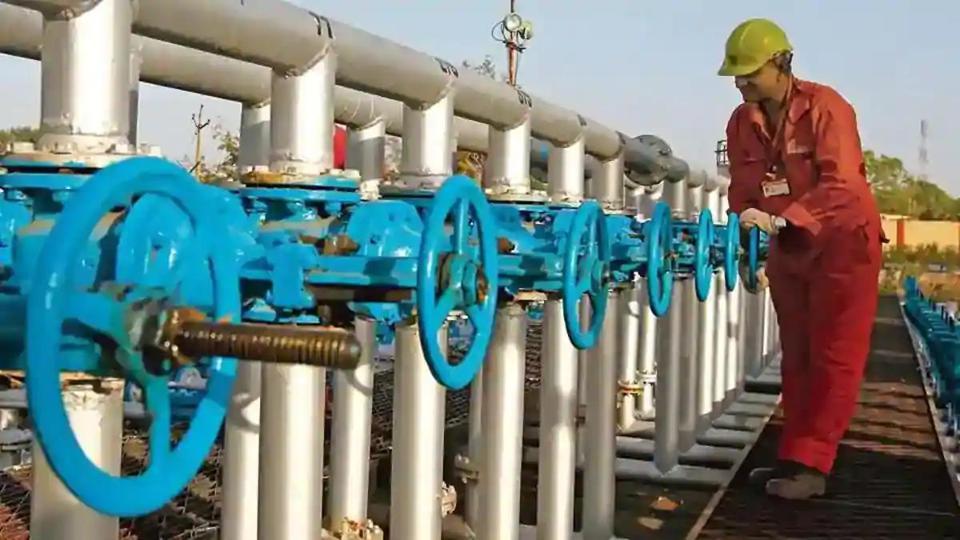
Amar Nath, joint secretary in the ministry of petroleum and natural gas reached Baghjan, where natural gas and oil condensate from the well has been flowing “uncontrollably” since May 27.
A blowout is uncontrolled release of crude oil or gas from a well when pressure control systems fail. Condensate is a low density high gravity hydrocarbon generally found along with natural gas.
Nath took a review meeting at Tinsukia, which was attended by Sanjay Kishan, Assam tea tribes’ welfare minister, district officials, forest and pollution department officials as well as senior OIL executives.
In a statement issued on Wednesday, OIL informed that a two-member team of experts from Singapore-based Alert Disaster Control is expected to reach the site on Thursday to help control the blowout.
“Pumping of water to the well through the casing valve is in progress to minimize chances of fire. Testing of equipment required for controlling of the well is in progress,” the statement read.
To ensure that there is adequate and continuous supply of water while the process to control the blowout is underway, a reservoir is being dug up near the well and a pipeline being laid from a nearby river.
The blowout happened at the Baghjan well while work was underway to produce gas from a new oil and gas bearing reservoir at a depth of 3,729 metres. Natural gas and oil condensate has been flowing from the well continuously.
Around 1610 families have been evacuated from the areas near the well and have been shifted to four relief camps.
Since the well is located close to the Dibru Saikhowa National Park and the eco-sensitive Maguri wetland, wildlife and environment activists in Assam have expressed concern of long term damage to ecology and wildlife if the blow out is not contained soon.
Residue of the condensate has spread to areas near the well and trees, water bodies and roofs of houses are covered in a thin oil-like layer.
“All safety and security measures are continuously being monitored to protect surrounding villagers and their properties, working teams. Protection of environment would be paramount while carrying out the well control operation,” said the OIL statement.


