E-Paper



To highlight erosion threat to Assam’s Majuli, locals plan music fest next month
Majuli used to be home to 65 ‘Satras’, Vaishnavite monasteries which preserve and propagate the teachings of 15th century scholar-reformer Srimanta Sankardev. Only 22 of them exist now, the others shifted from the island due to the threat of erosion.


Every year as annual floods ravage most parts of Assam, Majuli-- the world’s largest river island shrinks. Erosion caused by surging waters of the Brahmaputra reduces the size of the river island even further.
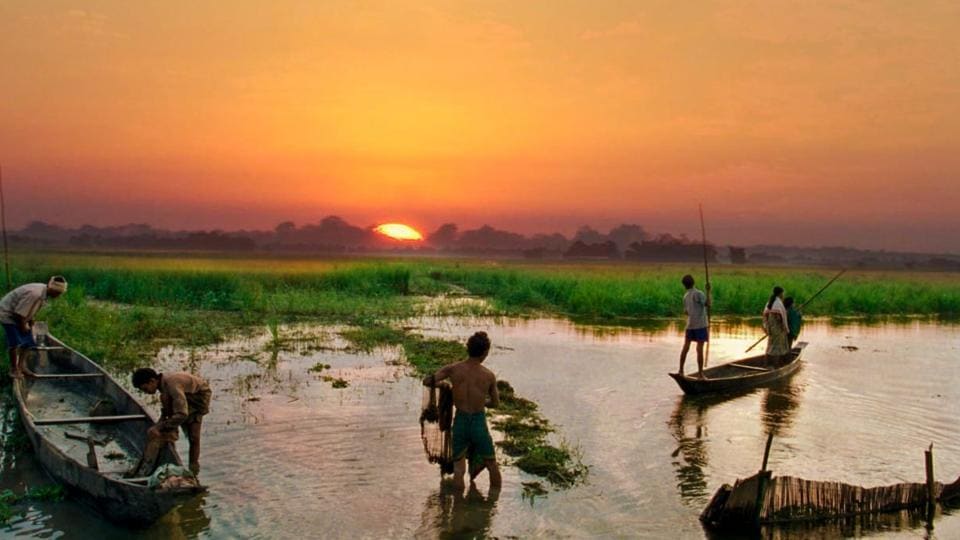
The threat to Majuli, the seat of neo-Vaishnavite culture in Assam, is not new. Spread over 1,256 sq km at the beginning of the 20th century, the island has now been reduced to around 350 sq km uprooting many of its residents in the process.
Majuli used to be home to 65 ‘Satras’, Vaishnavite monasteries which preserve and propagate the teachings of 15th century scholar-reformer Srimanta Sankardev. Only 22 of them exist now, the others shifted from the island due to the threat of erosion.
In an attempt to highlight the plight of Majuli, some young residents are organising a music festival. To be held over 3 days and beginning on November 15, the festival will bring together musicians from the northeast and beyond.
“The idea of organising a music festival started 3 years ago. I am from Majuli and love singing and composing (not professionally) and wanted to give something back to my island,” said Mukul Doley, the brain behind the festival.
Mukul left Mumbai where he lived and returned to his native place to kickstart the first such festival in Majuli with the help of nearly a dozen local enthusiasts like him.
Besides music, the Majuli Music Festival will showcase local food and beverages, encourage visitors to take tours of the tribal villages and get a feel of life in the ‘Satras’ while promoting rural tourism and boosting local economy.
It will also take the issue of erosion in Majuli from boardrooms and inform visitors of how the island itself could vanish if adequate and timely steps are not taken to secure its boundaries.
“Everyone knows about Majuli’s erosion problem. But while everything is on the discussion table nobody has initiated any concrete steps to stop it. The move to declare it a UNESCO world heritage site is also stuck. Therefore, through this festival we wanted to raise our voices and tell the global forum that this beautiful island is on the verge of extinction,” said Doley.
To go with the theme, there will be a Majuli clean and green campaign, a plastic-free drive and a tree plantation initiative launched by Jadav Payeng, a Padmashri award winner, popular for converting a barren island into a forest by planting trees.
“One of the main reasons for deciding to be part of the festival was because the organizers wanted to associate the cause of protecting Majuli. We support the initiative and are happy we will be performing there,” said Alobo Naga, a popular singer from Dimapur, Nagaland.
The venue of the festival is on the banks of the Kerkotiya River which connects the Brahmaputra and Subansiri rivers. The organizers expect around thousands of visitors over three days and camping sites and home stays are being prepared for them.
“The music festival will be an annual feature. Once this year’s festival concludes, we will start work on a music school that would give a chance to local youth to learn the intricacies of music and sound technology,” he said.
Assam Chief Minister Sarbananda Sonowal, who represents Majuli in the state assembly, is backing the festival. It was his government that declared Majuli as the first island district of India in September, 2016.
“I am associated with the festival since its conception. The idea to highlight the threat to Majuli is good and I hope the festival will result in something concrete,” said popular Assamese singer Nilotpal Bora, whose song on Majuli has garnered over 3 million views on YouTube.