
 E-Paper



Delhi chalo: Rural theatre on Mamata’s national dreams to coincide with LS campaign
Sita Ghosh, who has already played the role of Mamata Banerjee twice, is busy picking up the nuances of her transformation from a firebrand opposition leader to an experienced administrator.

 Prefer HTon Google


What should be the difference in the aggression and decibel levels of a firebrand opposition leader, a queen of melodrama and an experienced administrator?
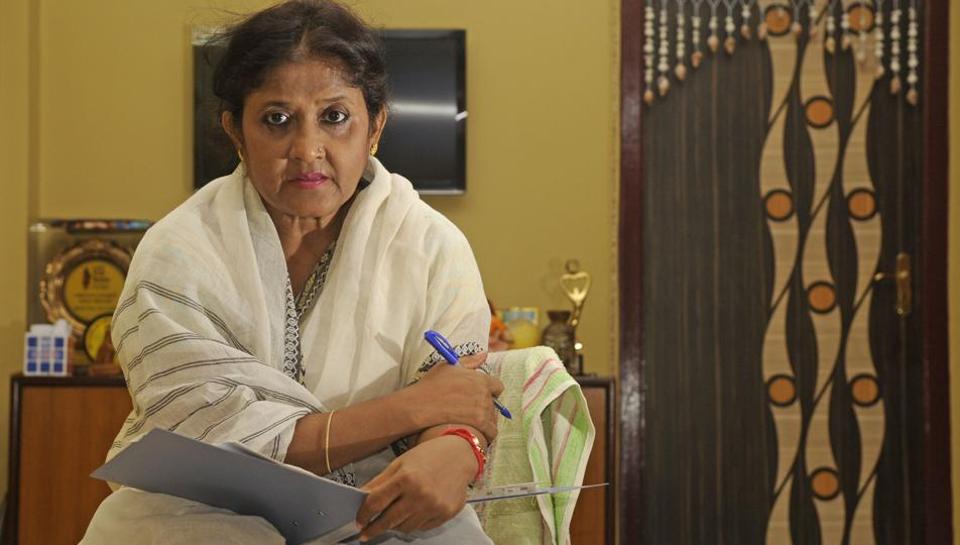
Tucked away in the first floor of her house in Barisha, a neighbourhood in the southern fringes of Kolkata, wearing a white sari and white rubber slippers, Sita Ghosh ponders over the question, as she walks up and down the room rehearsing dialogues of a three-hour play.
Read: TMC digital drive to project Mamata as the nation’s anti-BJP face
Her day starts close to midnight when everybody falls asleep. For the next three hours, she struggles to master the mannerisms of an administrator and modulate her voice to suit the character, the most remarkable in her 36-year-old life as an actor.
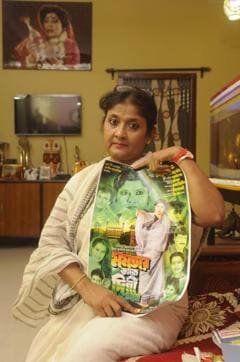
As the neighbourhood falls silent, Ghosh removes her favourite red nail polish, nose pin and wears a watch with a leather band. She clutches a sheaf of papers in her left hand, paces up and down a longish room, pauses, takes a half turn, looks at a mirror, raises her hand, throws a punch in the air to emphasise a point, stares at an imaginary audience to master the role, only pausing to occasionally sip at half a litre of “liquor tea” her daughter has made to keep her throat moist.
Ghosh has a tough assignment at hand. She has to essay the role of chief minister Mamata Banerjee in a rural theatre that will be launched across West Bengal.
Read: Nephew to be TMC’s Bengal face, Mamata to focus more on national politics
“Mamatar Dakey Delhi Cholo (Mamata beckons, march to Delhi) by Lokbandana Opera will be launched just after Diwali. We expect it to run till close to the elections,” said Uttam Maity, the director.
Is it a ruling party hagiography? “Whatever it is, it’s not mimicry. The challenge for me is the same,” asserts Ghosh, who has acted for a number of groups including Notto Company, the most famous outfit of the state.
“As Mamata Banerjee takes a step on the national platform, the play will highlight the popular programmes of the chief minister such as the girl child welfare project (Kanyashree), handling of the Maoist and Gorkhaland crisis and her opposition to measures such as demonetisation and NRC,” says Ashok Dey, the scriptwriter, who admits that the turbulence of an opposition leader sells more than the challenges of a ruler.
Read: Durga puja politics: Mamata Banerjee sends out a clear message to BJP
Rural plays, or jatra in Bengali, constitute a form of entertainment that has survived onslaught of technology down the centuries and retained their popularity. Typically melodramatic and loud, these deal mostly with social and religious stories and are staged mostly in the fields, with the audience sitting on tarpaulin spread on the ground.
Mamata Banerjee has always recognised the power of this form of communication with the masses.
Incidentally, her party’s slogan Ma Mati Manush first appeared as the title of a theatre written by Bhairab Gangopadhyay in the 1970s when the Left unseated the Congress in the state.
The play being rehearsed now critically hinges on Ghosh, who has played Mamata Banerjee, now 63, twice earlier.
Read: West Bengal spent Rs 32.5 crore on 13 inquiry panels, tables 3 reports
“When I played her role during the Singur-Nandigram movements, she was an opposition leader breathing fire. The next time I enacted her role, she has just taken charge of the state. But this time, she is an administrator who is aspiring for a nationwide role. So I have to articulate the difference,” says Ghosh.
The two earlier plays were staged for a total of about 350 times.
For the past two months, Ghosh has been studying the transition of the Trinamool Congress leader.
“The jhola she carried as an opposition leader is gone. She wears a thin chain around her neck. But she still wraps the white sari around her in a typical style and frequently wipes her face with one end of it,” says Ghosh, who has also attended public meetings to watch her up close.
Fond of fish, the 53-year-old actor is now punishing herself with a diet.
“During the Singur-Nandigram struggle, Mamata was plump and I looked more like her. I was 63 kg, but have shed more than five kg. Another couple of kgs less would be fine,” Ghosh says with a grin.
Read: Mamata Banerjee’s 6-year rule riddled with Saradha, Narada, Rose Valley scams
The actor was one of six children of a poor agricultural labourer, who found it difficult to fend for his family. Inspired by a cousin, she performed on a jatra stage before she went to school. She was only six-and-a-half-years then. At 16, she took to professional acting.
“The poverty I faced in childhood helps me empathise with the chief minister,” says Ghosh.
On stage, she will be the part of a scene where the father of the chief minister -- who was a college student -- expired at a hospital and the family did not have the money to pay for his treatment.
Jatra has given Ghosh a comfortable home and popularity. But she still holds up a piece of paper as her most cherished possession.
“On July 21, 2015 I got this letter from the chief minister congratulating my acting prowess on my birthday. It was the most pleasant surprise I could think of. Before that day, I did not know what my date of birth was,” she says.
On July 21, Trinamool Congress holds their annual flagship programme that they observe as Martyrs’ Day.


