
 E-Paper



In Odisha’s former Maoist hotbed of Swabhiman Anchala, people vote after two decades
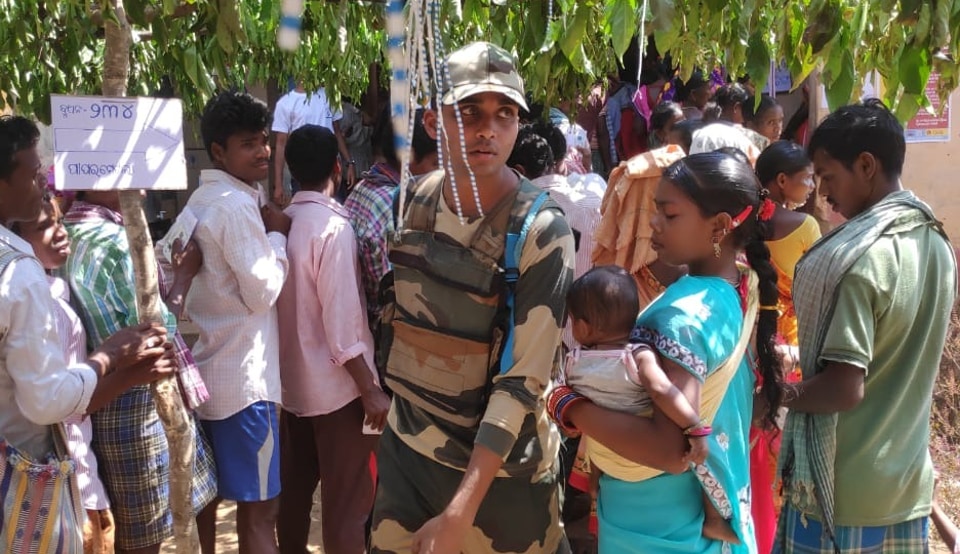
Maoists had issued warnings asking people to boycott polls like previous elections. But hundreds of tribals queued up at the six polling stations in Malkangiri since morning to vote.


Five years ago, tribal farmer Dasa Khilo in Dudhupali village of in the former Maoist stronghold of Swabhiman Anchala in Nabarangpur Lok Sabha constituency would not have even thought of voting.
“Who wants to die early? With Maoist commanders all around our area, it was stupid to even think of going anywhere near the polling station knowing well that the Maoists had called for a poll boycott. No one voted in our area in the last 20 years,” said Khilo.
But on Thursday, Khilo and his wife Sadei picked up their one-year-old son and walked more than 10 km to cast their votes at the polling station in Jantapai village of Chitrakond block in Maoist-affected Malkangiri district. Nabarangpur Lok Sabha constituency, a reserved seat for Scheduled Tribes saw a triangular contest between the BJP, Congress and the BJD this time.
This year too, Maoists issued warning through posters and banners asking people to boycott polls like previous elections. But without caring for the threats, the Khilo couple and hundreds of tribals queued up at the six polling stations since morning.
“I feel less scared now. There are police all around us,” said Khilo as a BSF jawan handed a candy to his son. First-time tribal voter Dambarudhar Pangi too said he did not feel any jitters while coming out to vote. “Earlier my parents used to boycott the polls due to Maoist threat. But this time we were not scared,” said Pangi, sitting on a motorcycle.
Voters either hopped onto tractors and autorickshaws to travel to polling stations to cast their vote. Some like 55-year-old Jagannath Khara from Budarpakhna village came walking with his fellow villagers. Many of them carried a local brew packed in bottles and sipped it while waiting for their turn at the polling station.
Malkangiri officials said they never thought tribals would come out in large numbers to vote in the Maoist bastion. “It’s nothing less than a revolution. Six months ago no one could even think that there would be voting in Jantapai. Maoists called the shots and police could not do anything. In 2000, 2004 and 2009 no one turned up to vote. Even in 2014, Maoists had captured the polling booth and a repoll had to be ordered. But then no one turned up to vote. In 2017 panchayat polls, no one filed nominations due to Maoist threat and so the area went unrepresented in the panchayatiraj bodies,” said Malkangiri’s Superintendent of Police Jagmohan Meena.
Jantapai, where tribals came to vote in large numbers, was at the heart of erstwhile Maoist bastion of Swabhiman Anchala area, a cluster of 151 villages of Malkangiri district that was almost hived off from the Odisha mainland after construction of Balimela hydroelectric project in 1972. Sandwiched between the Balimela reservoir on one side and hills, Swabhiman Anchala which was once called Cut-off area, was where the red rebels called the shots.
In 2008, 37 jawans of Greyhound police, an anti-Maoist joint force of Andhra Pradesh and Telangana police and a driver of Odisha police died when Naxals sunk their motorboat in Balimela reservoir. In 2012, Maoists triggered a landmine blast in Balimela killing a BSF commandant and three other jawans. In February 2011, the then Malkangiri district collector Ravella Vineel Krishna was taken hostage at Jantapai by Maoists while he was inspecting developmental works.
Officials said the tide turned after the 30 Maoists were killed in a encounter with Greyhound and Odisha police on the Andhra-Odisha border in October 2016. The confidence of the people went up after the state government in June last year built a 910-metre long concrete bridge across Gurupriya river connecting Swabhiman Anchala to mainland Malkangiri. “The area was almost a liberated zone for Maoists and making our presence felt was a herculean task. The opening of Gurupriya bridge, opening of a BSF camp at Jantapai and surrender of Maoists was a major turning point,” said assistant commandant of BSF, AC Pandey.
Many tribals who queued up for polling on Thursday said they were impressed by the pace of road-building in the area after the Gurupriya bridge opened last year. “People who could not travel to Chitrakonda market in one day, are now able to go there in a few hours. They are now waiting for roads into interior areas and drinking water facilities. People are coming out of the fear that reigned supreme in the area,” said Purna Kirsani, former chairman of Kudumulgumma panchayat samiti.
By 1 am, more than 35 per cent of the 3000-odd eligible voters in Jantapai had cast their vote and more than 400 had queued up. “I have never seen so much of a crowd during election day. It seems unreal,” said Parbati Khara, a villager of Jantapai.