
 E-Paper



Google Doodle recognizes Dr Ignaz Semmelweis, first person to discover the medical benefits of handwashing



COVID-19: In the wake of the global pandemic, the World Health Organization is making several efforts to promote good health and hygiene by targeting different groups in a number of ways, including videos, infographics, social media and more.
In the wake of the global pandemic, the World Health Organization is making several efforts to promote good health and hygiene by targeting different groups in a number of ways, including videos, infographics, social media and more. According to the WHO site, “most health care-associated infections are preventable through good hand hygiene – cleaning hands at the right times and in the right way. The WHO Guidelines on hand hygiene in health care support hand hygiene promotion and improvement in health-care facilities worldwide.”
Some of the ways to protect yourself from infection is by:
- Cleaning your hands regularly
- Washing your hands with soap and water, and drying them thoroughly
- Using alcohol-based handrub if you don’t have immediate access to soap and water.
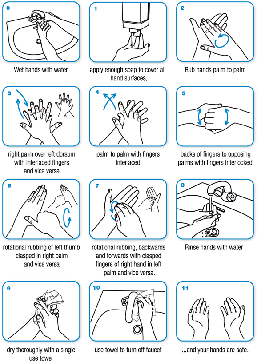
- Washing your hands properly takes about as long as singing “Happy Birthday” twice. Take a look at the following image for a detailed 11-step procedure:
Today’s Google Doodle recognizes Hungarian physician Dr Ignaz Semmelweis, widely attributed as the first person to discover the medical benefits of handwashing. On this day in 1847, Dr Semmelweis was appointed Chief Resident in the maternity clinic of the Vienna General Hospital, where he deduced and demonstrated that requiring doctors to disinfect their hands vastly reduced the transmission of disease.
Born in Buda (now Budapest), Hungary on July 1st, 1818, Ignaz Semmelweis went on to obtain a doctorate from the University of Vienna and master’s degree in midwifery. At the beginning of his tenure at the Vienna General Hospital in the mid-19th century, a mysterious and poorly understood infection known as “childbed fever” had spread leading to high mortality rates in new mothers in maternity wards across Europe.
Semmelweis was dedicated to finding the cause of the “childbed fever”. After a thorough investigation, he deduced that the doctors were transmitting infectious material from earlier operations and autopsies to susceptible mothers through their hands. With immediate effect, he instituted a requirement that all medical staff wash their hands in between patient examinations, and as a result, infection rates in his division began decreasing.
Unfortunately, many of Semmelweis’ peers initially viewed his ideas with skepticism. Decades later, his hygienic recommendations were validated by the widespread acceptance of the “germ theory of disease.”
In the present day, Dr Semmelweis is widely remembered as “the father of infection control,” credited with revolutionizing not just obstetrics, but the medical field itself, informing posterity about the importance of handwashing as one of the most effective ways to prevent the spread of diseases.
The Google Doodle shows a video with the picture of Dr Semmelweis super-imposed over a background video showing the steps of effective handwashing. In the recent past, these handwashing techniques promoted by WHO’s 11-step creative have been re-created by popular pages like NaPoWriMo (National Poetry Writing Month) who released three versions of the same creative with works by Lewis Carroll (Jabberwocky poem), William Shakespeare and Jane Austen on Twitter and Instagram; TVGuide on Instagram released this creative with the lead song of the popular TV show F.R.I.E.N.D.S.
As of earlier today, the novel coronavirus has spread to nearly 150 countries around the globe with major outbreaks in China, Iran, Italy, the United States, and several countries in Europe. The virus has been contracted by over 2,40,000 people and caused a fatality to over 10000 people worldwide.