E-Paper



Maharashtra chief minister Fadnavis’ chopper that crashed in Latur was not old, had flown only 1,300 hours
Mumbai city news: While the Director General of Civil Aviation (DGCA) has ordered an inquiry in to the incident, an experts says that heat coupled with a full passenger capacity on board may have caused the helicopter to malfunction.


While chief minister Devendra Fadnavis escaped unhurt in a helicopter accident at Latur district on Thursday afternoon, experts stand divided on what might have caused the incident.
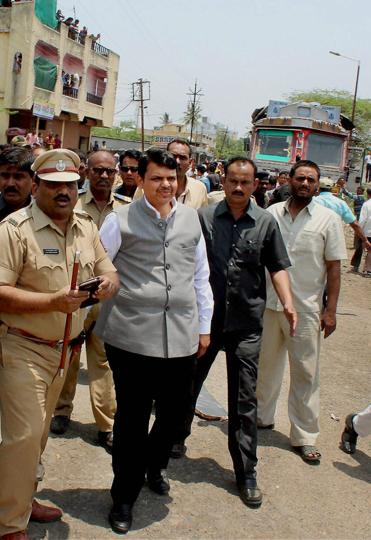
The aircraft was not old and had been flown for only 1,300 hours after its manufacture. Some experts suspect that it was a technical snag as it could not move upward while others claimed that the heat coupled with a full passenger capacity of six people on board may have caused the helicopter to malfunction.
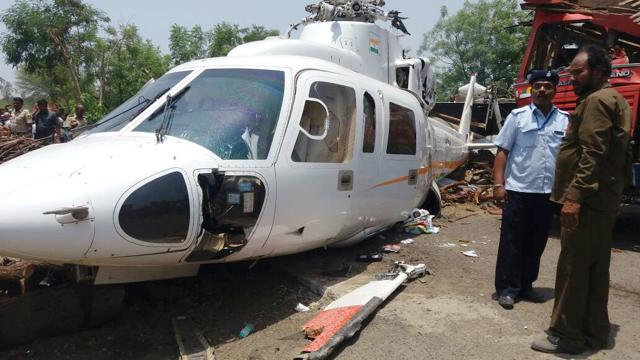
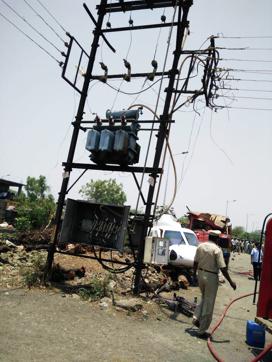
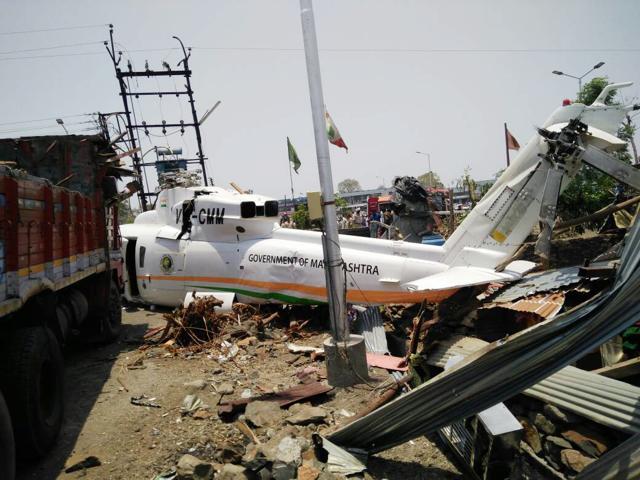
After taking off, the helicopter could not gain height but could move forward. Realising the problem, the pilot decided to land it when its blades got entangled with electricity wires and it crashed down. The Director General of Civil Aviation (DGCA) has ordered an inquiry in to the incident
The Sikorsky S-76C++, that was carrying the chief minister and three other officials along with two pilots, was bought in December 2011 at for Rs55 crore and was put into use since January.
Sources said that the crash severely damaged the helicopter. “The damage is so serious that the helicopter may not be repaired,” said a senior official not wanting to be named. A DGCA team from Delhi has also left for Latur to find out the exact cause of the incident, he added.
Uday Gelli, an aviation expert and president (western region) Rotary Wing Society of India (RWSI), said that from what he understood from the visuals from the incident, the helicopter was unable to gain height.
“Normally, after take-off as the helicopter starts going forward, it gains height. What was surprising, in this case was that the helicopter moved forward but did not gain much height,” said Gelli.
“This could be because of two reasons: either the engines were not developing enough power to pull the chopper up or the helicopter did not get enough thrust in the hot weather to pull up its weight. Not all helicopters are adapted to hot climates. Some perform well in the heat, others don’t,” he added.
Meanwhile, captain Sanjay Karve, one of the pilots of the helicopter said that a ‘variable air pressure’ or a fluctuation in the flow of wind caused the accident.
“The aircraft started coming down due to variable air pressure, we applied more power but there were electricity wires in our path. To avoid getting entangled in them, we tried to land but by then the blades had gotten entwined with the wires and we crashed down,” said Karve.