
 E-Paper



Photos: Toxic air makes matters worse during Delhi’s third Covid-19 wave
Delhi’s health minister Satyendar Jain on November 8 said that Delhi was past the peak of what is being called the “third wave” in the capital’s trajectory with Covid-19 and that aggressive testing and contact-tracing have brought to light the intensity of this contagion. Just a day prior to Jain’s statements, the Indian Medical Association shared that 13% of the increase in cases being experienced been estimated to be due to air pollution which has risen to the “severe” category in recent days.
Updated on: Nov 9, 2020 11:32 AM IST


Share via


Copy link

1/9
 View Photos in a new improved layout
Updated on Nov 9, 2020 11:32 AM
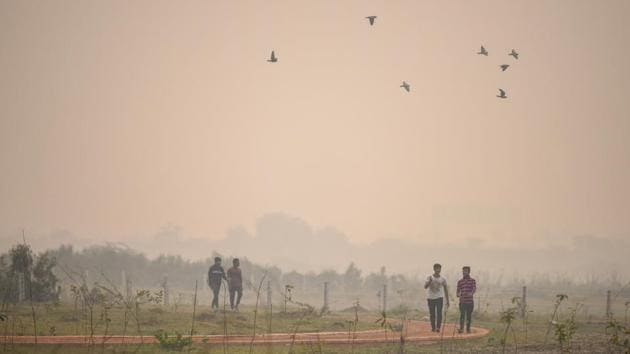
Morning walkers out on a smoggy day at Mayur Vihar in New Delhi on November 8. Delhi has been reporting nearly 7,000 new cases of the coronavirus disease (Covid-19) in recent days, and 13% of this increase has been estimated to be due to air pollution, the Indian Medical Association (IMA) said on November 7. (Amal KS / HT Photo)
2/9
 View Photos in a new improved layout
Updated on Nov 9, 2020 11:32 AM
People flouting social distancing norms while shopping at a roadside market in Inderlok, New Delhi on November 5. The IMA’s statement came on day the number of active cases or those with current Covid-19 infections crossed the 40,000 mark for the first time in the city. (Biplov Bhuyan / HT PHOTO)
3/9
 View Photos in a new improved layout
Updated on Nov 9, 2020 11:32 AM
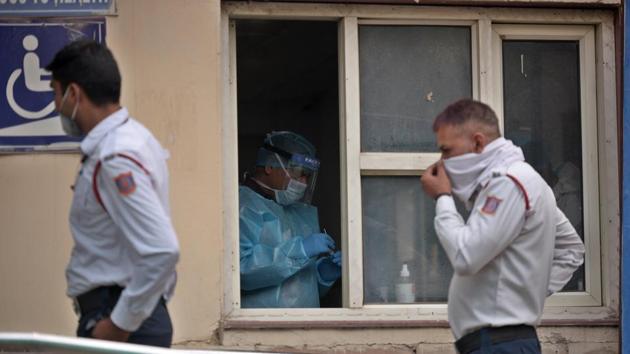
Traffic police personnel are tested for coronavirus infection in Karol Bagh, New Delhi on November 6. As per data shared by the Union Health Ministry on November 8, Delhi is leading the list of 10 states that are contributing 77% of the new Covid-19 cases daily. The Delhi high court had last week said Delhi was on its way to become the “corona capital of the country.” (Raj K Raj / HT Photo)
4/9
 View Photos in a new improved layout
Updated on Nov 9, 2020 11:32 AM
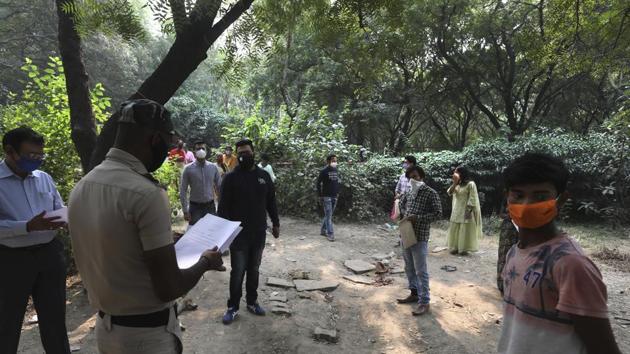
A police volunteer hands out Covid-19 test results in New Delhi on November 6. Meanwhile, Delhi Health Minister Satyendar Jain said while speaking to the media on November 7 that the national capital had hit the peak of its third wave of Covid-19 and the number of cases suggests it has been the worst so far. He added that “cases will come down soon.” (Manish Swarup / AP)
5/9
 View Photos in a new improved layout
Updated on Nov 9, 2020 11:32 AM
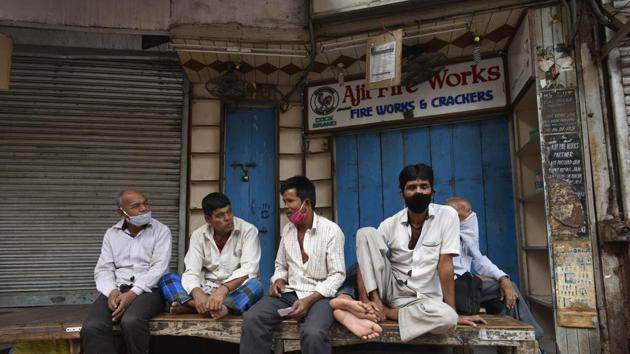
Workers bide time outside a shuttered firecracker shop after the Delhi government banned their sale ahead of Diwali in New Delhi on November 8. Jain also called out people’s laxity in adhering to Covid-19 safe behaviour and urged them to treat the mask as the only medicine till a vaccine is available. (Vipin Kumar / HT Photo)
6/9
 View Photos in a new improved layout
Updated on Nov 9, 2020 11:32 AM
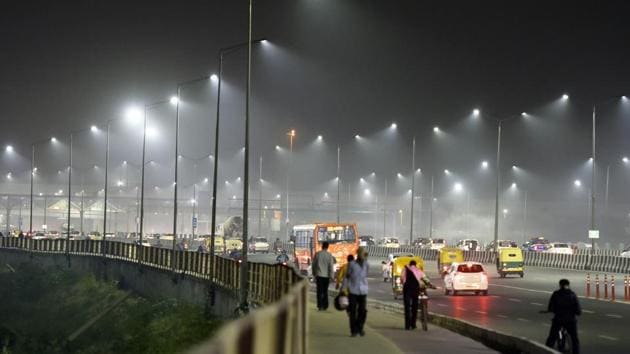
Pedestrians and vehicular traffic near Akshardham Temple on a hazy evening in the capital on November 7. Over the last 10 days, the national capital region has seen a sharp spike in air pollution levels. According to the Central Pollution Control Board’s (CPCB), Delhi’s overall air quality index (AQI) remained in the “severe” category recorded at 426 on November 8. (Sanjeev Verma / HT Photo)
7/9
 View Photos in a new improved layout
Updated on Nov 9, 2020 11:32 AM
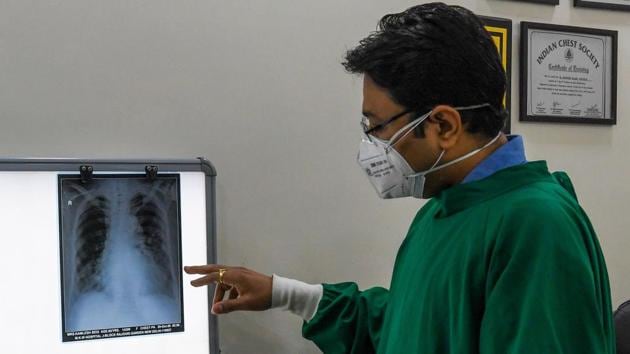
Lung specialist Davinder Kundra checks an x-ray of a patient at his Breathe Better clinic in New Delhi on November 5. Poor air quality may result in the aggravation of asthma, COPD, high BP and even cardiovascular diseases. Merely walking could result in health complications due to the high concentration of particulate matter (PM) 2.5 in Delhi’s air. (Prakash Singh / AFP)
8/9
 View Photos in a new improved layout
Updated on Nov 9, 2020 11:32 AM
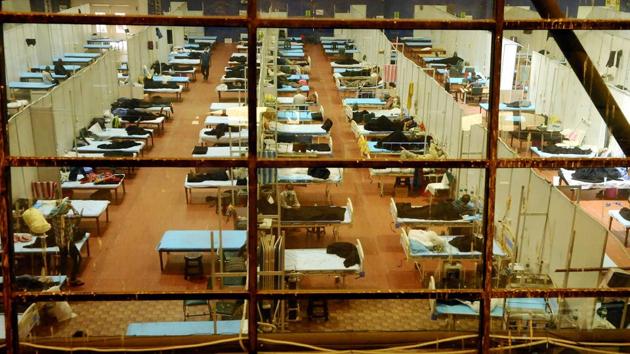
Patients recuperate at the a Covid-19 Care Centre in New Delhi on November 7. Health minister Satyendar Jain attributed the increase in the capital’s number of cases to aggressive testing and contact-tracing. The government has increased the number of beds for Covid-19 patients in hospitals in Delhi, but there is no plan to rope in hotels and banquet halls, Jain said. (PTI)
9/9
 View Photos in a new improved layout
Updated on Nov 9, 2020 11:32 AM


