
 E-Paper



Photos: On the Amarnath Yatra trail in Kashmir’s Himalayas
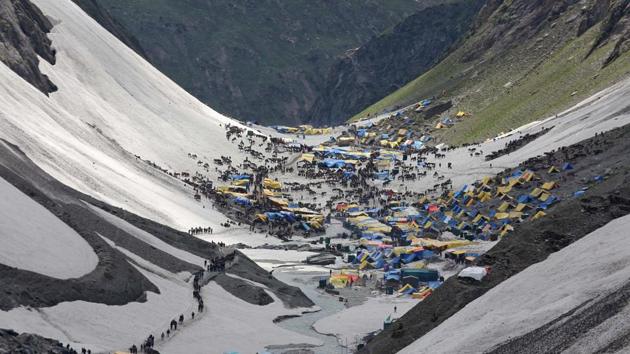
Thousands of Hindu pilgrims began the arduous trek to an icy Himalayan cave in Kashmir on Monday July 1, 2019, with as many as 40,000 Indian security forces guarding roads and mountain passes along the two pilgrimage routes. The Amarnath cave is covered with snow most of the year except for a short period in summer when it is open for the pilgrims. Hindus worship a stalagmite inside the cave as an incarnation of Shiva, the Hindu god of destruction and regeneration. As many as 8000 pilgrims have taken the two routes leading to the shrine each day since the 45-day long pilgrimage period began.
Updated on: Jul 04, 2019 4:40 PM IST

Share via


Copy link

1/10
 View Photos in a new improved layout
Updated on Jul 04, 2019 4:40 PM
Hindu pilgrims arrive to worship at the holy cave of Lord Shiva in Amarnath, southeast of Srinagar on July 2, 2019. With a view of snowy peaks on their way, more than 200,000 pilgrims are expected to visit the cave during the 45-day pilgrimage that began on July 1 this year. (Mukesh Gupta / REUTERS)
2/10
 View Photos in a new improved layout
Updated on Jul 04, 2019 4:40 PM
Hindu pilgrims descend the holy cave after worshipping in Amarnath. The worshippers approach the hallowed mountain cave, the Amarnath shrine, through two routes, a traditional one via the southern hill resort of Pahalgam and a shorter one through northeastern Baltal. Some also use helicopter services to pay quick obeisance. (Mukesh Gupta / REUTERS)
3/10
 View Photos in a new improved layout
Updated on Jul 04, 2019 4:40 PM
Chinar Corps Commander Lt Gen KJS Dhillon (C) along with Maj Gen JP Mathew (L) and Maj Gen A Sengupta (R) at the Amarnath cave on Monday. More than 8,000 pilgrims paid obeisance Day 1 with Jammu and Kashmir Governor Satya Pal Malik participating in the ‘Pratham Pooja’ (first prayer) inside the 3880-metre high cave shrine and praying for peace in the state. (ANI)
4/10
 View Photos in a new improved layout
Updated on Jul 04, 2019 4:40 PM
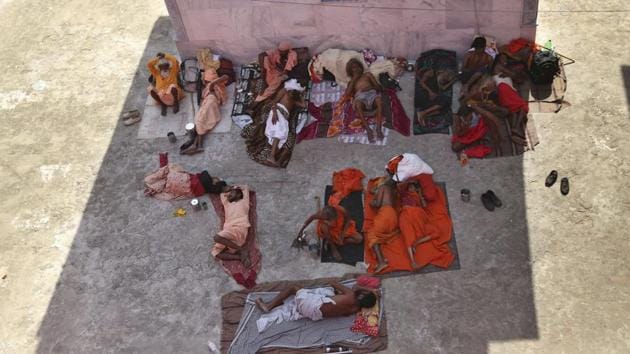
Hindu holy men take rest at a base camp for the annual pilgrimage in Jammu on July 1, 2019. The pilgrims, many of them barefooted ascetics, chanted hymns and rang bells as they travelled through forested areas in Kashmir’s Himalayas. (Channi Anand / AP)
5/10
 View Photos in a new improved layout
Updated on Jul 04, 2019 4:40 PM
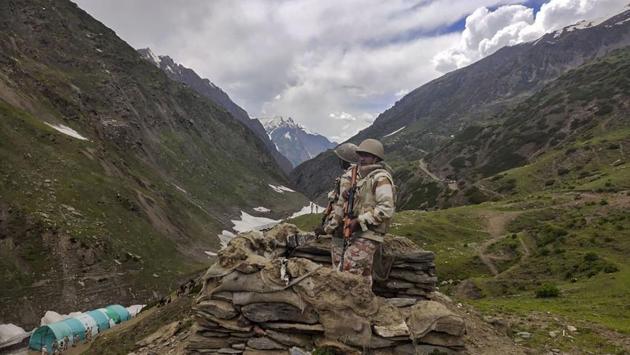
Indo-Tibetan Border Police personnel stand guard the route to the cave shrine of Amarnath, in Ganderbal district of Jammu and Kashmi. At least 40,000 police and soldiers have been deployed to guard the pilgrimage. Carrying automatic rifles and wearing flak jackets, they have set up checkpoints, barricades and temporary camps along the routes. (PTI)
6/10
 View Photos in a new improved layout
Updated on Jul 04, 2019 4:40 PM
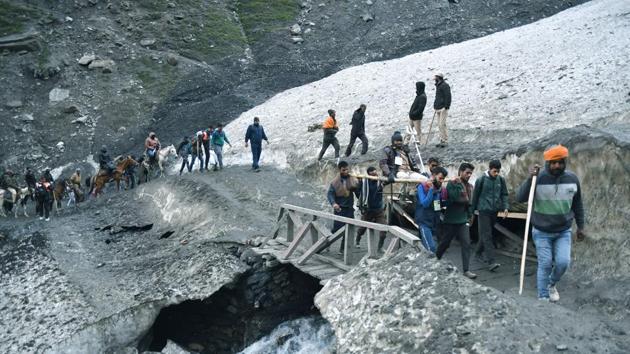
Pilgrims cross a mountain trail during their journey to the Amarnath shrine from the Baltal route. Over 1.5 lakh pilgrims from across the country have so far registered themselves for the pilgrimage which will conclude on August 15, a full-moon night that Hindus say commemorates Shiva revealing the secret of the creation of the universe. (ANI)
7/10
 View Photos in a new improved layout
Updated on Jul 04, 2019 4:40 PM
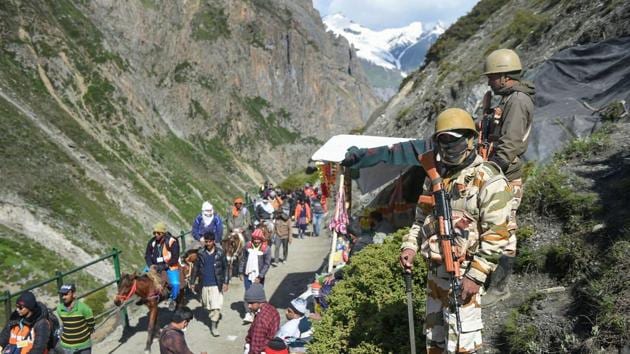
Security personnel stand guard as the first batch of pilgrims en route Amarnath passes them, at Baltal. The Amarnath cave is covered with snow most of the year except for a short period in summer when it is open for passage. Hindus worship a stalagmite inside the cave as an incarnation of Shiva, the Hindu god of destruction and regeneration. (S Irfan / PTI)
8/10
 View Photos in a new improved layout
Updated on Jul 04, 2019 4:40 PM
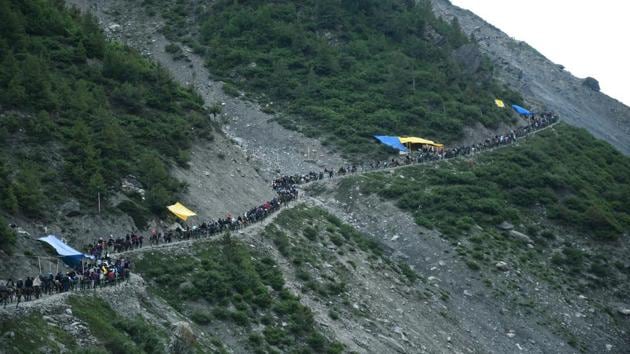
Pilgrims zig-zag along the mountain trail from the Baltal route. The yatra has not been without incidents of violence targeting pilgrims. In 2017, gunmen sprayed bullets at a bus carrying Hindu pilgrims in the region, killing at least seven people, including six women, and wounding 19 others as they returned from the cave shrine. (ANI)
9/10
 View Photos in a new improved layout
Updated on Jul 04, 2019 4:40 PM
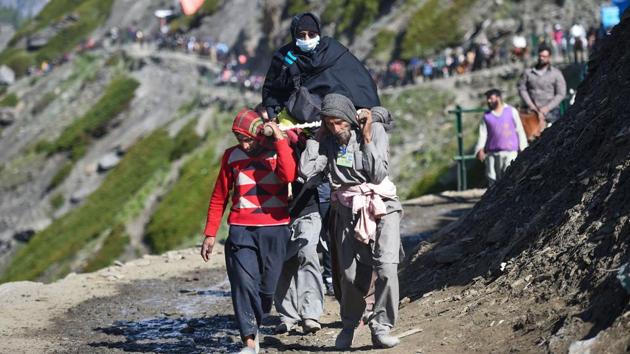
A woman devotee is carried on a palanquin as pilgrims move towards the cave shrine. Old people and children rode ponies on Monday. In 2000, gunmen struck in the Pahalgam area and killed 30 people, including some local porters who carry the pilgrims’ baggage on the mountain path. (S Irfan / PTI)
10/10
 View Photos in a new improved layout
Updated on Jul 04, 2019 4:40 PM