
 E-Paper



Photos: Delhi struggles with smog; air quality ‘very poor’
As winter hits Delhi, a high level of moisture in the air has trapped dust particles resulting in an atmosphere clouded with a thick layer of smog. Prolonged exposure to pollution causing particles can lead to various respiratory and heart diseases.
Updated on: Nov 03, 2017 1:12 PM IST

Share via


Copy link

1/10
 View Photos in a new improved layout
Updated on Nov 03, 2017 1:12 PM
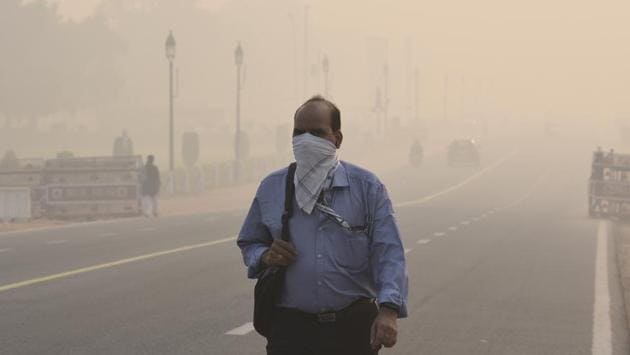
Thick smog and pollution covered Rajpath after Diwali celebrations in New Delhi. Every year as the mercury levels dip, Delhi’s atmosphere is cloaked with thick smog, a constant reminder of the pollution that the city emits and inhales. On Tuesday, monitoring stations across the national capital recorded the air quality as ‘very poor’ as visibility fell below one kilometre. (Arvind Yadav / HT Photo)
2/10
 View Photos in a new improved layout
Updated on Nov 03, 2017 1:12 PM
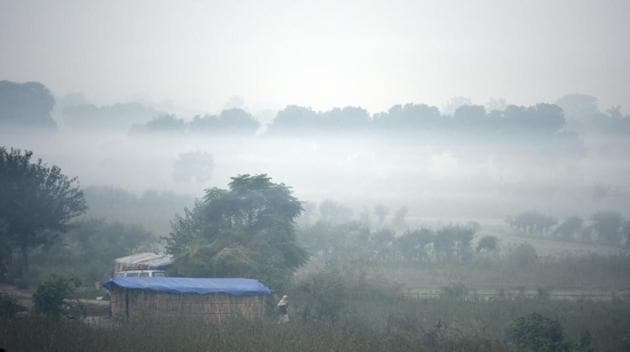
A view of the atmosphere shrouded with smog at Mayur Vihar in New Delhi. Moisture levels as high as 96% added to the problem. According to the India Meteorological Department (IMD), ‘The high moisture level is increasing the pollution load because particles are getting trapped in the air.’ (Sushil Kumar/ HT Photo)
3/10
 View Photos in a new improved layout
Updated on Nov 03, 2017 1:12 PM
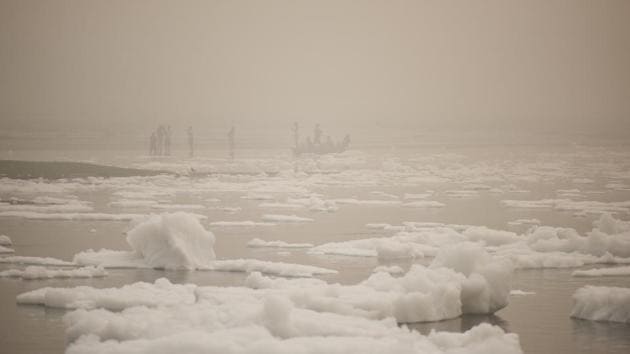
Fishermen in the Yamuna river lay down fishing nets engulfed in haze. Every year, Delhi’s air quality starts to worsen with the onset of winter, as weather conditions facilitate concentration of toxic gases and ultra-fine particles. (Burhaan Kinu / HT Photo)
4/10
 View Photos in a new improved layout
Updated on Nov 03, 2017 1:12 PM
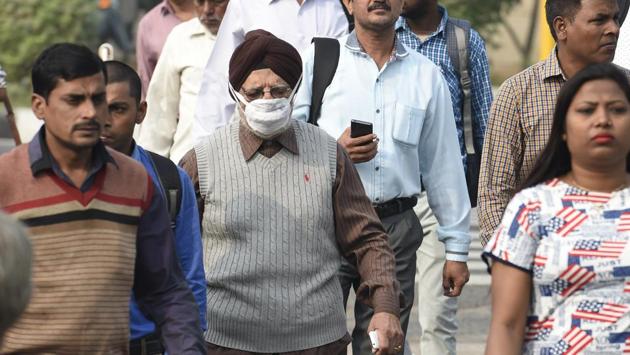
A man wears air a pollution mask as a precautionary measure to minimise the impact of toxic air at ITO crossing, New Delhi. Prolonged exposure to these particles can cause respiratory and heart diseases. The WHO has declared polluted air a carcinogen. (Arvind Yadav / HT Photo)
5/10
 View Photos in a new improved layout
Updated on Nov 03, 2017 1:12 PM
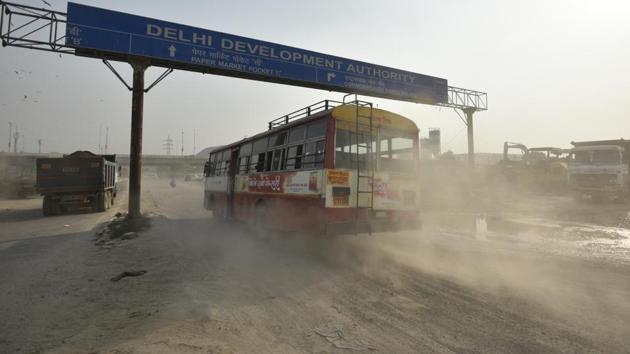
A wave of dust emerges from a road construction site at NH-24. Experts say vehicular emissions and stubble burning by farmers in neighbouring states are primary reasons for the capital’s poor air. Dust particles and construction activity, also contribute to the problem. (Ravi Choudhary/HT PHOTO)
6/10
 View Photos in a new improved layout
Updated on Nov 03, 2017 1:12 PM
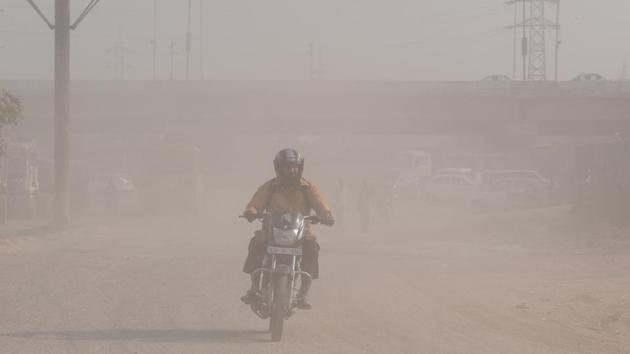
A motorist rides through a dust filled landscape in Gazipur, New Delhi. A Graded Response Action Plan to combat air pollution came into force for the first time last month, which involved taking measures such as bans on garbage burning and firecrackers, closing brick kilns and mechanised sweeping of roads as air quality turned from ‘moderate’ to ‘poor’ (Ravi Choudhary/HT PHOTO)
7/10
 View Photos in a new improved layout
Updated on Nov 03, 2017 1:12 PM
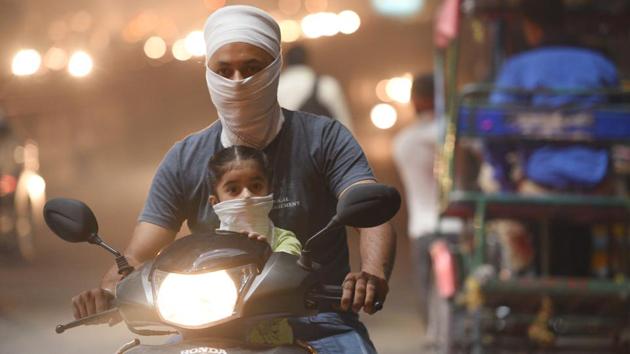
People cover their face with scarfs to minimise the impact of toxic air, engulfed in a cloud of pesticide during a dengue prevention spraying session at Pandav Nagar in New Delhi. (Raj K Raj / HT Photo)
8/10
 View Photos in a new improved layout
Updated on Nov 03, 2017 1:12 PM
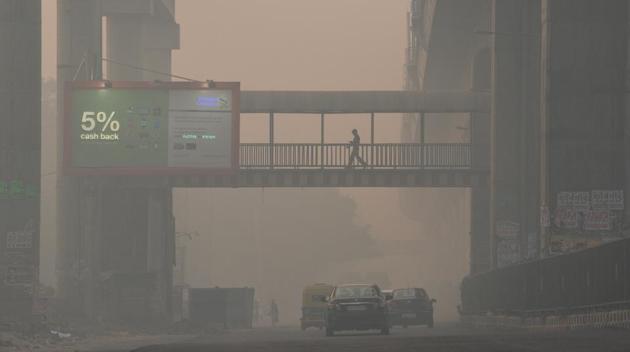
Smog envelops the national capital after Diwali at Moti Bagh. Although experts said there was a substantial decline in bursting of firecrackers when compared to Diwali 2016, a statement issued by the Ministry of Earth Sciences’ System of Air Quality and Weather Forecasting And Research (SAFAR) insisted that prevalent pollution levels give no such indication. (Sanchit Khanna / HT Photo)
9/10
 View Photos in a new improved layout
Updated on Nov 03, 2017 1:12 PM
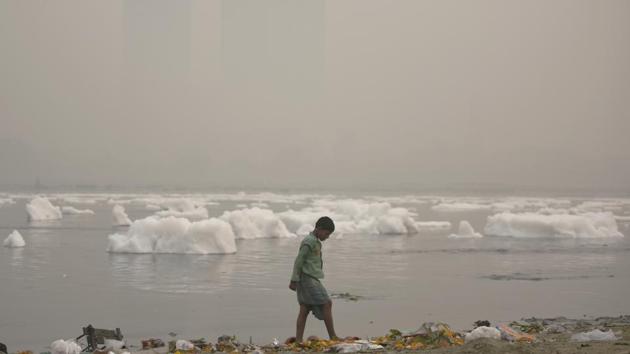
A boy searches for coins on the banks of the Yamuna on a hazy morning in New Delhi. With Delhi-NCR air quality varying between ‘severe’ and ‘very poor’, and stubble burning unabated in neighbouring states, major city hospitals saw a spike, with some registering a 25% hike in patients complaining of respiratory issues. (Burhaan Kinu / HT Photo)
10/10
 View Photos in a new improved layout
Updated on Nov 03, 2017 1:12 PM