
 E-Paper



Keeping old traditions alive: Turkey’s annual camel wresting festival
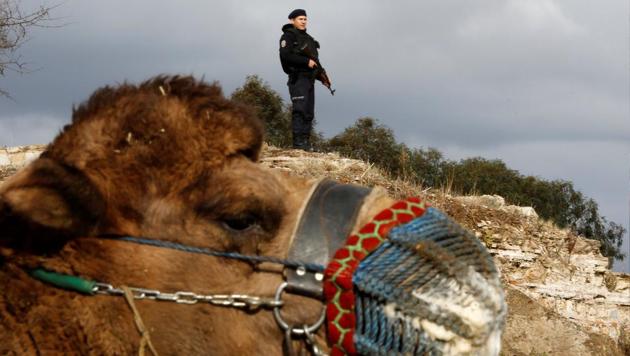
Turkish town Selcuk, near Izmir, hosted its annual Camel Wrestling Festival , a tradition that has continued for over 2,000 years. A riot police officer stands guard at the Pamucak arena during the festival. (Murad Sezer/REUTERS)
Published on: Jan 16, 2017 3:26 PM IST

Share via


Copy link

1/14
 View Photos in a new improved layout
Published on Jan 16, 2017 3:26 PM
Turkish town Selcuk, near Izmir, hosted its annual Camel Wrestling Festival , a tradition that has continued for over 2,000 years. A riot police officer stands guard at the Pamucak arena during the festival. (Murad Sezer/REUTERS)
2/14
 View Photos in a new improved layout
Published on Jan 16, 2017 3:26 PM
Almost 150 camels and their owners are participating at the event, which draws tourists and revellers from around the world. (Murad Sezer/REUTERS)
3/14
 View Photos in a new improved layout
Published on Jan 16, 2017 3:26 PM
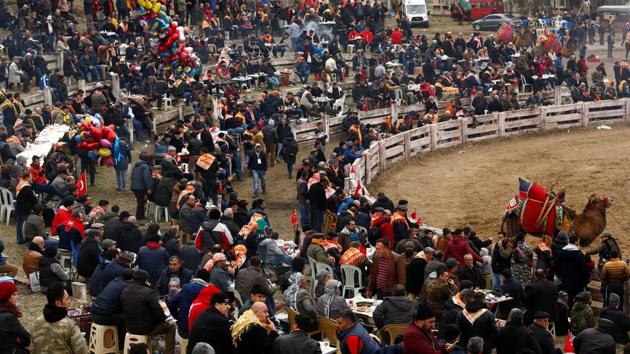
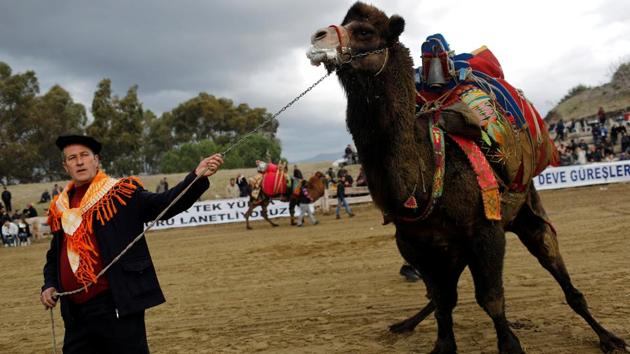
A wrestling camel is paraded before a fight at the Pamucak arena. The camels are bred for wrestling and are trained over the years. (Murad Sezer/REUTERS)
4/14
 View Photos in a new improved layout
Published on Jan 16, 2017 3:26 PM
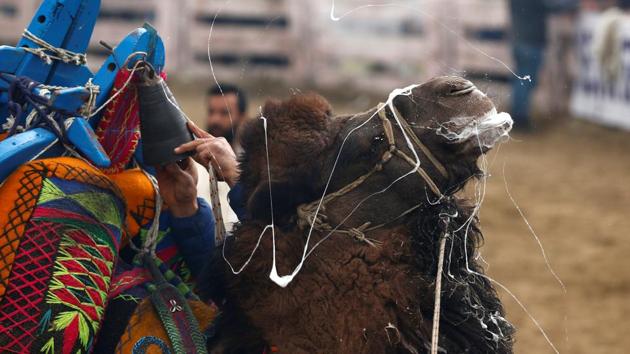
A wrestling camel after a fight during the Camel Wrestling Festival in Selcuk, Turkey. Camel wrestling is now mostly restricted to the Aegean region though it was once more widespread in Anatolia. (Murad Sezer/REUTERS)
5/14
 View Photos in a new improved layout
Published on Jan 16, 2017 3:26 PM
Spectators gather at the Pamucak arena to watch a fight at the Camel Wrestling Festival. (Murad Sezer/REUTERS)
6/14
 View Photos in a new improved layout
Published on Jan 16, 2017 3:26 PM
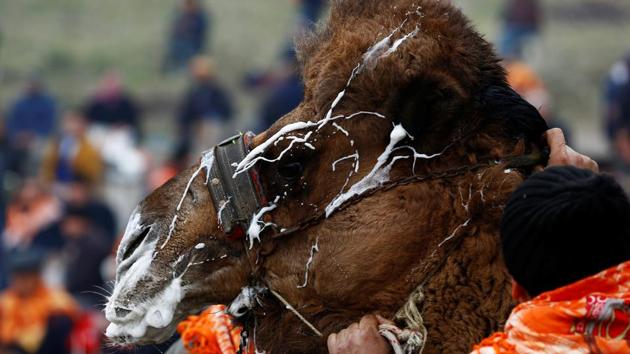
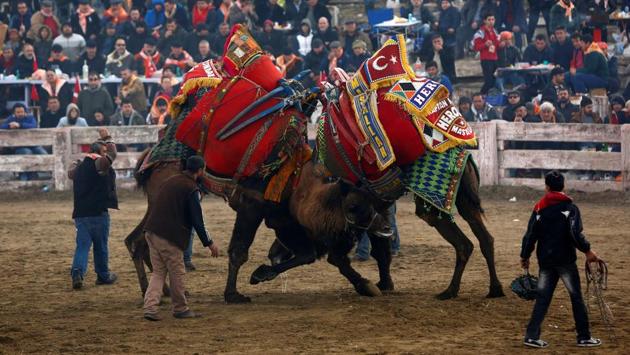
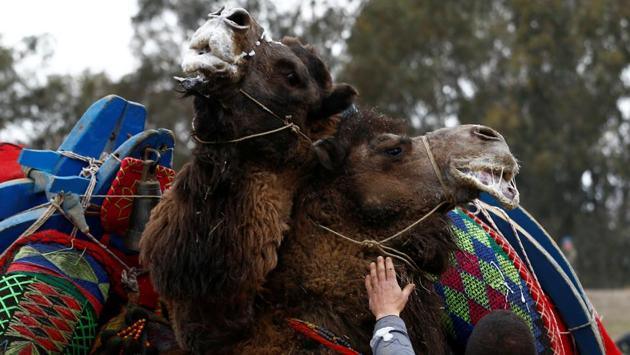
Throughout the event, bets are placed on camels who try to wrestle each other to the ground with their long necks. (Murad Sezer/REUTERS)
7/14
 View Photos in a new improved layout
Published on Jan 16, 2017 3:26 PM
Although this isn’t a blood sport, more and more tourists journey to Selcuk every year to watch this unusual spectacle unfold. (Murad Sezer/REUTERS)
8/14
 View Photos in a new improved layout
Published on Jan 16, 2017 3:26 PM
At the beginning of each year, a female camel is paraded in front of the male participants to get the festival started, a tradition dating back to over 2400 years. (Murad Sezer/REUTERS)
9/14
 View Photos in a new improved layout
Published on Jan 16, 2017 3:26 PM
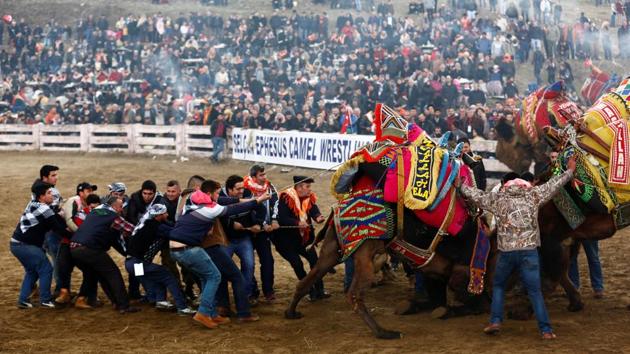
Two wrestling camels fight during the Camel Wrestling Festival in the Aegean town of Turkey. If the animals become too violent, they are separated by handlers. (Murad Sezer/REUTERS)
10/14
 View Photos in a new improved layout
Published on Jan 16, 2017 3:26 PM
Spectators enjoy the camel wrestling, and the arenas resemble big outdoor parties, with food, beverages and balloons. (Murad Sezer/REUTERS)
11/14
 View Photos in a new improved layout
Published on Jan 16, 2017 3:26 PM
At each match, depending on attendance, there are usually extra activities to keep you entertained such as a village band or food stalls. (Murad Sezer/REUTERS)
12/14
 View Photos in a new improved layout
Published on Jan 16, 2017 3:26 PM
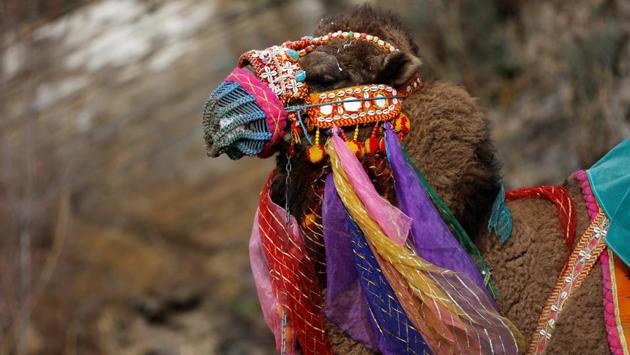
Before the wrestling bouts begin, the camels are decked up in colour and paraded. A wrestling camel adorned with colourful ornaments waits for his fight. (Murad Sezer/REUTERS)
13/14
 View Photos in a new improved layout
Published on Jan 16, 2017 3:26 PM
Owners and tether holders separate the animals after a wrestling camel is knocked down by its rival. (Murad Sezer/REUTERS)
14/14
 View Photos in a new improved layout
Published on Jan 16, 2017 3:26 PM