
 E-Paper



Photos | 100 years since World War One: Life in the trenches
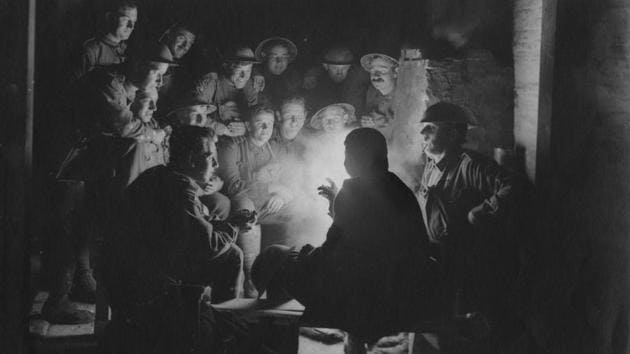
Trenches are most often associated with World War I. In the face of dramatically advancing technology which included howitzers, machine guns and tanks, frontal attacks like in centuries of wars before meant courting massive casualties. Entrenchment then became a primary tactic, employed on the Western Front, an area of northern France and Belgium that saw combat between German troops and Allied forces from France, Great Britain and, later, the United States. With troops spending a considerable amount of time in them, trenches also lent themselves to images capturing pauses between the fighting of the Great War. Moments of calm, rallying up morale and often assessing the damage.
Updated on: Nov 09, 2018 2:04 PM IST

Share via


Copy link

1/13
 View Photos in a new improved layout
Updated on Nov 09, 2018 2:04 PM
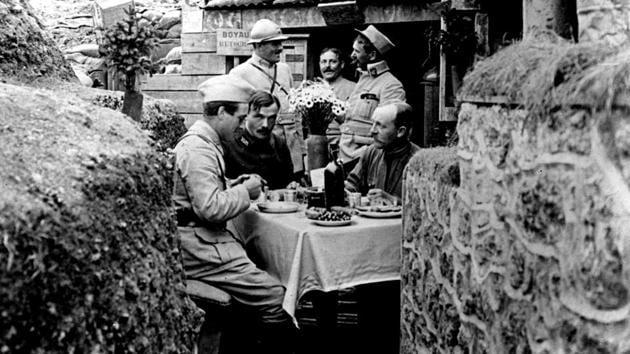
This undated image shows French officers dining in a trench near the front line. The table setting, despite circumstances, manages to find place for a bottle of wine and a floral centrepiece. (Hulton Archive / Getty Images)
2/13
 View Photos in a new improved layout
Updated on Nov 09, 2018 2:04 PM
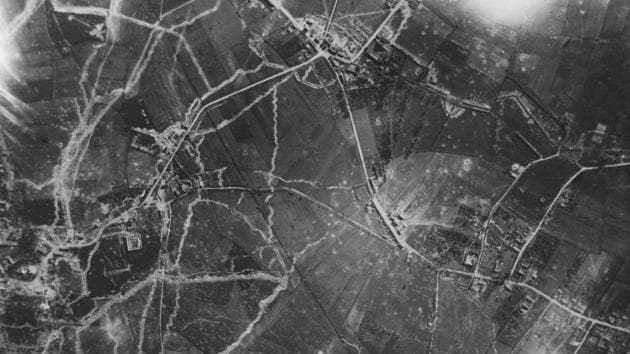
An aerial reconnaissance photograph of trench networks at Le Plantin, ‘Windy Corner.’ As the war progressed, serpentine trenches led to stalemates on both sides. With no open flanks left, putting faith in a dash became an inevitable tactic on the ground. (Hulton Archive / Getty Images)
3/13
 View Photos in a new improved layout
Updated on Nov 09, 2018 2:04 PM
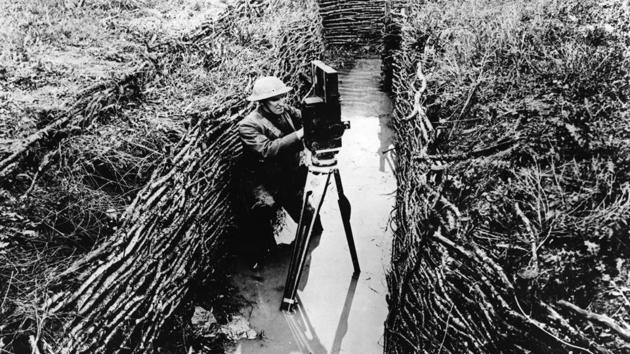
An American cinematographer sets up his camera in a water-filled trench. With most nations new to the effects of cinema during this period, trenches provided a safe location for early experiments in war propaganda and manipulating emotions towards the war effort through newsreels. (Hulton Archive / Getty Images)
4/13
 View Photos in a new improved layout
Updated on Nov 09, 2018 2:04 PM
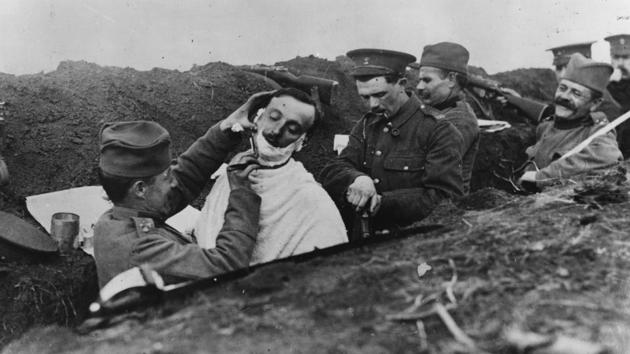
Circa 1916: A soldier gets a shave in a Serbian trench. Daytime was most often quiet on the front, snipers or artillery making movement perilous. The hours were utilised instead for humdrum routine work --the maintenance of barbed wire, general trench upkeep, or as pictured here. (Hulton Archive / Getty Images)
5/13
 View Photos in a new improved layout
Updated on Nov 09, 2018 2:04 PM
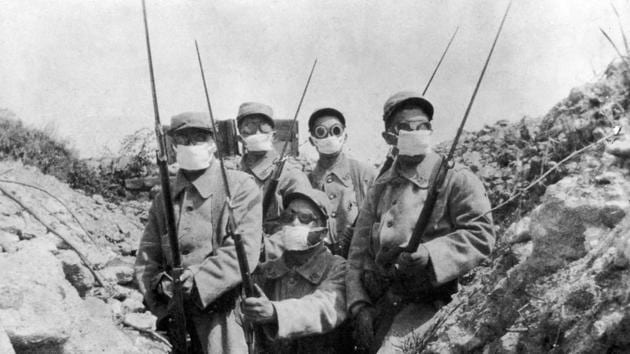
Circa 1915: French troops wearing an early form of gas masks during the 2nd Battle of Ypres, still unsure of the effectiveness of poison gas. Trenches made long range and remote attacks more feasible. Chemical warfare --the use of mustard gas, chlorine and phosgene featured --prominently in the first global war. (Hulton Archive / Getty Images)
6/13
 View Photos in a new improved layout
Updated on Nov 09, 2018 2:04 PM
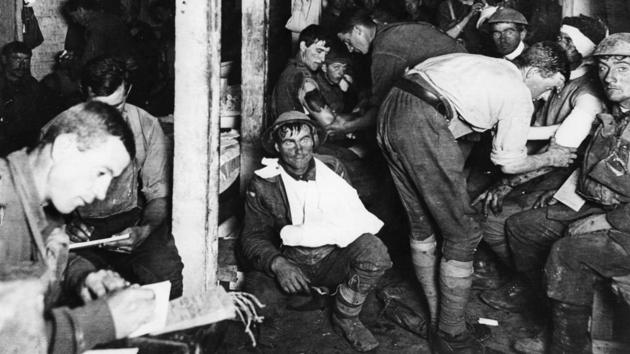
British tommies relaxing while others have their wounds treated in an underground forward dressing station by the Menin Road in France. (Frank Hurley / Three Lions / Getty Images)
7/13
 View Photos in a new improved layout
Updated on Nov 09, 2018 2:04 PM
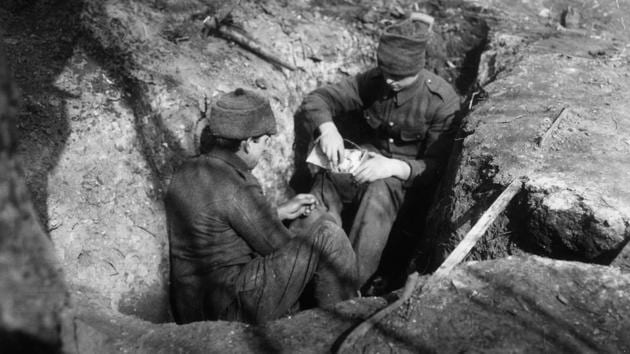
Circa 1915: British soldiers making grenades from tins in the trenches. The hand grenade and its variants became a favourite among troops on rotation in trenches. Requiring minimal accuracy or exposure to oncoming fire, both sides were quick to raise specialist grenadier regiments. (Hulton Archive / Getty Images)
8/13
 View Photos in a new improved layout
Updated on Nov 09, 2018 2:04 PM
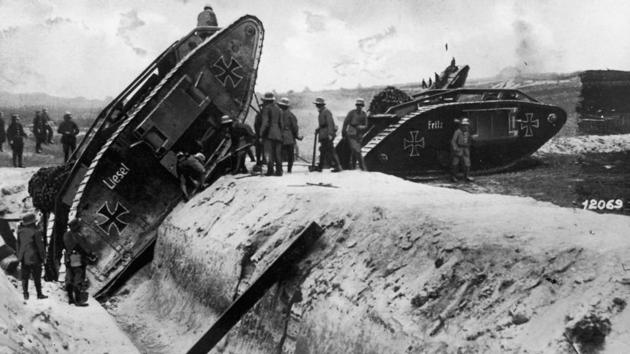
Circa 1917: Germans test the climbing powers of captured British tanks, redecorated in German colours. The development of tanks by the British was a direct response to the stalemate of trenches. Rhomboid tracks on early tanks were meant to overcome barbed wire and cross enemy lines. The Battle of Somme in 1916 was also the first deployment of the tank. (General Photographic Agency / Getty Images)
9/13
 View Photos in a new improved layout
Updated on Nov 09, 2018 2:04 PM
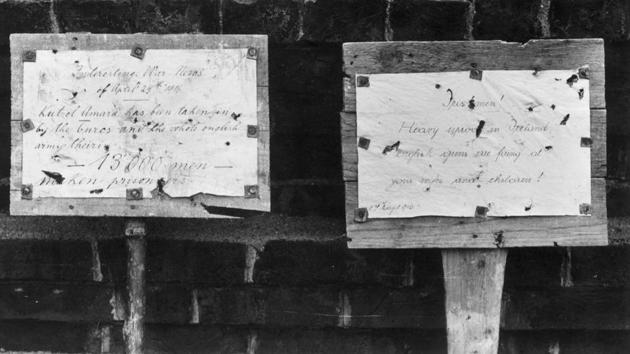
1916: Handwritten signs in a captured German trench inform the Munster Regiment of British troops, of the Easter Rising in Dublin and the capture of 13,000 soldiers at Kut-al-Imara by Ottoman forces, the latter considered the most abject capitulation in British military legacy by historians. (Central Press / Getty Images)
10/13
 View Photos in a new improved layout
Updated on Nov 09, 2018 2:04 PM
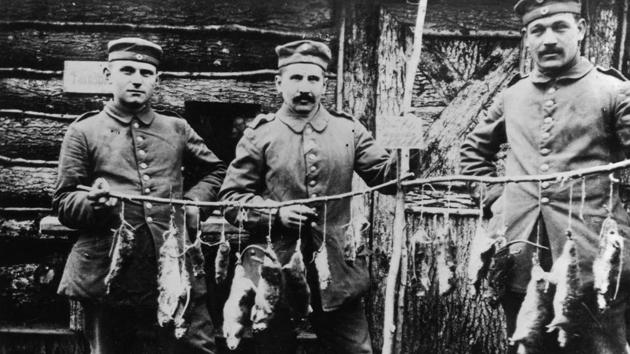
Three German soldiers display rats killed in their trench the previous night. (Faber / Getty Images)
11/13
 View Photos in a new improved layout
Updated on Nov 09, 2018 2:04 PM
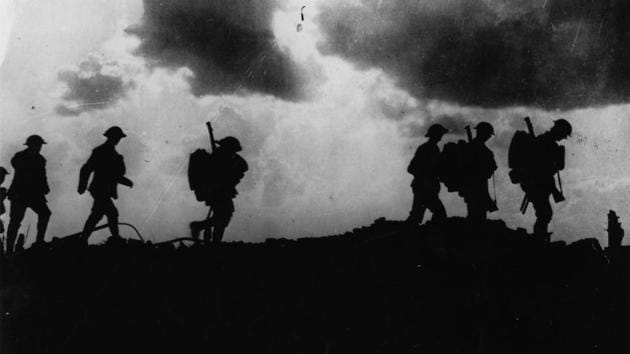
British troops moving up to the trenches, 2.5 miles East of Ypres on October 5, 1917. As months and then years passed, the trench grew into a symbol of the futility of war. A popular image of the war became that of men leaping out, advancing to near-certain death in a maelstrom of fire. (Hulton Archive / Getty Images)
12/13
 View Photos in a new improved layout
Updated on Nov 09, 2018 2:04 PM
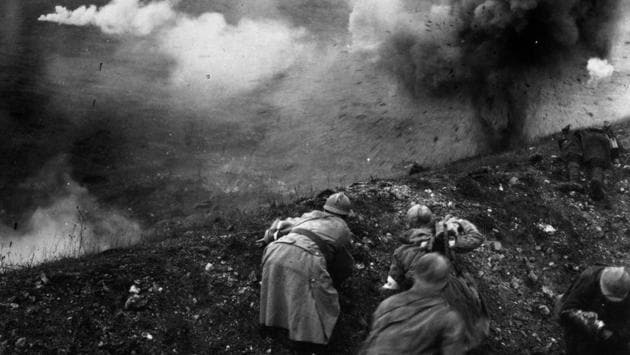
French troops under shellfire during the Battle of Verdun. Both sides firmly dug in place, advancement came either under the cover of night or offensive shellfire. Machine guns and mortar fire spelt casualties either way for soldiers leaving the trench, like in the Battle of Somme for the British and at Verdun for the French. (General Photographic Agency / Getty Images)
13/13
 View Photos in a new improved layout
Updated on Nov 09, 2018 2:04 PM