
 E-Paper



Photos: Anonymous bones of Guatemala’s civil war dead laid to rest
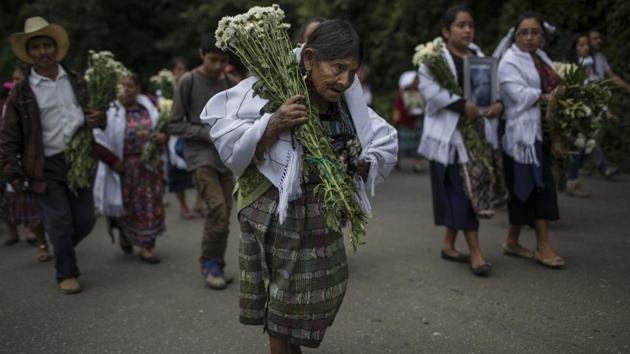
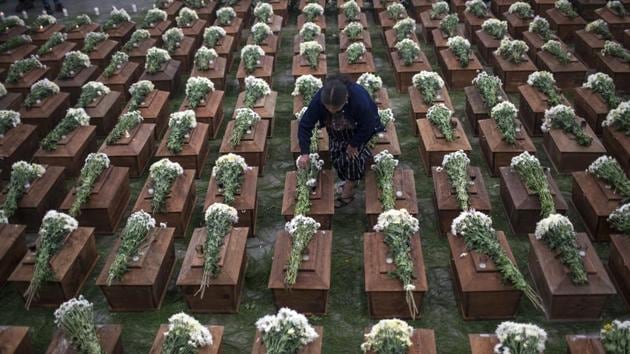
In a small rural town, the anonymous remains of some of the tens of thousands who disappeared during Guatemala's long and bloody civil war can finally rest in peace. Women from the village of San Juan Comalapa, about 80 km west of Guatemala City, spent years saving money and raising donations to buy a plot of land for burials where an army camp once stood. On a recent day a truck rolled past with 172 coffins strapped to the flatbed. They were smaller than normal coffins, containing just collections of bones rather than whole skeletons. Women carried bouquets of flowers in a solemn procession behind the truck.
Updated on: Jul 13, 2018 11:12 AM IST

Share via


Copy link

1/13
 View Photos in a new improved layout
Updated on Jul 13, 2018 11:12 AM
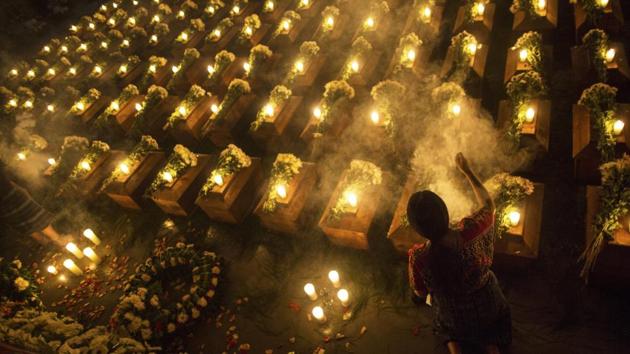
A woman spreads incense over coffins holding the remains of 172 unidentified people who were discovered buried at what once was a military camp in San Juan Comalapa, Guatemala, one day before their formal burial at the same site where they were discovered. (Rodrigo Abd / AP)
2/13
 View Photos in a new improved layout
Updated on Jul 13, 2018 11:12 AM
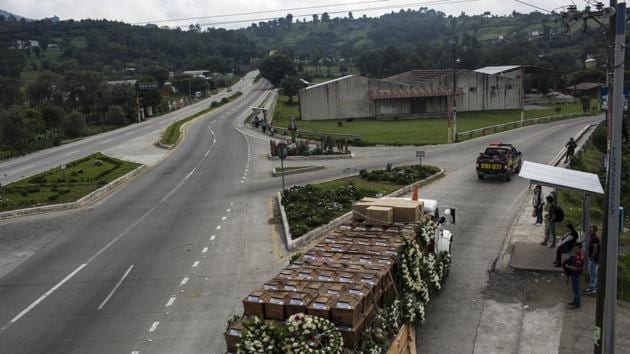
A cargo truck transports the remains of 172 unidentified people who were exhumed from a former military base in San Juan Comalapa, Guatemala. Forensic anthropologists and villagers unearthed the bodies in 2003 at the former base, where three of the graves remain open as a symbol of the massacre. (Rodrigo Abd / AP)
3/13
 View Photos in a new improved layout
Updated on Jul 13, 2018 11:12 AM
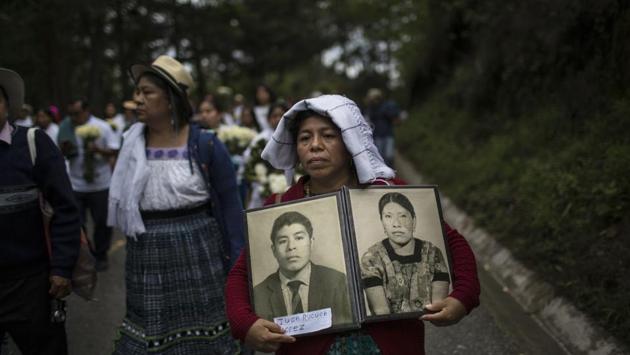
Marivel Yolanda Rucuch carries portraits of her father Juan Rucuch and aunt Virgilia Quina who were disappeared in the 1980's, allegedly by the army, during the funeral procession for 172 unidentified people. In this small rural town, the anonymous remains of some of the tens of thousands who disappeared during Guatemala’s long and bloody civil war can finally rest in peace. (Rodrigo Abd / AP)
4/13
 View Photos in a new improved layout
Updated on Jul 13, 2018 11:12 AM
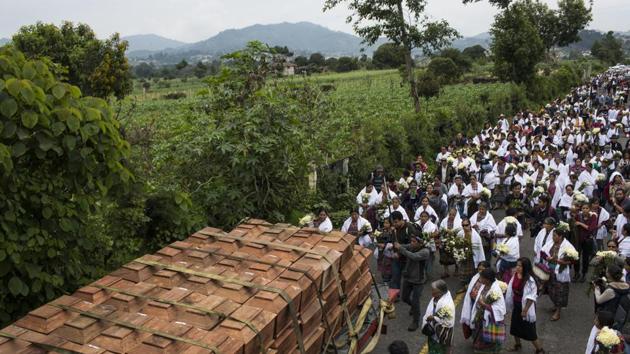
Villagers walk behind coffins. Women from the village of San Juan Comalapa, 80 kilometers west of Guatemala City, spent years saving money and raising donations to buy a plot of land where an army camp once stood. During the 1960-1996 conflict, people from across the country were abducted and brought here by soldiers, then were tortured, killed and buried in mass graves. (Rodrigo Abd / AP)
5/13
 View Photos in a new improved layout
Updated on Jul 13, 2018 11:12 AM
The United Nations has documented the disappearance of 45,000 people during the 36 years of civil war in Guatemala, and the murder of another 200,000. Since 2003, forensic anthropologists have dug up at least 220 individual remains, but only about a quarter could be matched to relatives. Those unidentified have now been interred at the forest location. (Rodrigo Abd / AP)
6/13
 View Photos in a new improved layout
Updated on Jul 13, 2018 11:12 AM
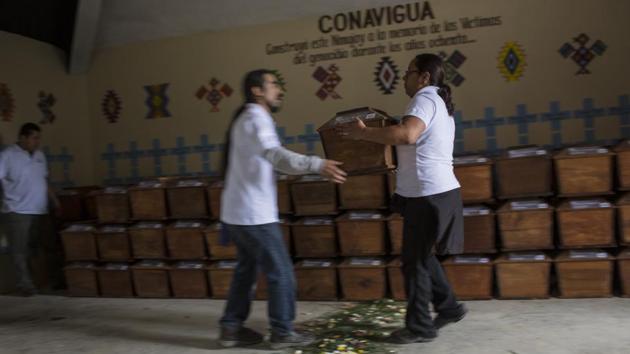
Forensic anthropologists organize the remains of the unidentified people. At the site now stands a large house, or "nimajay" in the Kakchikel language, a place of memory where crosses carry the names of the disappeared. Murals tell the story of what happened here, as revealed to the women in dreams and interpreted by artists hired to give their visions form. (Rodrigo Abd / AP)
7/13
 View Photos in a new improved layout
Updated on Jul 13, 2018 11:12 AM
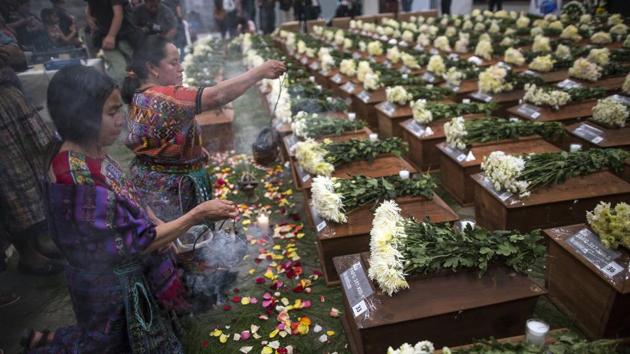
Women burn incense before the remains during a funeral ceremony in San Juan Comalapa, Guatemala. It is through art that “we can reclaim the victims’ existence” and educate young people born after the war, said Uriela Cumes, one of the Kakchikel artists involved in the project. (Rodrigo Abd / AP)
8/13
 View Photos in a new improved layout
Updated on Jul 13, 2018 11:12 AM
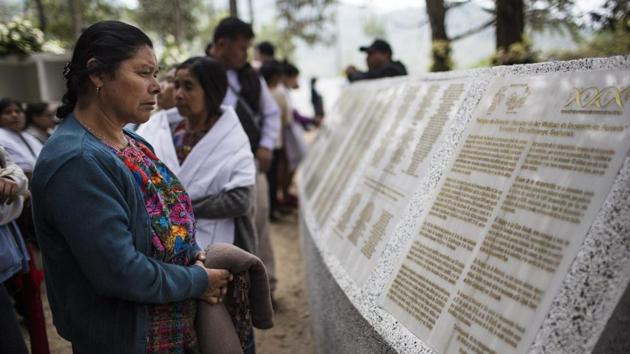
A woman reads the names of people who disappeared during the civil war, at the site where a military camp once operated. The previous night, in the center of town, women had put grass and flower petals on the cement floor of a community center as they blessed the coffins with prayers and incense. (Rodrigo Abd / AP)
9/13
 View Photos in a new improved layout
Updated on Jul 13, 2018 11:12 AM
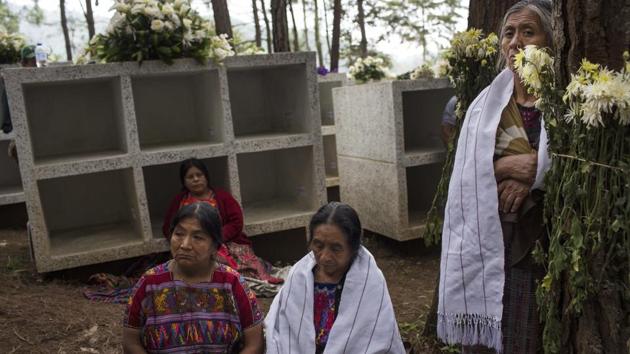
Women attend the funeral ceremony. A place is also reserved for renowned US anthropologist Clyde Snow, who worked on disappearances in Guatemala before his own death in 2014. “He asked in his will for his remains to rest here in Comalapa,” said Rosalina Tuyuc, who lost her husband and father and came to lead a national organization of Kakchikel widows demanding justice. (Rodrigo Abd / AP)
10/13
 View Photos in a new improved layout
Updated on Jul 13, 2018 11:12 AM
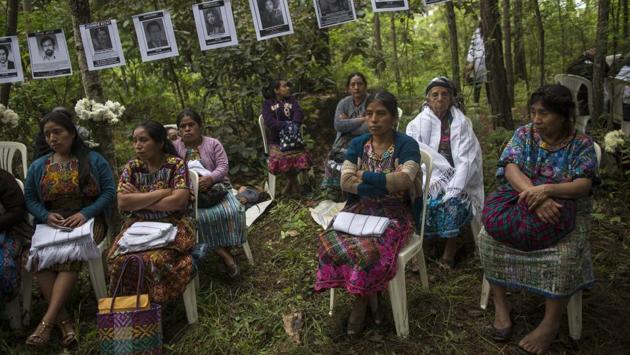
Women sit under the portraits of villagers who disappeared during the civil war. According to Rosalina Tuyuc, there was always a fire burning at this site, where soldiers threw gasoline and burned kidnapped villagers. (Rodrigo Abd / AP)
11/13
 View Photos in a new improved layout
Updated on Jul 13, 2018 11:12 AM
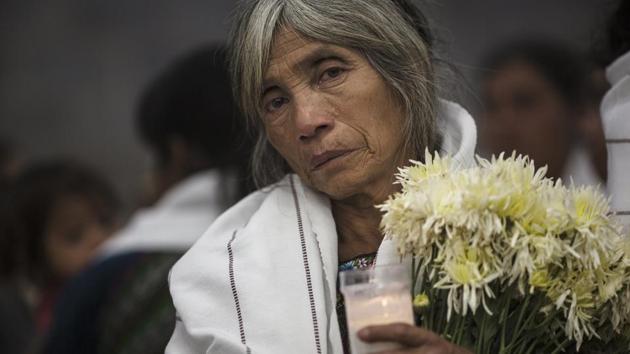
Prudencia Machan, whose daughter went missing in 1981, wept profusely, deepening the wrinkles on her 76-year-old face. About 97% of the victims who disappeared or were killed during the 36-year civil war are estimated to have died at the hands of the army and paramilitary groups. (Rodrigo Abd / AP)
12/13
 View Photos in a new improved layout
Updated on Jul 13, 2018 11:12 AM
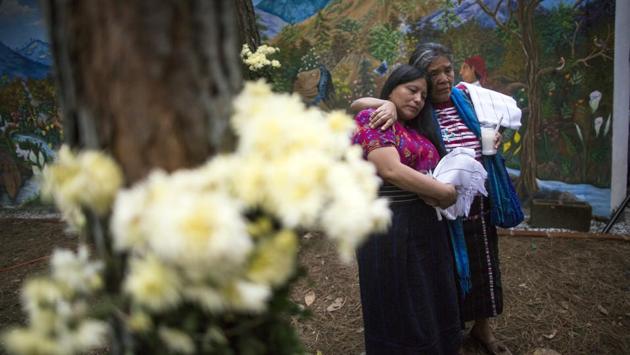
Women console each other during the formal burial ceremony. In 2006, several human rights organizations presented a bill for the creation of a National Search Commission for Victims of Enforced Disappearance, but after 12 years, the initiative has not been approved. (Rodrigo Abd / AP)
13/13
 View Photos in a new improved layout
Updated on Jul 13, 2018 11:12 AM