
 E-Paper



Photos| ‘Everything’s business’: Rohingya crisis offers earning opportunity
The Bangladeshi district of Cox's Bazar now hosts around one million Rohingya from Myanmar, the vast majority of whom fled their country a year ago, driven out by the army and mobs of ethnic Rakhine, who falsely branded the Muslim minority as "Bengali" intruders. The makeshift Rohingya camps contain new and dynamic economies, pump-primed by donor money and driven by a captive market of hundreds of thousands in need of food, shelter, work and -- for those who can afford it -- consumer goods.
Updated on: Aug 26, 2018 3:01 PM IST

Share via


Copy link

1/13
 View Photos in a new improved layout
Updated on Aug 26, 2018 3:01 PM
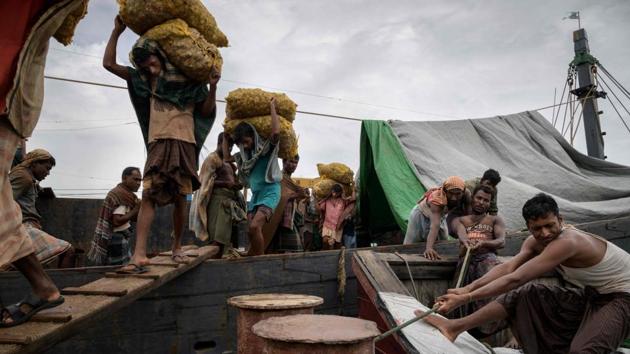
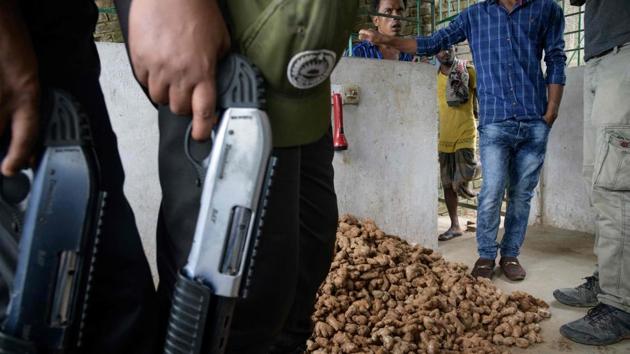
Captain Min Min, a Buddhist from Myanmar, looks on as a stream of Muslim Rohingya labourers zig-zag up narrow gangplanks hauling sacks of ginger from his boat onto Bangladeshi soil -- one of many seizing the economic opportunities presented by a refugee crisis. “I don’t worry about conflict... everything is just business,” the ethnic Rakhine skipper said waiting for his nine-tonne cargo to be unloaded. (Ed Jones / AFP)
2/13
 View Photos in a new improved layout
Updated on Aug 26, 2018 3:01 PM
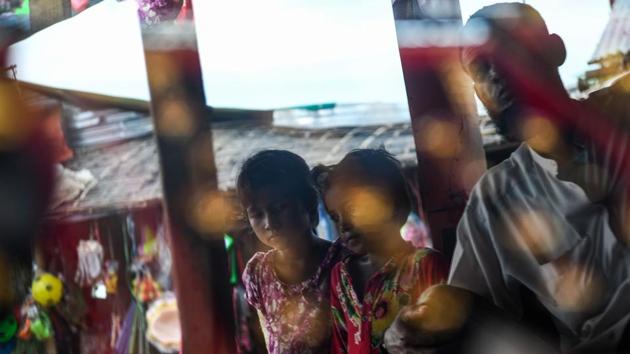
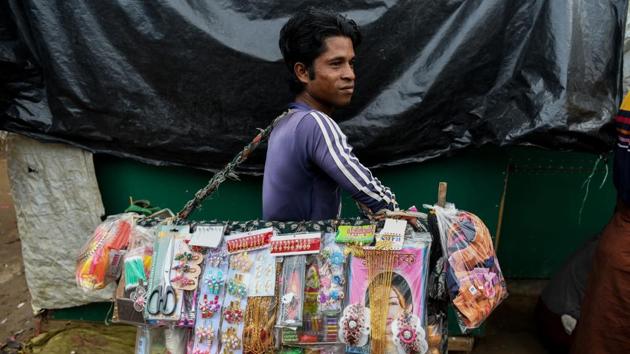
Young Rohingya refugees are pictured by a jewellery display shelf in the Thengkhali camp. The district of Cox’s Bazar now hosts around one million Rohingya, the vast majority of whom fled their country a year ago, the Muslim minority branded back home as “Bengali” intruders. (Chandan Khanna / AFP)
3/13
 View Photos in a new improved layout
Updated on Aug 26, 2018 3:01 PM
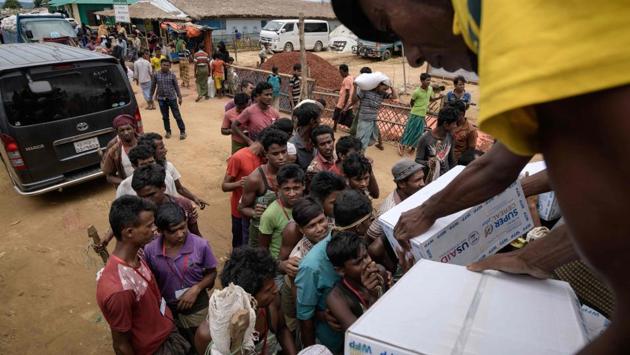
Rohingya refugees collect boxes of food aid at a distribution point in the Kutupalong camp. The makeshift Rohingya camps have now congealed into tent cities spread out across hills and farmland. They contain new and dynamic economies, pump-primed by donor money and driven by a captive market of hundreds of thousands in need of food, shelter, work and -- for those who can afford it -- consumer goods. (Ed Jones / AFP)
4/13
 View Photos in a new improved layout
Updated on Aug 26, 2018 3:01 PM
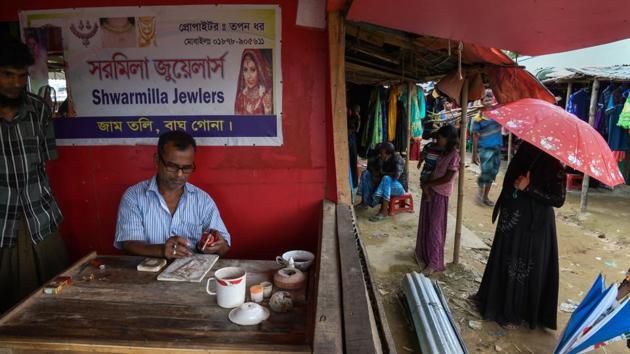
Bangladeshi gold trader Tapan Dhar repairs a gold ornament at his makeshift jewellery shop in the Thengkhali camp. For generations trade has diluted ethnic and religious rivalries among the Rakhine, Rohingya and Bangladeshis who flit between the two countries. Commerce was barely interrupted as scores of Rohingya villages were torched in August last year, sparking an exodus of around 700,000 people by land and sea into Bangladesh. (Chandan Khanna / AFP)
5/13
 View Photos in a new improved layout
Updated on Aug 26, 2018 3:01 PM
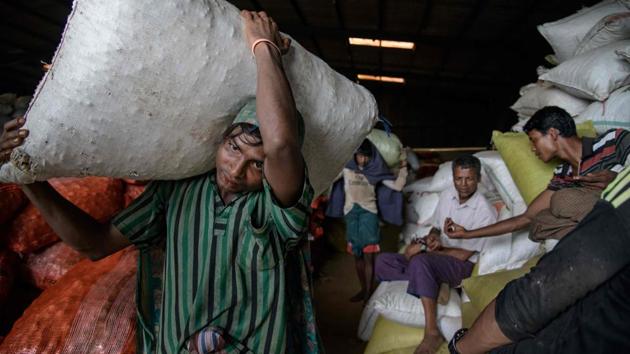
Workers carry sacks of rice from Myanmar to waiting trucks at Teknaf port. Commerce was barely interrupted as scores of Rohingya villages were torched in August last year. The skies were heavy with smoke, but Min Min said he carried on delivering his “Made in Myanmar” cargo to Teknaf port -- rice, ginger, make-up, noodles and the “ainshi” chestnuts ubiquitous at Rohingya snack stalls. (Ed Jones / AFP)
6/13
 View Photos in a new improved layout
Updated on Aug 26, 2018 3:01 PM
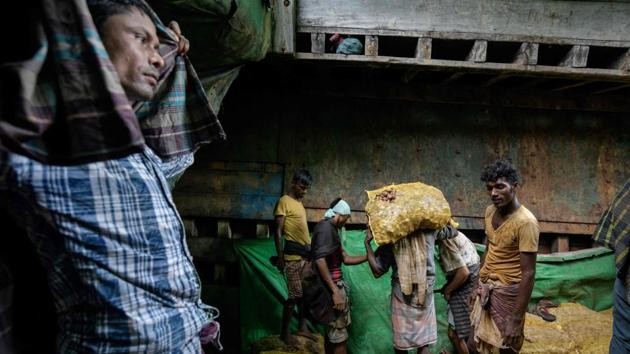
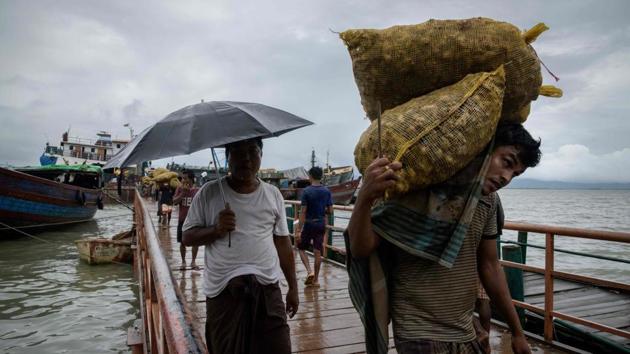
The refugee influx has been good for business, said his friend Thoin Line, an ethnic Rakhine importer from the Bangladesh side of the border. “The Rohingya are tough... they work night and day,” he says, adding, “and their wages are not too high.” Below, a line of drenched, wiry workers emerge from the hull of the boat, each shouldering two 30-kilogramme (66-pound) sacks of ginger imported from Myanmar. (Ed Jones / AFP)
7/13
 View Photos in a new improved layout
Updated on Aug 26, 2018 3:01 PM
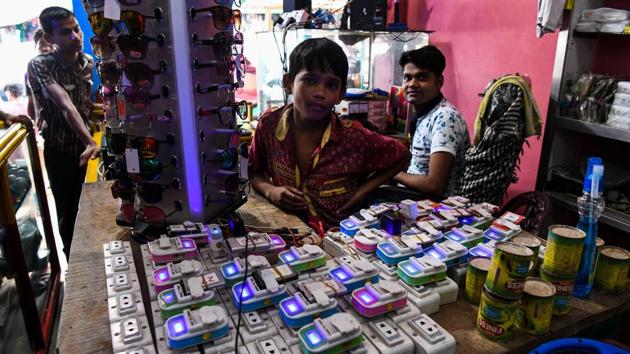
At the Kutupalong megacamp Bangladeshi entrepreneur Kamal Hussein, 24, is praying for rain. His income comes from a row of nearly 50 mobile phone charging points secured by bamboo struts. “Business is slow... it is sunny and most people have solar panels so they don’t need our shop,” he said. Business is better when it rains because then “the solar panels don’t work”, he adds (Chandan Khanna / AFP)
8/13
 View Photos in a new improved layout
Updated on Aug 26, 2018 3:01 PM
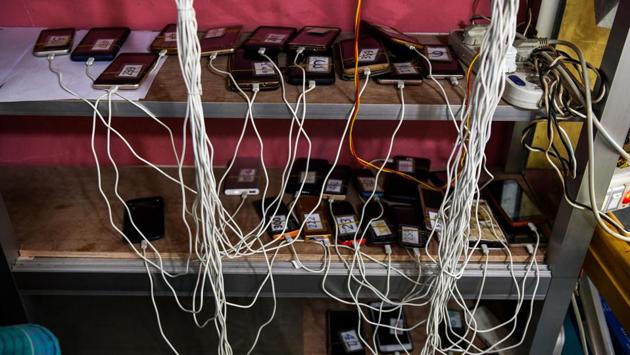
Consumer goods like mobile phones are in hot demand as refugees settle in, spending salaries and remittances from relatives overseas. Salesman Kaiser Ahmed says before last August’s crisis he sold five or six phones a week at the existing camps. “Now it is around 300,” he explains. His income also has surged in step with the crisis. (Chandan Khanna / AFP)
9/13
 View Photos in a new improved layout
Updated on Aug 26, 2018 3:01 PM
Stores to repair and pawn Rohingya jewellery, stalls selling saris and shops charging refugees 30 US cents to watch live English Premier League football matches on their TVs have sprung up around the camp fringes over the past year. Furthermore, the non-profits which work in the camps are big buyers of local bamboo, tarpaulins, concrete, pots, pans and blankets and employ thousands of Bangladeshi and Rohingya staff. (Chanddan Khanna / AFP)
10/13
 View Photos in a new improved layout
Updated on Aug 26, 2018 3:01 PM
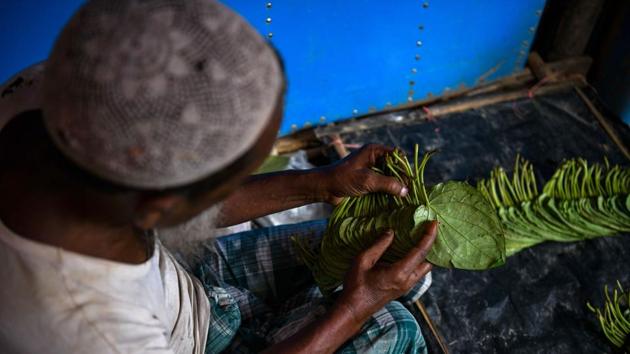
A Rohingya refugee sorts leaves to sell for chewing paan in the Kutupalong camp. Poorer Bangladeshis say the Rohingya influx has collapsed wages. Crime, drugs and prostitution are rising, while the foreign NGO influx has warped prices -- making owners of apartments, cars, hotels and restaurants richer, but sharpening the poverty of the locals with nothing to offer them. (Chandan Khanna / AFP)
11/13
 View Photos in a new improved layout
Updated on Aug 26, 2018 3:01 PM
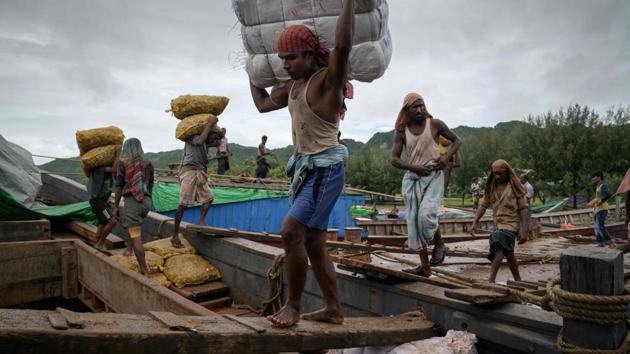
Rohingya workers transfer ginger, as others (front) load products from Bangladesh onto boats travelling to and from Myanmar’s Rakhine state. In June the World Bank moved to head off angst between the Rohingya and their Bangladeshi hosts, offering nearly half a billion dollars in grants for refugee health, education and sanitation. The aim is to help ease Dhaka’s burden and establish services that will also be used -- and staffed by -- Bangladeshis. (Ed Jones / AFP)
12/13
 View Photos in a new improved layout
Updated on Aug 26, 2018 3:01 PM
With refugees unlikely to be repatriated any time soon, cash and jobs are the best route to keeping the peace. At a beach outside the Shamlapur camp, Rohingya fisherman Mohammad Hossain says he worked his way up over two decades from crew to become the co-owner of two of the distinctive crescent-shaped boats that dot the coastline. (Ed Jones / AFP)
13/13
 View Photos in a new improved layout
Updated on Aug 26, 2018 3:01 PM