
 E-Paper



Photos: Floods amplify Japan’s monsoon misery amid coronavirus
Japan is in the middle of its annual rainfall season, yet citizens share that this year’s rain spell is unlike what they have witnessed before. The rain front that started in Southwest Japan is believed to have already claimed over 60 lives. The spell that started early on July 4 has not stopped since. Japan's Meteorological Agency (JMA) predicted that the rain is likely to continue at least until July 12. Swollen rivers, landslides and terrifying floods have only added worries to the Japanese economy already hit by coronavirus. The need to maintain social distancing has further complicated the evacuation order issued to more than 450,000 people in the affected areas.
Updated on: Jul 10, 2020 6:29 PM IST


Share via


Copy link

1/9

 View Photos in a new improved layout
Published on Jul 10, 2020 6:29 PM
An aerial view shows the aftermath of floods caused by the torrential rain, in Kumamura on July 8. Rains that began early on July 4 have already brought widespread damage across the Southwest Japan. (Kim Kyung-Hoon / REUTERS)
2/9
 View Photos in a new improved layout
Published on Jul 10, 2020 6:29 PM
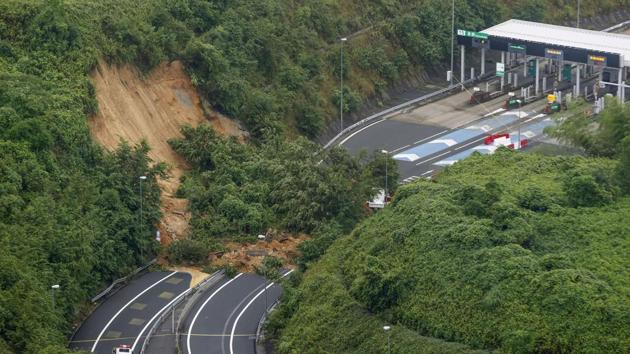
A landslide is seen near an exit of a highway in Kyoto on July 9. Japan’s Fire and Disaster Management Agency told AFP that rising floodwater or roads damaged by landslides had blocked access to more than 3,000 households, mostly in the hardest-hit southwestern region of Kumamoto where fresh downpours were forecast. (Kyodo News / AP)
3/9
 View Photos in a new improved layout
Published on Jul 10, 2020 6:29 PM
Police officers make their way to a damaged area during a search operation after floods caused by torrential rain swept through Kumamura on July 9. AP reported that hundreds of thousands of people were in areas under evacuation advisories, but leaving wasn’t mandatory and the number who sought shelter was not known. (Kim Kyung-Hoon / REUTERS)
4/9
 View Photos in a new improved layout
Published on Jul 10, 2020 6:29 PM
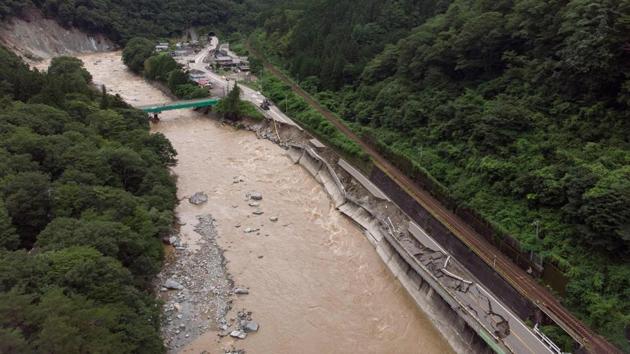
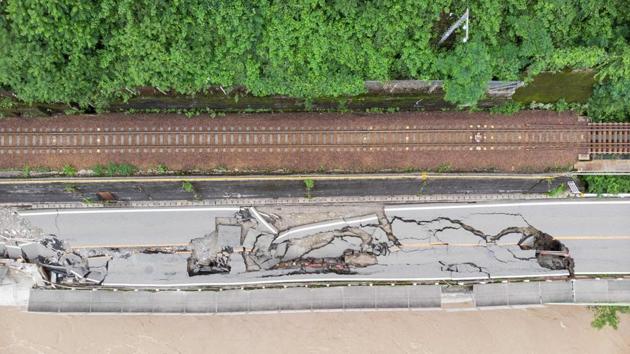
An aerial image shows a collapsed road alongside River Hida after it was damaged in heavy rains in Gero village, on July 9. Japan Meteorological Agency (JMA) issued an advisory that “heavy rain will likely continue at least until July 12 in a wide area” of the country, calling for “extreme vigilance” on landslide risks and flooding in low-lying areas. The death toll has climbed gradually as more victims are discovered in isolated areas, reported AFP. (Quentin TYBERGHIEN / AFP)
5/9
 View Photos in a new improved layout
Published on Jul 10, 2020 6:29 PM
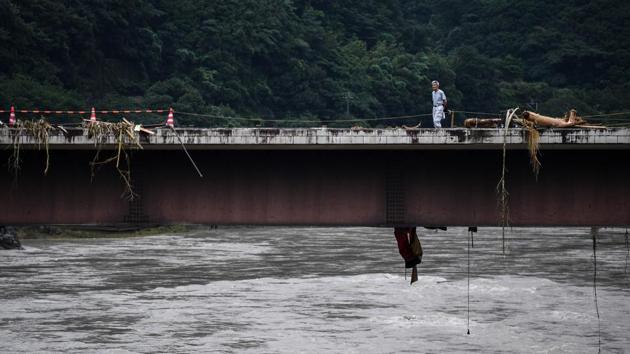
A man walks across a bridge covered with debris in Kuma village on July 9. AFP reported that in many areas, landslides reduced houses to rubble and floodwater rushed into homes in low-lying areas, destroying the contents and rendering them uninhabitable. (CHARLY TRIBALLEAU / AFP)
6/9
 View Photos in a new improved layout
Published on Jul 10, 2020 6:29 PM
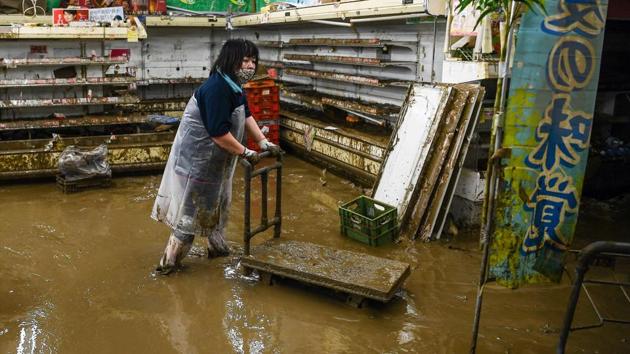
A woman wades in mud water in a supermarket following heavy rains and flooding in Hitoyoshi on July 9. Floodwaters rendered useless all local produce ready to be shipped to customers. (CHARLY TRIBALLEAU / AFP)
7/9
 View Photos in a new improved layout
Published on Jul 10, 2020 6:29 PM
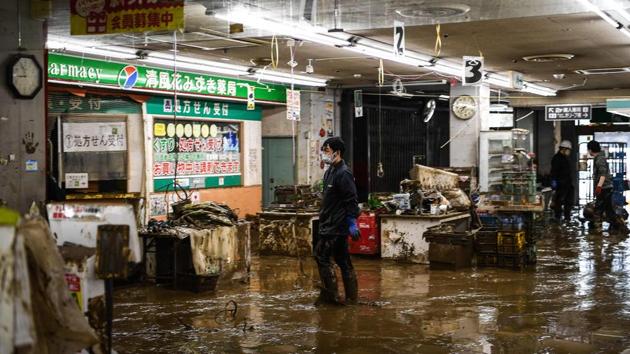
People clear the mess in a supermarket in Hitoyoshi, on July 9. Even though Japan has reported just over 20,000 coronavirus cases so far, the floods are a further blow to an economy already hit by the coronavirus lockdowns, just as the country was returning to business as usual, reported AP. (CHARLY TRIBALLEAU / AFP)
8/9
 View Photos in a new improved layout
Published on Jul 10, 2020 6:29 PM
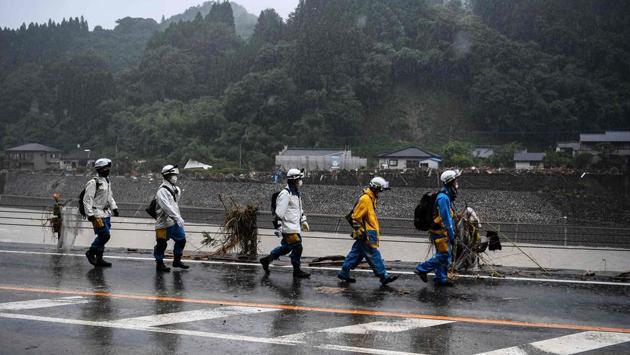
Police arrives to help in rescue and clean up operations in Kuma village on July 9. Japan Meteorological Agency (JMA) issued its second-highest evacuation order to more than 450,000 people. However, such orders are not compulsory and most residents are choosing not to go to shelters, possibly due to coronavirus fears. (CHARLY TRIBALLEAU / AFP)
9/9
 View Photos in a new improved layout
Published on Jul 10, 2020 6:29 PM


