
 E-Paper



Photos: Hindus in Nepal commence month long Madhav Narayan celebrations
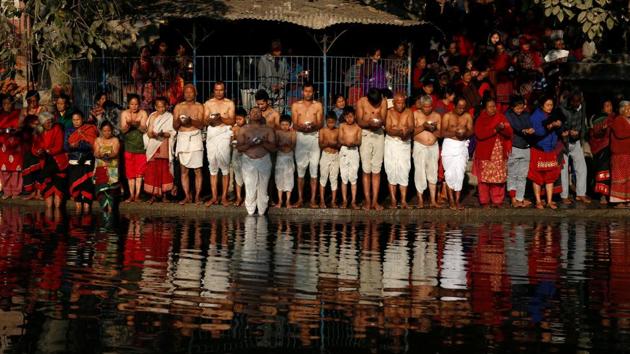
The month long Madhav Narayan festival began in Nepal on Tuesday. During the festival devotees recite holy scriptures dedicated to the Hindu goddess Swasthani and Lord Shiva. Unmarried women pray to find a good husband while those married pray for the longevity of their husbands by observing a month-long fast.
Updated on: Jan 3, 2018 12:01 PM IST


Share via


Copy link

1/9
 View Photos in a new improved layout
Updated on Jan 3, 2018 12:01 PM
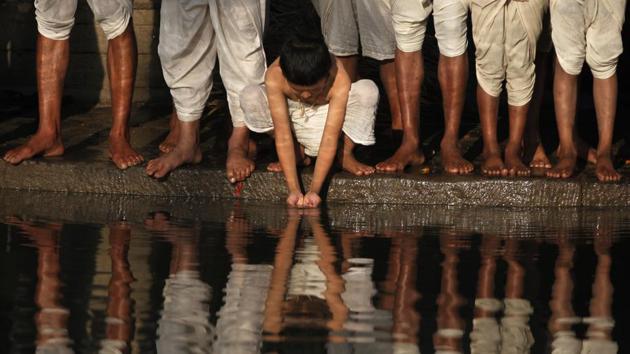
A young devotee collects water while offering prayers at the banks of the Hanumante River during the Madhav Narayan festival in Bhaktapur, Nepal. Hindus poured onto the banks of the Hanumante on Tuesday to mark the first day of the month-long Madhav Narayan festival in the city of Bhaktapur. (Niranjan Shrestha / AP)
2/9
 View Photos in a new improved layout
Updated on Jan 3, 2018 12:01 PM
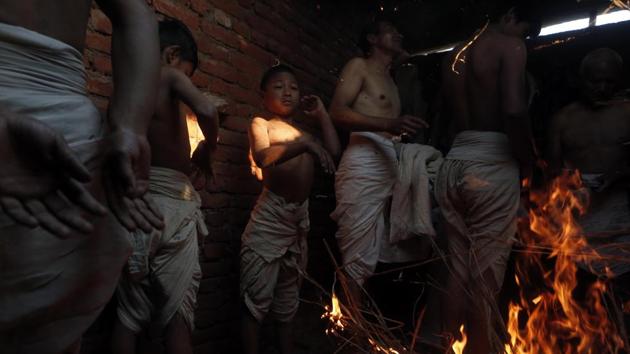
Nepalese devotees warm themselves before a dip in the Hanumante River during the Madhav Narayan Festival in Bhaktapur. This religious festival is also known as the Swasthani Brata Katha festival. (Niranjan Shrestha / AP)
3/9
 View Photos in a new improved layout
Updated on Jan 3, 2018 12:01 PM
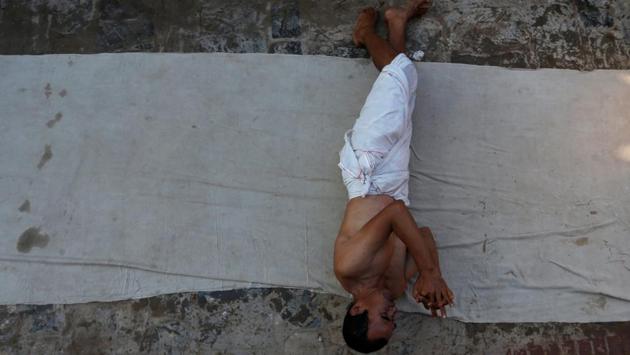
A devotee prays by rolling on the ground before taking a dip during the Swasthani Brata Katha festival. The festival begins on the full moon day of the Nepalese month of Poush, normally from January to February, ending on the next full moon day. (Navesh Chitrakar / REUTERS)
4/9
 View Photos in a new improved layout
Updated on Jan 3, 2018 12:01 PM
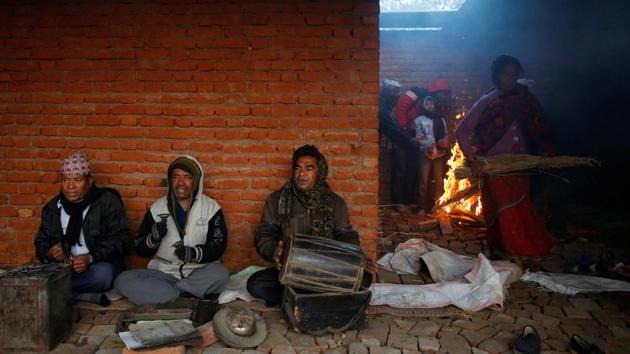
During the festival, devotees recite holy scriptures and sing songs dedicated to the Hindu gods Swasthani and Shiva. (Navesh Chitrakar / REUTERS)
5/9
 View Photos in a new improved layout
Updated on Jan 3, 2018 12:01 PM
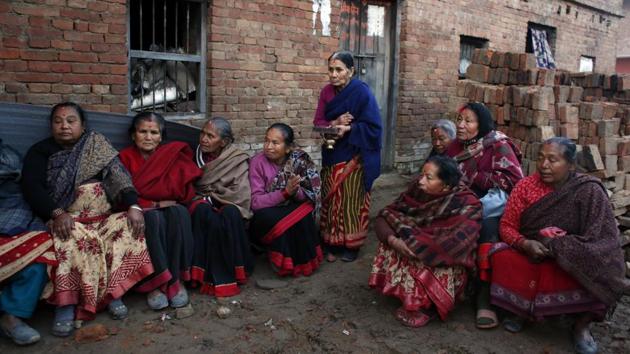
Devotees listen as a priest recites a chapter from the Swasthani Brata Katha during the festival. The tale runs into 31 chapters and narrates the story of the life of various gods and goddesses. The prime focus though remains on Swasthani and Shiva. (Niranjan Shrestha / AP)
6/9
 View Photos in a new improved layout
Updated on Jan 3, 2018 12:01 PM
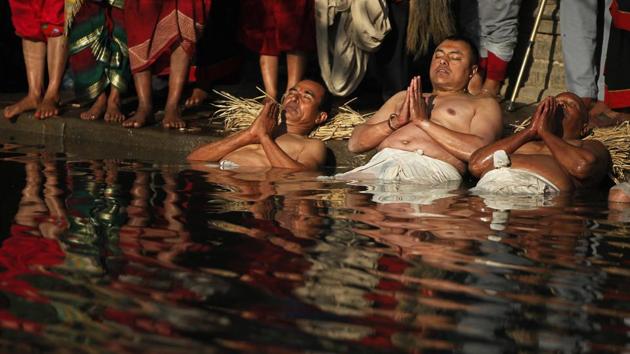
Men perform a half dip in the Hanumante River. During the month-long festival hundreds of thousands of Hindus are expected to take these dips in the holy waters on astronomically auspicious days, to pay tribute to goddess Swasthani, who is believed to bring good fortune. (Niranjan Shrestha / AP)
7/9
 View Photos in a new improved layout
Updated on Jan 3, 2018 12:01 PM
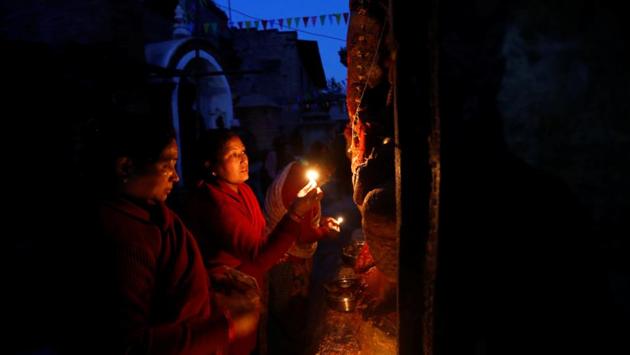
As part of the rituals, unmarried women pray for a good groom while those already married pray for the longevity of their husbands by observing a month-long fast. (Navesh Chitrakar / REUTERS)
8/9
 View Photos in a new improved layout
Updated on Jan 3, 2018 12:01 PM
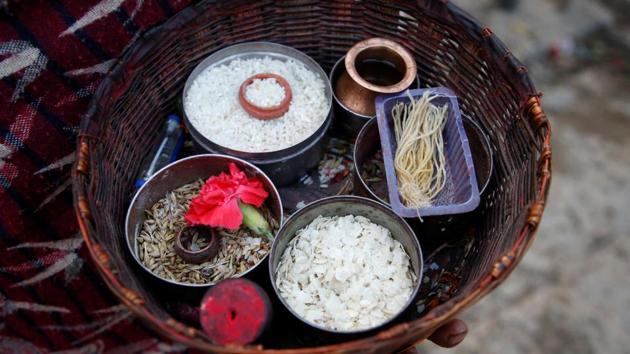
A basket holds offerings of grains used during the festival. The 30-day fast called ‘brata’ in the local Newari and Nepali languages is voluntary and some men also undertake it seeking the welfare of their families. (Navesh Chitrakar / REUTERS)
9/9
 View Photos in a new improved layout
Updated on Jan 3, 2018 12:01 PM


