
 E-Paper



Photos: Israeli coral rescue plan aiming to preserve marine ecosystem
The corals in the southern Israeli port Eilat are most likely perishing due to the toxins and pollution from human activity and industry entering the bay on a daily basis. The Israel Nature and Parks Authority along with various organisations are now working on the preservation and maintenance of these corals and also creating awareness of the marine environment and educating the public about their ecological significance.
Updated on: Jun 12, 2019 1:03 PM IST

Share via


Copy link

1/7
 View Photos in a new improved layout
Updated on Jun 12, 2019 1:03 PM
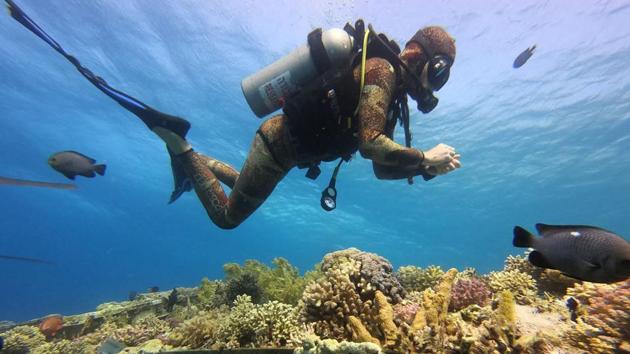
A marine biology university employee inspects corals growing on tables in the Red Sea as a part of a research in the Interuniversity Institute for Marine Sciences near the southern Israeli city Eilat. The proximity of the Gulf of Eilat’s reefs to the shore increases the threats they face, with “toxins and pollution” from human activity and industry entering the bay on a daily basis, according to French marine biologist Guilhem Banc-Prandi. (Menahem Kahana / AFP)
2/7
 View Photos in a new improved layout
Updated on Jun 12, 2019 1:03 PM
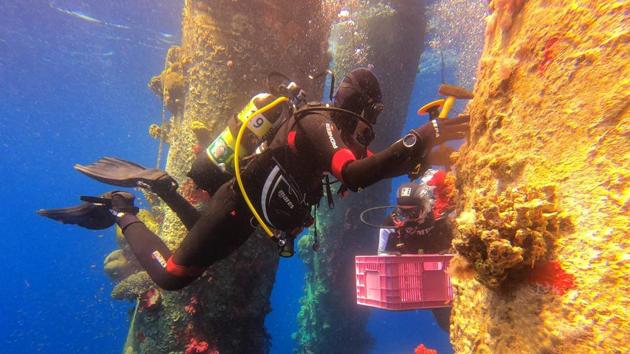
An Israeli Nature and Parks Authority employee dives in the Red Sea to remove corals that grew on columns supporting the Europe Asia Pipeline crude oil jetty off the shore of ahead of maintenance works at the site. With a chisel placed at the bottom of the red coral, he carefully begins to hit, causing a loud clacking to reverberate through the silent sea. “We need to safeguard them,” he said after the dive. (Menahem Kahana / AFP)
3/7
 View Photos in a new improved layout
Updated on Jun 12, 2019 1:03 PM
An Israeli Nature and Parks Authority employee carries corals after removing them from a column. The Nature and Parks Authority regularly relocates corals to safe locations as part of its efforts to preserve the protected animals, which are crucial to the maritime ecosystem. (Menahem Kahana / AFP)
4/7
 View Photos in a new improved layout
Updated on Jun 12, 2019 1:03 PM
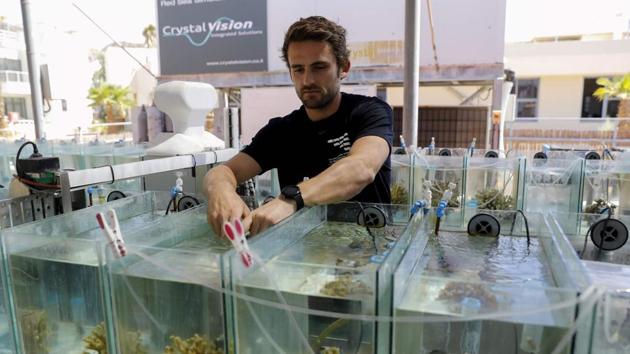
Guilhem Banc-Prandi, currently working on a doctorate at the Interuniversity Institute for Marine Sciences, inspects corals in an aquarium in the southern Israeli resort city of Eilat. Coral populations around the world are undergoing bleaching and dying due to global warming, but the population in the northern Red Sea has remained stable due to its unique heat resistance. (Menahem Kahana / AFP)
5/7
 View Photos in a new improved layout
Updated on Jun 12, 2019 1:03 PM
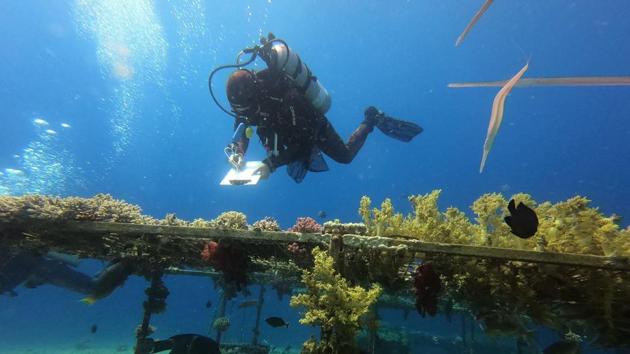
Banc-Prandi inspects corals in the Red Sea growing on tables as part of research. To counter the threats in Eilat and elsewhere, Banc-Prandi has founded WeSea, an NGO dedicated to raising awareness of the marine environment and educating the public. “We strongly believe that outreach and education can truly change the fate of the marine ecosystem,” he said. (Menahem Kahana / AFP)
6/7
 View Photos in a new improved layout
Updated on Jun 12, 2019 1:03 PM
While relocation saves the coral from a certain death, not all survive the move, which could be to the observatory and local educational facilities, or even the Jerusalem zoo’s aquarium. “Corals in general are very important animals in being species that engineer the environment,” Israeli marine ecologist Assaf Zvuloni said. “It’s much more than just the coral itself.” (Menahem Kahana / AFP)
7/7
 View Photos in a new improved layout
Updated on Jun 12, 2019 1:03 PM