
 E-Paper



Photos: Rohingya hunker down as monsoon sweeps through Bangladesh camps
With the arrival of long-dreaded monsoon, Rohingya refugees living in ramshackle huts have evacuated in several camps in Bangladesh. Built over denuded hills, landslides and flooding aggravated by the weakened soil make for hazardous living. Beyond these, there are worries about waterborne diseases like cholera due to the poor sanitation. The most intense rains are expected over the next few months, though heavy downpours began pummeling camps in June. There have already been more than 160 landslides, 30 people injured and one toddler killed.
Updated on: Jul 19, 2018 10:07 AM IST

Share via


Copy link

1/9
 View Photos in a new improved layout
Updated on Jul 19, 2018 10:07 AM
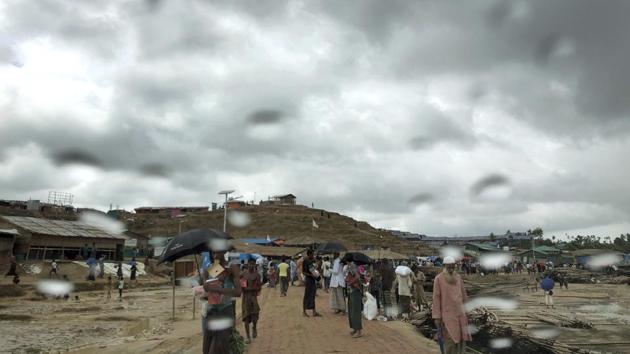
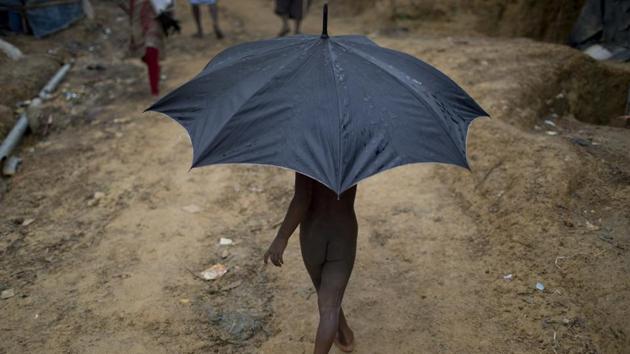
Rohingya refugees walk in the rain though Jamtoli refugee camp in Bangladesh. The monsoon season has arrived in Bangladesh, bringing fresh dangers to the 900,000 Rohingya refugees who live in ramshackle huts on unstable hills. The threat of landslides is so dire that some have already evacuated. (Wong Maye-E / AP)
2/9
 View Photos in a new improved layout
Updated on Jul 19, 2018 10:07 AM
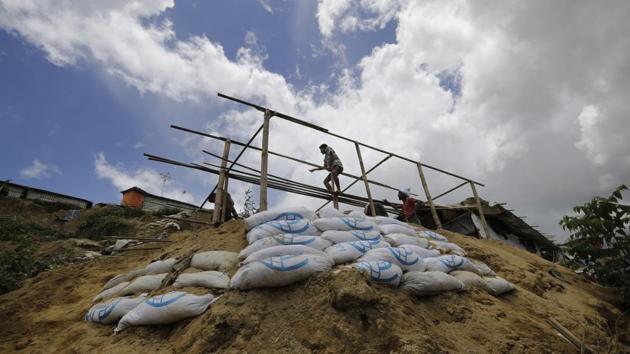
A man builds a new shelter for Mustawkima, whose former shelter was destroyed by heavy rains in Balukhali refugee camp. She sold off her donated rations of rice, lentils and oil so she could hire men to build a sturdier shelter atop a hill. The bamboo and sandbags were donated by aid agencies. Though living here could spell doom in the monsoon, she will anyway. (Wong Maye-E / AP)
3/9
 View Photos in a new improved layout
Updated on Jul 19, 2018 10:07 AM
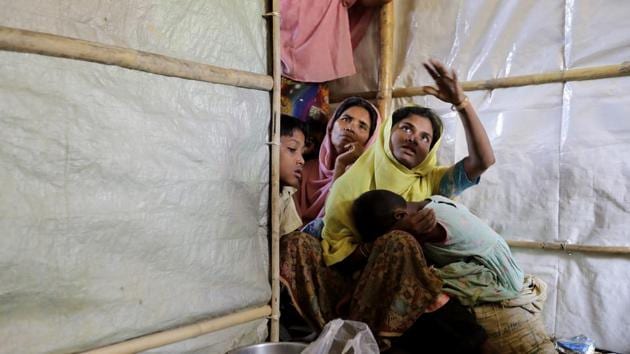
Mustawkima (C), sits in her relative's shelter as she talks about abandoning her previous shelters. Hers is a dilemma repeated over and over for many of the 900,000 Rohingya living in ramshackle huts across this unsteady landscape. As the rains begin to flood parts of the camps, many find themselves trapped — by geography, by poverty and by fear. (Wong Maye-E / AP)
4/9
 View Photos in a new improved layout
Updated on Jul 19, 2018 10:07 AM
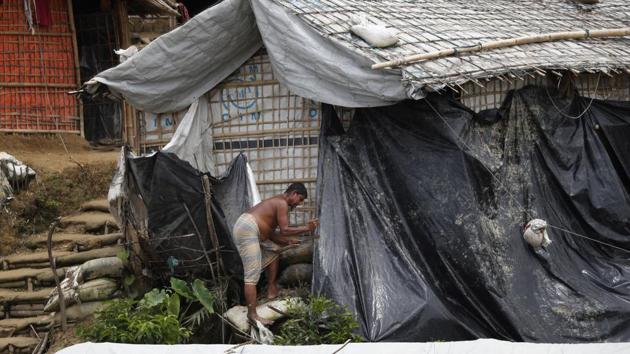
A man covers his shelter with waterproof tarp in Chakmarkul refugee camp. The most intense rains are expected over the next few months, though downpours began pummeling the camps in June. There have already been more than 160 landslides, 30 people injured and one toddler killed, according to the Inter Sector Coordination Group, or ISCG, which oversees aid agencies in the camps. (Wong Maye-E / AP)
5/9
 View Photos in a new improved layout
Updated on Jul 19, 2018 10:07 AM
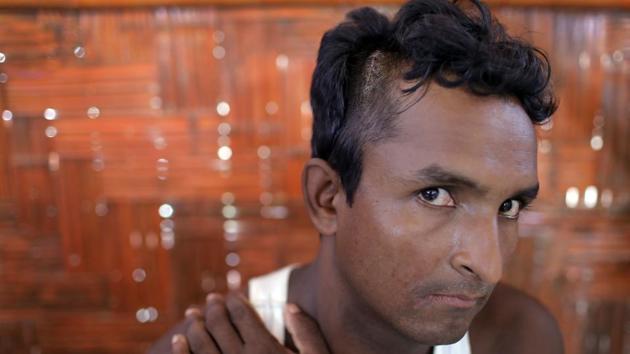
Mohamed Alom, 27, was asleep last month when a torrent of mud crashed through the plastic wall next to him. A tree root slammed into his head, slicing open his skin. Now he and his family are among 13 people living in this one-room schoolhouse. Alom hopes officials will help him build a new shelter, but has no idea how long that will take. (Wong Maye-E / AP)
6/9
 View Photos in a new improved layout
Updated on Jul 19, 2018 10:07 AM
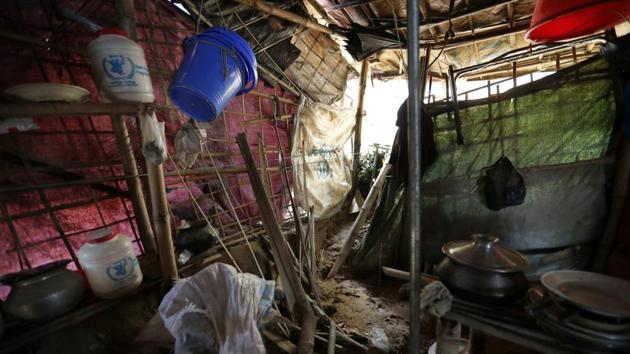
Abu Bakker’s home, destroyed by a landslide, seen in Chakmarkul camp. His family lives at the base of a hill where a landslide destroyed eight shelters. Adding to worriers are risks of waterborne diseases like cholera. Some of the latrines are piled high with fly-riddled excrement, which seeps out the sides during downpours. Water pumps are generally just a few meters away — worse, some are located downhill. (Wong Maye-E / AP)
7/9
 View Photos in a new improved layout
Updated on Jul 19, 2018 10:07 AM
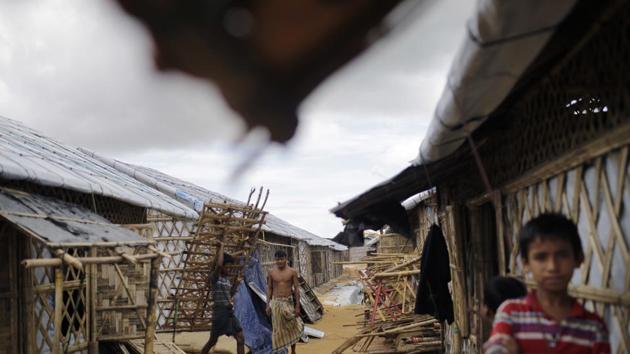
Refugees carry construction material through huts built in an extended area of Kutupalong camp where some refugees from areas at risk of landslides and flooding were relocated to. Children are receiving identity bracelets in case they are separated from parents in the flooding. Families have received extra materials to fortify shelters. Trenches have been dug to try and redirect floodwaters. (Wong Maye-E / AP)
8/9
 View Photos in a new improved layout
Updated on Jul 19, 2018 10:07 AM
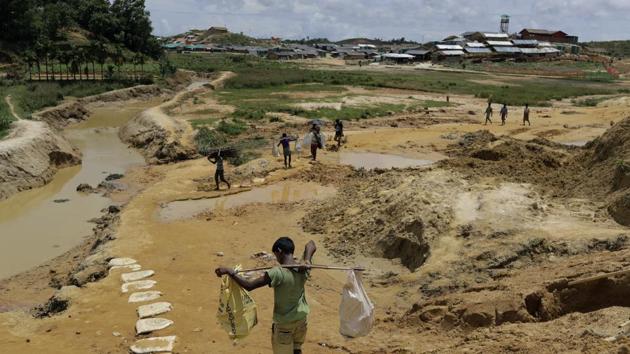
Ultimately, though, the topography of the camps is the biggest problem. The trees that once covered the hills have been cut down to make room for shelters, and the roots dug up for firewood. That process has dramatically loosened the soil, which the rains turn into heavy mud that slips down the hillsides, burying anything in its path. (Wong Maye-E / AP)
9/9
 View Photos in a new improved layout
Updated on Jul 19, 2018 10:07 AM