
 E-Paper



Photos: Short on supplies, South Sudan rebels fight on
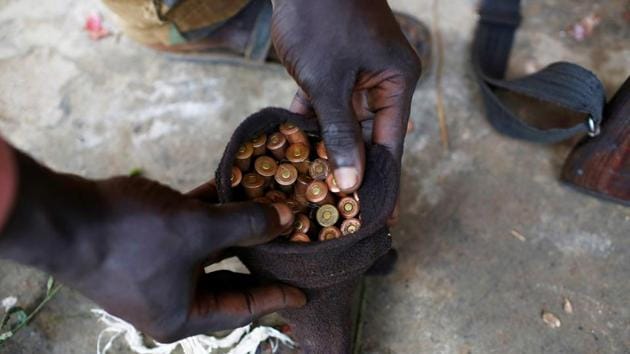
The South Sudanese rebels clashed with the governement forces but following shortage of ammunition within 40minutes, the rebel group had to withdraw back to their base camp. Ever since President Salva Kiir, an ethnic Dinka fired his deputy Riek Machar, a ethnic Nuer- the conflict between the groups has divided the country into a patchwork of fiefdoms resulting in one of Africa's refugee crisis.
Updated on: Sep 01, 2017 4:03 PM IST

Share via


Copy link

1/9

 View Photos in a new improved layout
Updated on Sep 01, 2017 4:03 PM
Oil-rich South Sudan became the world’s youngest nation when it won independence from neighbouring Sudan in 2011 following decades of conflict. But civil war quickly followed in 2013 after President Salva Kiir, an ethnic Dinka fired his deputy Riek Machar, an ethnic Nuer.Since then the conflict has been punctuated by gruesome massacres of civilians and extreme sexual violence. Ethnic militias have divided the country into a patchwork of fiefdoms. (Goran Tomasevic / REUTERS)
2/9
 View Photos in a new improved layout
Updated on Sep 01, 2017 4:03 PM
Before the South Sudanese rebels attacked the town of Kaya, they handed out supplies - a ragged strip of red cloth to identify themselves to each other as friendly forces, a packet of biscuits, and two precious magazines of ammunition per fighter.But government forces counter-attacked, killing several rebels and an American journalist. The rebels ran out of ammunition after 40 minutes and had to retreat back to their base in the bush. (Goran Tomasevic / REUTERS)
3/9
 View Photos in a new improved layout
Updated on Sep 01, 2017 4:03 PM
Before the rebels attacked Kaya, a town near the Ugandan border and one of four that were simultaneously attacked on August 26. Then they tied their red strips of cloth around their heads and ran forwards, firing, to positions near cement walls or corrugated iron market stalls. (Goran Tomasevic / REUTERS)
4/9
 View Photos in a new improved layout
Updated on Sep 01, 2017 4:03 PM
“We lack funds and support. The guns we have, the ammunition we have, we take from the enemy,” General Matata Frank Elikana, the rebel governor for Yei River State told Reuters during the long march through rain-soaked elephant grass to the front line. (Goran Tomasevic / REUTERS)
5/9
 View Photos in a new improved layout
Updated on Sep 01, 2017 4:03 PM
The violence has paralysed oil production, fuelled hyperinflation and plunged parts of the country into famine briefly earlier this year. Nearly a third of South Sudan’s 12 million citizens have fled their homes creating Africa’s biggest refugee crisis since the Rwandan genocide. (Goran Tomasevic / REUTERS)
6/9
 View Photos in a new improved layout
Updated on Sep 01, 2017 4:03 PM
On the day of assault, Kaya town was eerily empty with no presence of any civilians. Shops, a market and the school echoed with the sound of gunfire and explosions. (Goran Tomasevic / REUTERS)
7/9
 View Photos in a new improved layout
Updated on Sep 01, 2017 4:03 PM
‘In government-controlled areas there are no civilians. They don’t feel safe as soldiers abuse them,’ said Colonel Lam Paul Gabriel, the deputy military spokesman for the rebels. ‘They kill civilians. They rape women. They do a lot of atrocities in the area’, he added. (Goran Tomasevic / REUTERS)
8/9
 View Photos in a new improved layout
Updated on Sep 01, 2017 4:03 PM
Sudan People’s Liberation Army- Opposition (SPLA-In Opposition) rebels fire weapons during an assault on government SPLA (Sudan People's Liberation Army) soldiers in the town of Kaya, on the border with Uganda, South Sudan. Local reporters have been killed and imprisoned and on Saturday, 26-year-old American journalist Christopher Allen was shot dead as he reporting on the battlefield during clashes between government and opposition rebels in Kaya. (Goran Tomasevic / REUTERS)
9/9
 View Photos in a new improved layout
Updated on Sep 01, 2017 4:03 PM