
 E-Paper



Photos: Survivors of IS Kabul attacks struggle to cope a month on
Survivors in Kabul, of Islamic State attacks in recent months, cope with life after their ordeals, while struggling to come to terms with their trauma -both physical and psychololocal.
Updated on: Jan 25, 2018 12:44 PM IST

Share via


Copy link

1/8
 View Photos in a new improved layout
Updated on Jan 25, 2018 12:44 PM
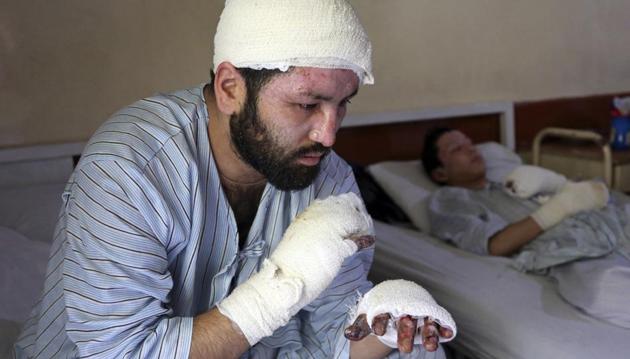
Sayed Mushtaq Hossaini, 26, a photographer who was injured last month when an Islamic State suicide bomber struck a weekly meeting at a Shiite cultural center, receives treatment at a hospital in Kabul. For Hossaini, some of the horrors of the day remain a blur. He remembers hiding behind a pillar in the room, terrified for his life, watching as flames engulfed his hands and face. (Rahmat Gul / AP)
2/8
 View Photos in a new improved layout
Updated on Jan 25, 2018 12:44 PM
Mehdi, 17, was injured in a suicide attack on a Shiite mosque in October which killed his 14-year-old brother, has his wounds treated at his home in Kabul. His burns required several skin grafts and his vision and hearing have been impaired since. (Rahmat Gul / AP)
3/8
 View Photos in a new improved layout
Updated on Jan 25, 2018 12:44 PM
Ahmadullah (L), and Mohammad Ali (R), survivors of the December 28 attacks in Kabul are struggling to come to terms with the ordeal they lived through. Such bombings staged by IS in Afghanistan aim to instill terror — by the large numbers of Afghans killed and among those who survive the attacks. (Rahmat Gul / AP)
4/8
 View Photos in a new improved layout
Updated on Jan 25, 2018 12:44 PM
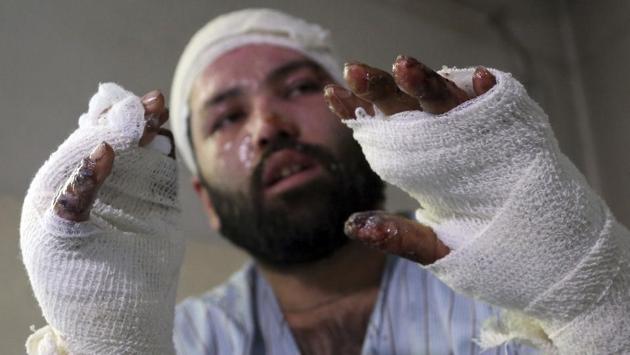
Hossaini survived the inferno with severe burns — but the wounds that won’t heal are the ones on the inside, the hopelessness he now lives with and the realization that nowhere is safe, not even culture centers or places of worship. (Rahmat Gul / AP)
5/8
 View Photos in a new improved layout
Updated on Jan 25, 2018 12:44 PM
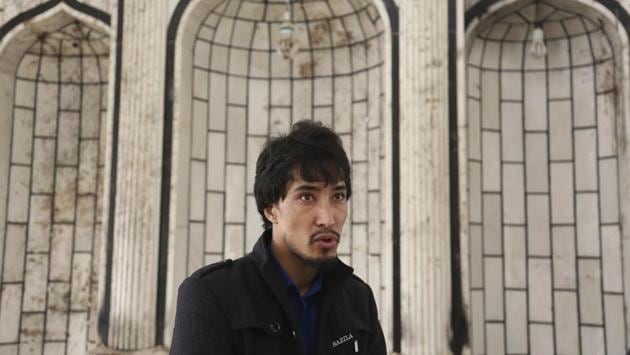
Hamid Azimi, 28, a reporter talks about his escape during the attack at Tebyan center. He lost his father when an Islamic State bomber killed 57 people at a Shiite mosque in Kabul in October. “I am so scared now, if there is a gathering somewhere, even just 10 to 20 people, I try to leave the place as soon as possible,” he said. (Rahmat Gul / AP)
6/8
 View Photos in a new improved layout
Updated on Jan 25, 2018 12:44 PM
Jan Ali Hossaini, (C), who was badly wounded in the mosque attack, prays at his 14-year-old son Mustafa’s grave. His 17-year-old son Mehdi was also wounded. Three months on, he still can’t use his hands and relies on his wife to help him with basic needs such as eating and bathing. (AP)
7/8
 View Photos in a new improved layout
Updated on Jan 25, 2018 12:44 PM
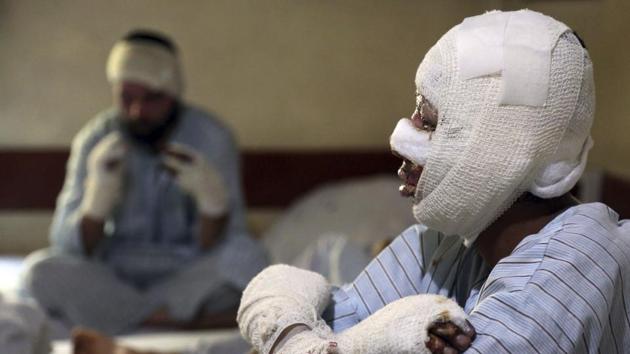
Mohammad Ali, 21, receives treatment at a hospital in Kabul. The Islamic State group in Afghanistan, which calls itself the Khorasan Province, views Shiite Muslims as apostates and has repeatedly attacked the minority and targets linked to neighbouring Iran. (Rahmat Gul / AP)
8/8
 View Photos in a new improved layout
Updated on Jan 25, 2018 12:44 PM