
 E-Paper



Photos: Turkey’s last nomads roam Anatolian steppe
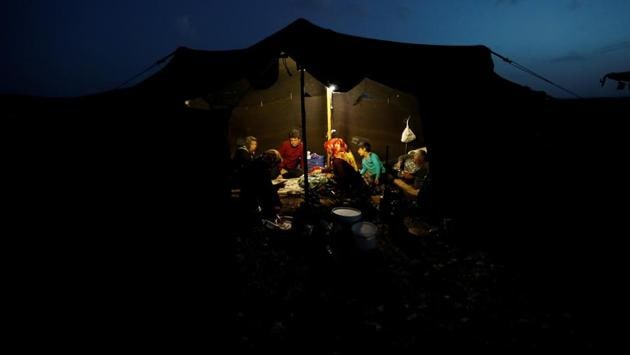
The Gobuts are a family of eight spread over three generations. They spend six months a year on the road and live in tents made of goat fur. They are a part of the Yoruk tribe, their name deriving from the Turkish verb yuru, which means "to walk". True to their name, these inhabitants of the steppes of Anatolia spend six months a year on the road and live in tents made of goat fur. On the way, they pitch tents each night and while away the evenings beside a campfire built right inside their tents as their goat herd graze nearby.
Updated on: Jul 15, 2018 3:52 PM IST

Share via


Copy link

1/11
 View Photos in a new improved layout
Updated on Jul 15, 2018 3:52 PM
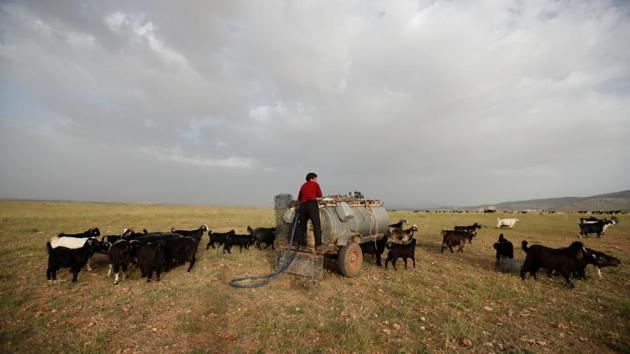
Mehmet Gobut sets up a water tank near Konya, Turkey. When summer comes to southern Turkey, the goats become restless and the Gobut family knows it is time to pack their tents and embark on the long trek north with their herd of 1,000 animals. (Osman Orsal / REUTERS)
2/11
 View Photos in a new improved layout
Updated on Jul 15, 2018 3:52 PM
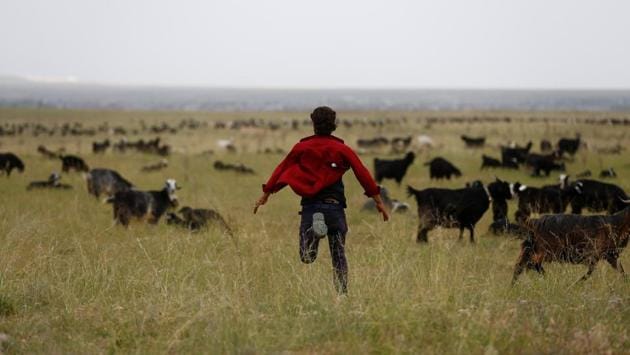
Muhammet Gobut runs to control a herd of goats. The family is part of the nomadic Yoruk tribe which for more than a millennium has crisscrossed Anatolia, a region that includes much of Turkey. Half a century ago, 1,000 families roamed the Anatolian steppe but now there are just 86, mirroring a decline in nomadic tribes worldwide due to industrialization and agricultural development. (Osman Orsal / REUTERS)
3/11
 View Photos in a new improved layout
Updated on Jul 15, 2018 3:52 PM
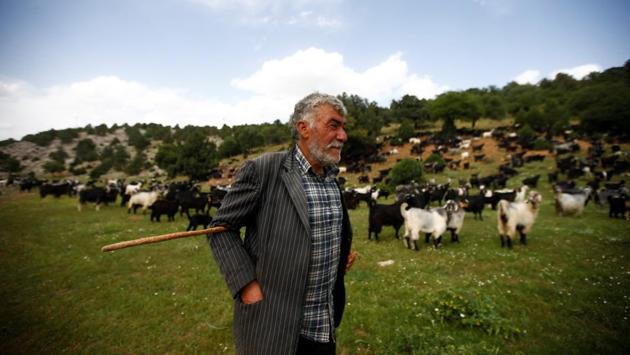
Ramazan Gobut walks with the family’s herd of goats near Konya. The Gobuts are a family of eight spread over three generations. They spend six months a year on the road and live in tents made of goat fur. They leave the southern province of Mersin in late April each year and arrive 600-km north in the central province of Konya in July, only to start the return trip a few days later. (Osman Orsal / REUTERS)
4/11
 View Photos in a new improved layout
Updated on Jul 15, 2018 3:52 PM
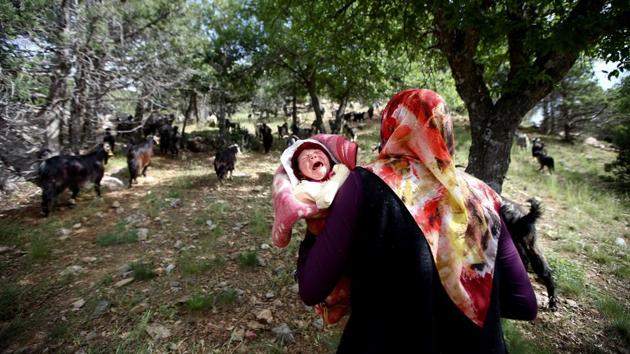
Rukiye Gobut carries her baby Efe Gobut. On the way, they pitch tents each night and while away the evenings beside a campfire built right inside their tents as their goat herd graze nearby. One family member sleeps outside with the herd and four shepherd dogs to guard against wolves that the family calls monsters. (Osman Orsal / REUTERS)
5/11
 View Photos in a new improved layout
Updated on Jul 15, 2018 3:52 PM
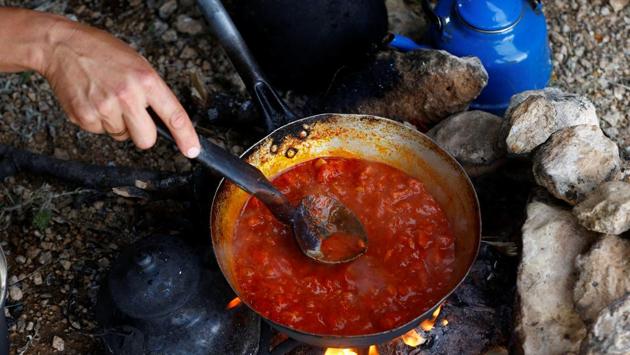
Kezban Gobut cooks a meal at their tent near Konya. Staple food also includes tomatoes and ‘bazlama’, a flatbread made from freshly ground flour bought on the road.The family makes its living from the goats. They make cheese from the milk, use fur to make tents and earn money by selling about a third of their goats en route. (Osman Orsal / REUTERS)
6/11
 View Photos in a new improved layout
Updated on Jul 15, 2018 3:52 PM
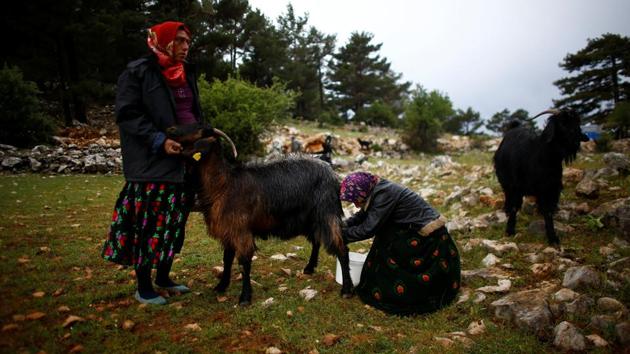
Each goat has a name and is treated as part of the family. The smaller ones are transported on a pick-up truck. “We never call them ‘animals’, we call them ‘companions’,” said Pervin Savran of the Sarikecililer Cooperation and Collaboration Foundation, which represents the Yoruks. “Everything we do - eating, sleeping, waking - depends on our companions. Such is our bond,” Savran said. (Osman Orsal / REUTERS)
7/11
 View Photos in a new improved layout
Updated on Jul 15, 2018 3:52 PM
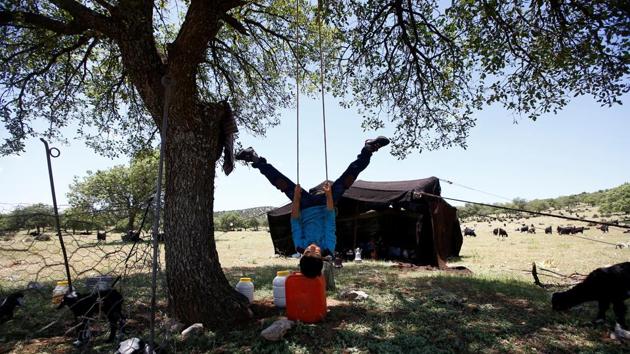
Yunus Gobut swings from a tree in front of the tent. The Gobuts have mobile phones but for news they listen to the radio for 15 minutes each evening. Yunus, is given leave to miss primary school after April to go on the trek. (Osman Orsal / REUTERS)
8/11
 View Photos in a new improved layout
Updated on Jul 15, 2018 3:52 PM
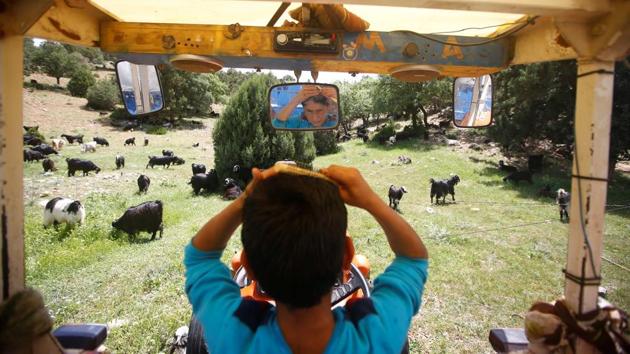
Yunus Gobut combs his hair as he sits inside a tractor. His sister-in-law Rukiye gave birth to her first son in April and a few days later was out shepherding the goats with her son in her arms. (Osman Orsal / REUTERS)
9/11
 View Photos in a new improved layout
Updated on Jul 15, 2018 3:52 PM
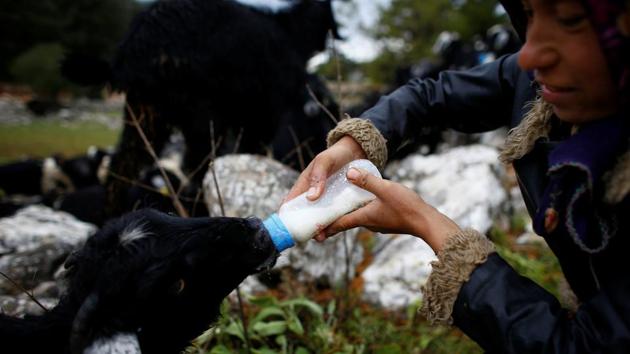
Gulay Gobut feeds a goat before the day's journey near Mersin. The family’s only daughter, Gulay studied medical supply marketing at a college in the mid-western province of Bilecik. She rejoined her family because she couldn’t find work, but said she misses the settled lifestyle. (Osman Orsal / REUTERS)
10/11
 View Photos in a new improved layout
Updated on Jul 15, 2018 3:52 PM
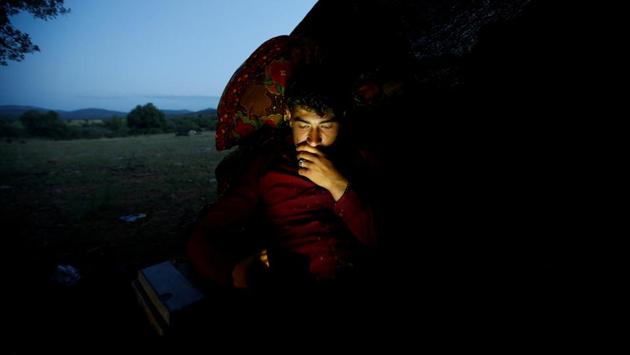
Muhammet Gobut sits inside their tent while looking at his phone near Konya. “I had a social life in college ... (and) I could go to the hospital whenever I needed to”, Gulay said. “But none of these exist in the nomadic life. We are alone with nature.” (Osman Orsal / REUTERS)
11/11
 View Photos in a new improved layout
Updated on Jul 15, 2018 3:52 PM