
 E-Paper



Photos: Turkey’s new dam is about to engulf a 12,000-year-old town
The small town of Hasankeyf, inhabited for 12,000 years, is doomed to disappear in the months ahead under an artificial lake, as a result of the hydroelectric dam project. The dam will be Turkey's second largest and has been built downstream of the Tigris. Assyrians, Romans, Seljuks... the empires that washed over this region have left an exceptional heritage, not least the thousands of caves that were inhabited as recently as the 1970s and are a major tourist draw. Confronted with the imminent flooding of their town and a hundred villages, the 3,000 habitants of Hasankeyf are divided.
Updated on: Jan 09, 2019 11:54 AM IST

Share via


Copy link

1/11
 View Photos in a new improved layout
Updated on Jan 09, 2019 11:54 AM
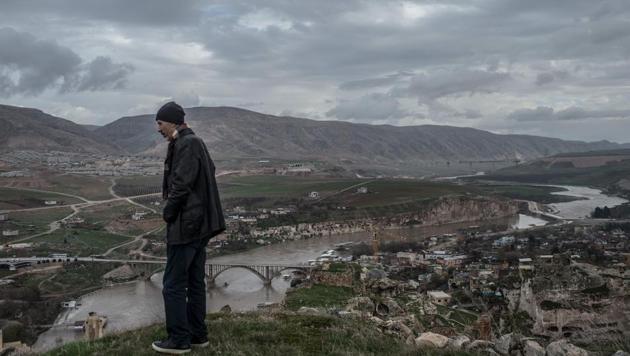
From the ancient citadel overlooking the valley, Ridvan Ayhan looks at the Tigris with a furrowed brow. The river that supported his family’s town for generations will soon destroy it. “My grandchildren will not see where I grew up, where I lived. They will ask me, ‘Grandpa, where do you come from? Where did you live?’ What will I do? Show them the lake?” asks Ayhan, readjusting the scarf over his face. (Bulent Kilic / AFP)
2/11
 View Photos in a new improved layout
Updated on Jan 09, 2019 11:54 AM
A worker stands at the construction site of the Ilisu dam near Hasankeyf. The small town of Hasankeyf, in Turkey’s Kurdish-majority southeast, inhabited for 12,000 years, is doomed to disappear in the coming months. An artificial lake, part of the Ilisu hydroelectric dam project, will swallow it up. The dam, which will be Turkey’s second largest, has been built further downstream the Tigris. (Bulent Kilic / AFP)
3/11
 View Photos in a new improved layout
Updated on Jan 09, 2019 11:54 AM
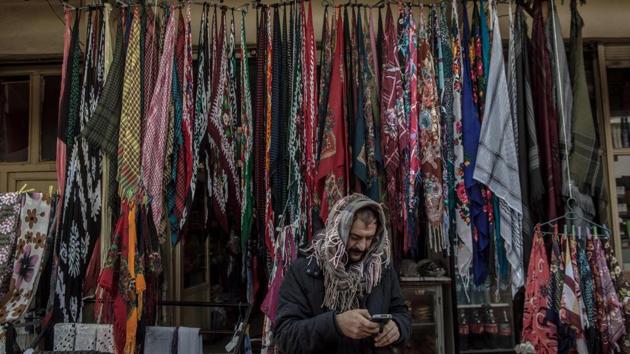
A shop owner checks his phone in Hasankeyf. Confronted with the imminent flooding of their town and a hundred villages, the 3,000 habitants of Hasankeyf are divided. While some are angry at the sacrifice being imposed on them, others are impatient for the economic benefits promised by Ankara. (Bulent Kilic / AFP)
4/11
 View Photos in a new improved layout
Updated on Jan 09, 2019 11:54 AM
Ayhan, who is retired, is steadfast in his opposition. He dedicates all his time to fighting against the dam as part of the “Keep Hasankeyf Alive” collective, which brings together campaigning groups and local representatives. “There is such history here,” says Ayhan. “Every time you dig, you come across something from a different civilisation. Destroying Hasankeyf is to commit a major crime.” (Bulent Kilic / AFP)
5/11
 View Photos in a new improved layout
Updated on Jan 09, 2019 11:54 AM
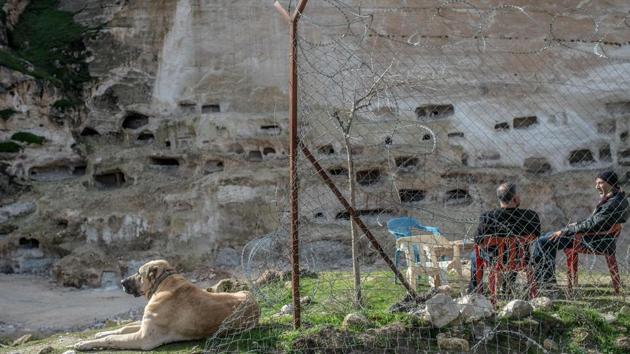
Residents sit in front of historical caves in Hasankeyf. Assyrians, Romans, Seljuks... the empires that washed over this region have left an exceptional heritage, not least the thousands of caves that were inhabited as recently as the 1970s and are a major tourist draw. The government dismisses criticism, arguing that everything has been done to save the monuments. (Bulent Kilic / AFP)
6/11
 View Photos in a new improved layout
Updated on Jan 09, 2019 11:54 AM
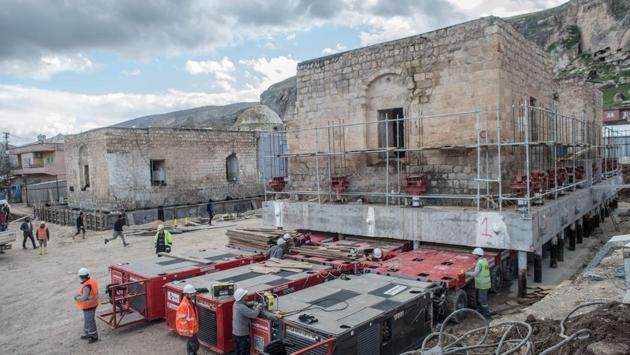
In one lengthy operation last August, the 1,600-tonne Artuklu Hamam bath house was loaded onto a wheeled platform and moved down a special road to its new home. Workers also recently moved the remnants of a 14th-century Ayyubid mosque (pictured), transporting it three kilometres to a site that will become a “cultural park”. Such relocations have turned Hasankeyf into a construction site. (Bulent Kilic / AFP)
7/11
 View Photos in a new improved layout
Updated on Jan 09, 2019 11:54 AM
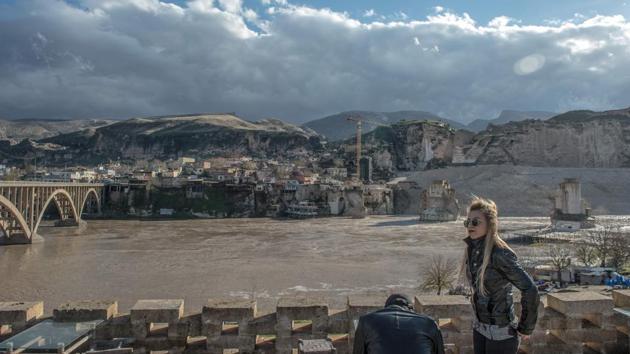
Tourists stand next to the Tigris river near Hasankeyf. Busloads of tourists have been replaced by swarms of dump trucks and a crane at the town’s entrance. In what is left of the old bazaar, the butcher, Zeki, sits among morose-looking traders. “There are no more tourists,” he laments. “Who would like to come to see this? Every step you take you’re liable to fall into a hole in the ground.” (Bulent Kilic / AFP)
8/11
 View Photos in a new improved layout
Updated on Jan 09, 2019 11:54 AM
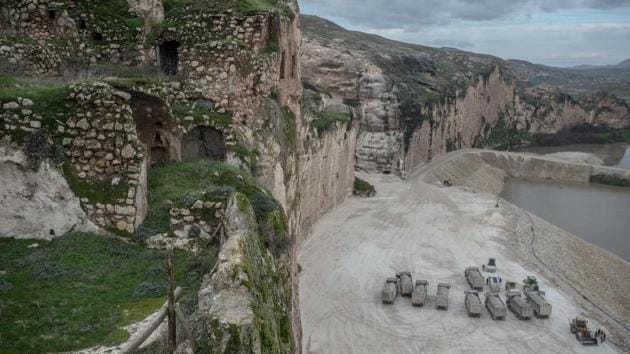
Not everyone is unhappy. Former shepherd Ahmet Akdeniz prefers to look to the future. He presides over the Hasankeyf cultural association dedicated to promoting what the town has to offer and he cannot wait “to finally start (his) new life”. During the inauguration of the Ilisu site in 2006, President Recep Tayyip Erdogan promised the dam would bring “the greatest benefit” to local people. (Bulent Kilic / AFP)
9/11
 View Photos in a new improved layout
Updated on Jan 09, 2019 11:54 AM
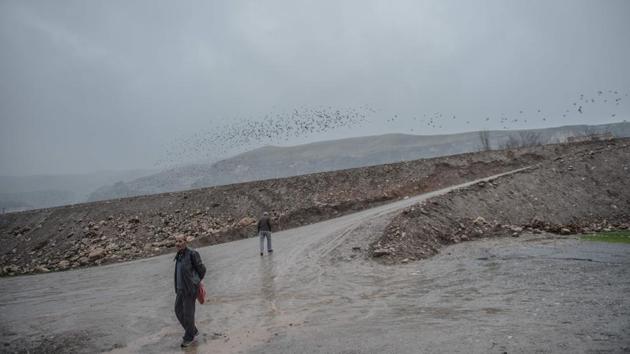
Geese make their way through a flooded road in Hasankeyf. Akdeniz is also convinced that the dam will boost tourism, thanks to the renovation of the citadel and some caves escaping the rising waters. “There will be boats, a cable car. We will have hotels,” he says. “Some of our young people are already starting to learn to dive. Diving into Hasankeyf, can you imagine?” (Bulent Kilic / AFP)
10/11
 View Photos in a new improved layout
Updated on Jan 09, 2019 11:54 AM
Engineers are still awaiting the green light from Erdogan to close a third floodgate and complete the retention of the water, a process launched last summer. After that, a three-month countdown will begin for Hasankeyf before it disappears beneath the Tigris. But the project has already had a considerable impact on residents, says Suleyman Agalday, owner of a small, makeshift cafe. (Bulent Kilic / AFP)
11/11
 View Photos in a new improved layout
Updated on Jan 09, 2019 11:54 AM