
 E-Paper



Photos: Violence and gangs cast pall over life in Honduras
Thousands of people in 2018 have sought to escape violence and poverty in Honduras by joining a migrant caravan in hope of making it to safety across the Mexico-US border. The country has for years been one of the world's most murderous countries. Though official data show the homicide rate has fallen sharply, it continues to be a highly challenging environment in which to work. Reuters Photographer Edgard Garrido recalls his experience of covering the country’s problems with gang violence and crime.
Updated on: Jan 02, 2019 11:31 AM IST

Share via


Copy link

1/10
 View Photos in a new improved layout
Updated on Jan 02, 2019 11:31 AM
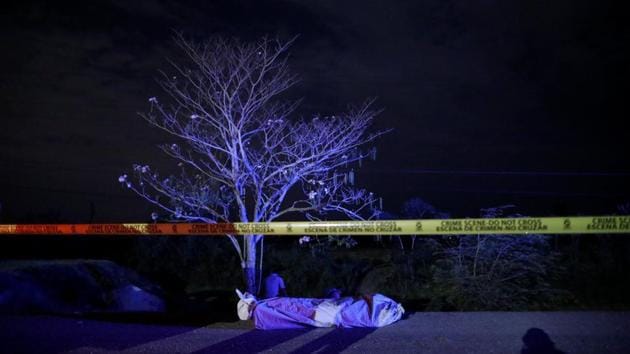
The body of a man lies on a highway in San Pedro Sula, Honduras. According to Honduran government figures, the homicide rate reached 86 per 100,000 people in 2011-2012. The rate for 2018 should end below 40 per 100,000, the security ministry has said. (Edgard Garrido / REUTERS)
2/10
 View Photos in a new improved layout
Updated on Jan 02, 2019 11:31 AM
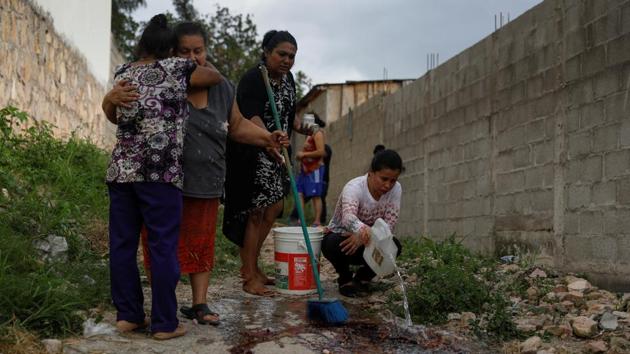
Ana Luz, a sister-in-law of Ronald Blanco, looked on grimly as neighbours of the murdered Honduran man washed away the rills of blood left where his bullet-ridden body had lain outside his house in a troubled barrio on the outskirts of Tegucigalpa. (Edgard Garrido / REUTERS)
3/10
 View Photos in a new improved layout
Updated on Jan 02, 2019 11:31 AM
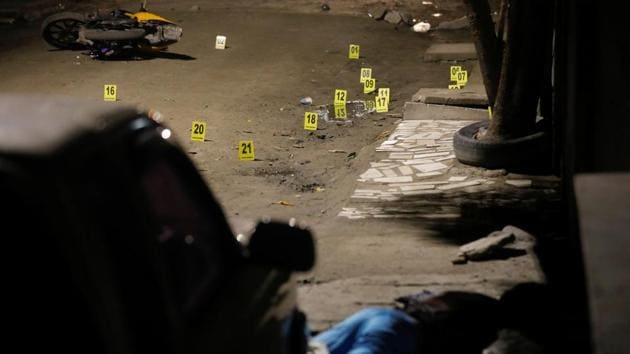
A man lies dead after a shooting in San Pedro Sula. It was one of many scenes Garrido witnessed while on assignment in Honduras, where thousands of people sought to escape violence and poverty by joining a migrant caravan in hope of making it to safety across the Mexico-US border. (Edgard Garrido / REUTERS)
4/10
 View Photos in a new improved layout
Updated on Jan 02, 2019 11:31 AM
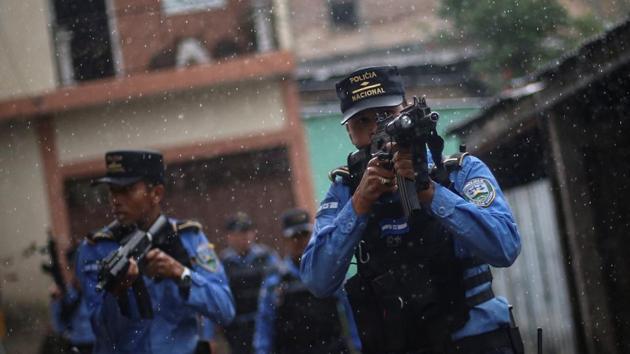
Police patrol in a neighbourhood occupied by gangs known as El Hoyo in Tegucigalpa. The problems in this small Central American country grabbed international attention as US President Donald Trump cracked down on illegal immigration. (Edgard Garrido / REUTERS)
5/10
 View Photos in a new improved layout
Updated on Jan 02, 2019 11:31 AM
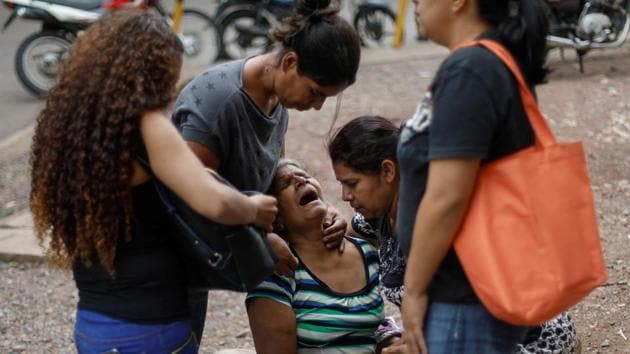
A woman reacts near the coffin containing the body of a man, who, according to the police, was kidnapped and killed, outside a morgue in Tegucigalpa. Honduras has for years been one of the world’s most murderous countries. Though official data show the homicide rate has fallen sharply, it continues to be a highly challenging environment in which to work. (Edgard Garrido / REUTERS)
6/10
 View Photos in a new improved layout
Updated on Jan 02, 2019 11:31 AM
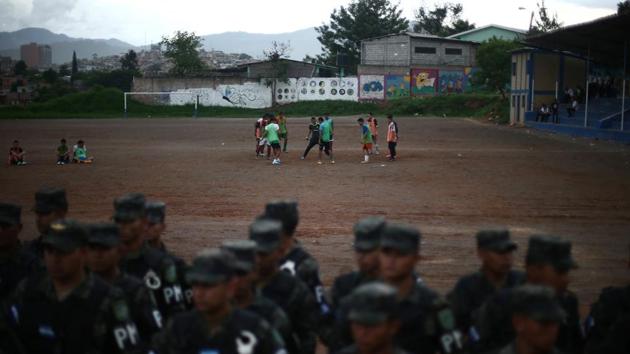
Men play soccer as soldiers line up in a neighbourhood occupied by gangs known as El Hoyo in Tegucigalpa. Danger in Honduras is never far away. For comparison, the latest statistics in the United States state there were 5.3 murders per 100,000 in 2017, according to the FBI’s most recent report on its website. (Edgard Garrido / REUTERS)
7/10
 View Photos in a new improved layout
Updated on Jan 02, 2019 11:31 AM
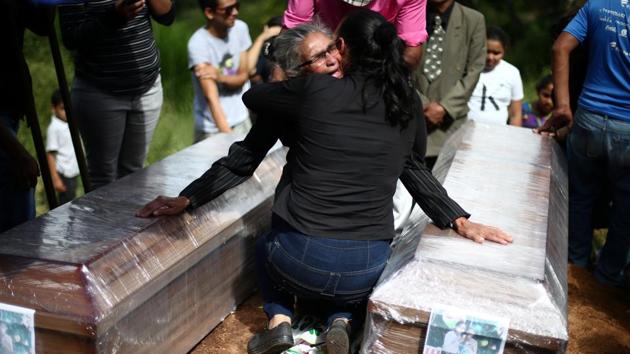
During his roughly three months spent in Honduras in 2018, Garrido photographed mothers waiting at the morgue for the bodies of murdered sons and daughters, police keeping watch over corpses left lying on streets after shootouts and families wailing over the coffins of loved ones. (Edgard Garrido / REUTERS)
8/10
 View Photos in a new improved layout
Updated on Jan 02, 2019 11:31 AM
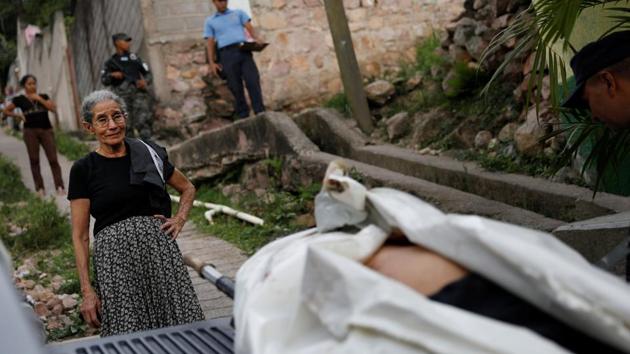
Concepcion, an aunt of Ronald Blanco, looks at his body as it lies on a pick-up truck at the crime scene. The Japon neighborhood, where Blanco lived, is a breeding ground for gang violence according to local authorities. It was here that Garrido places the most tense moment of his time in Honduras, moving between police, soldiers, gang members, forensic experts, hearse drivers and pastors. (Edgard Garrido / REUTERS)
9/10
 View Photos in a new improved layout
Updated on Jan 02, 2019 11:31 AM
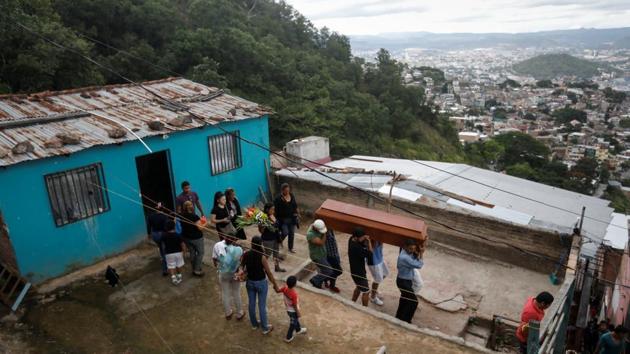
Relatives and friends of Ronald Blanco, carry the coffin during his funeral, outside his house. At Blanco’s funeral, he was stopped by a young man with piercing eyes, one green and one blue. He demanded to know why Garrido was there, pressing on with questions about what had brought him to Blanco’s funeral despite Garrido’s declaration of being a journalist. (Edgard Garrido / REUTERS)
10/10
 View Photos in a new improved layout
Updated on Jan 02, 2019 11:31 AM