
 E-Paper



Photos: What China’s economic slowdown feels like in the Henan heartland
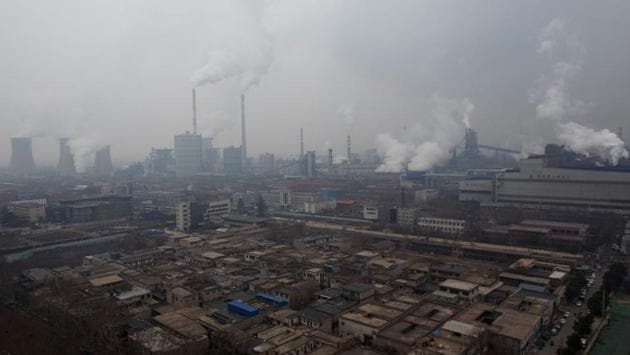
Long the sort of impoverished backwater that people left in search of better lives, Henan has in recent years enjoyed the fruits of an economic boom that has raised incomes and given people a taste of middle class lifestyles and aspirations. The region now faces the same crucial issues as the broader Chinese economy: a property boom that appears to be coming to an end; a slump in consumer spending; an anti-pollution campaign that has had a crippling economic impact on many cities and towns, even as their people are breathing more easily; and the undermining of dreams of upward social mobility.
Updated on: May 29, 2019 9:43 AM IST

Share via


Copy link

1/10
 View Photos in a new improved layout
Updated on May 29, 2019 9:43 AM
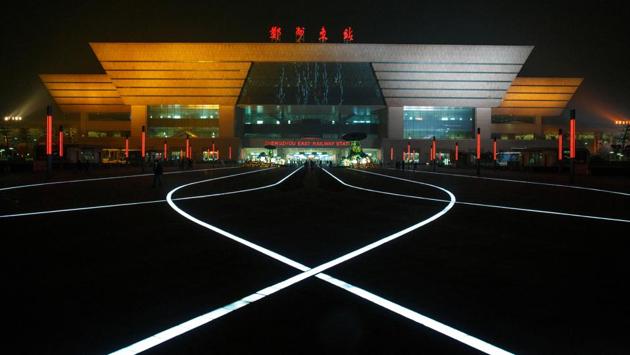
LED lights illuminate the pavement square in front of a high speed railway station in the new business district of Zhengzhou, Henan province. Long a quiet provincial capital, Zhengzhou has thrived in recent years thanks to its position as a transport and logistics hub. Taiwan’s Foxconn operates a factory in the city employing 230,000 people making Apple iPhones for the world. (Thomas Peter / REUTERS)
2/10
 View Photos in a new improved layout
Updated on May 29, 2019 9:43 AM
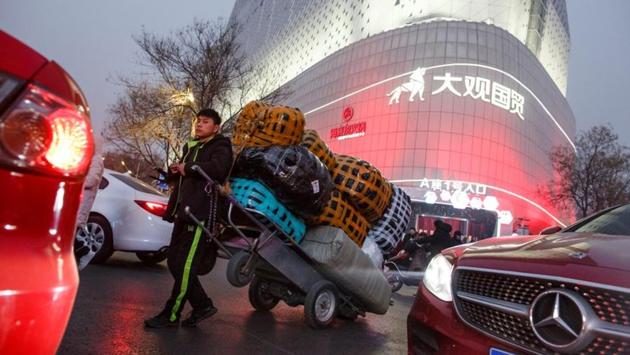
A deliveryman leans against a cart outside a wholesale market in central Zhengzhou. Considered the cradle of Chinese civilization, the central province of Henan and its 100 million-strong population symbolizes China’s transformative yet often turbulent economic ascent. (Thomas Peter / REUTERS)
3/10
 View Photos in a new improved layout
Updated on May 29, 2019 9:43 AM
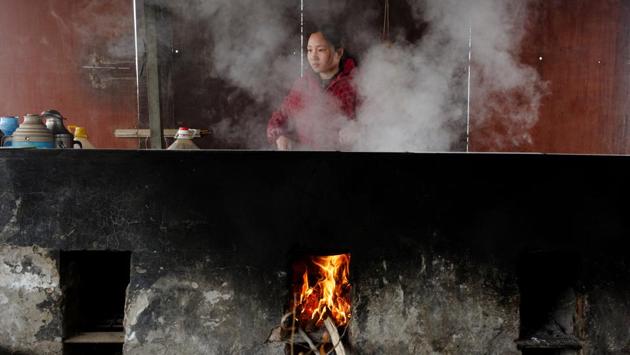
Jiejie Li prepares food on a wood stove in a makeshift dwelling at the Yellow River embankment on the northern outskirts of Zhengzhou. The city’s property market exploded when the Chinese government eased borrowing and credit restrictions in 2015 and 2016, setting off a nationwide home-buying frenzy. (Thomas Peter / REUTERS)
4/10
 View Photos in a new improved layout
Updated on May 29, 2019 9:43 AM
Neon signs in the shapes of luxury brand names illuminate the facade of David Plaza. The skyline of the city is packed with soaring office towers in a newly constructed business district. Flashy malls selling luxury goods jostle for space in the crowded city centre. And freshly minted residential blocks stretch far into the suburbs. (Yawen Chen / REUTERS)
5/10
 View Photos in a new improved layout
Updated on May 29, 2019 9:43 AM
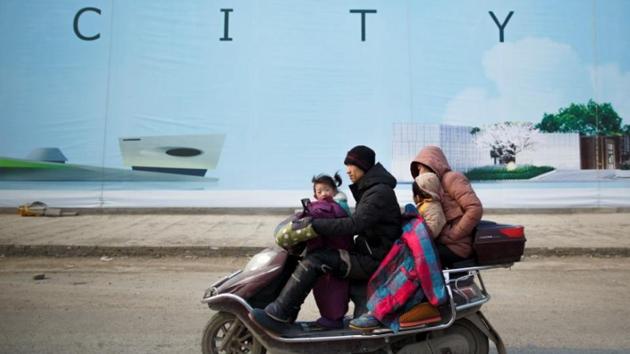
A family rides a scooter past a billboard advertisement of an apartment complex near the new stadium. Attracted by cheaper prices in interior provinces like Henan, buyers from across the country piled into Zhengzhou, many paying in full, in cash, to secure flats that often sold out within minutes. (Thomas Peter / REUTERS)
6/10
 View Photos in a new improved layout
Updated on May 29, 2019 9:43 AM
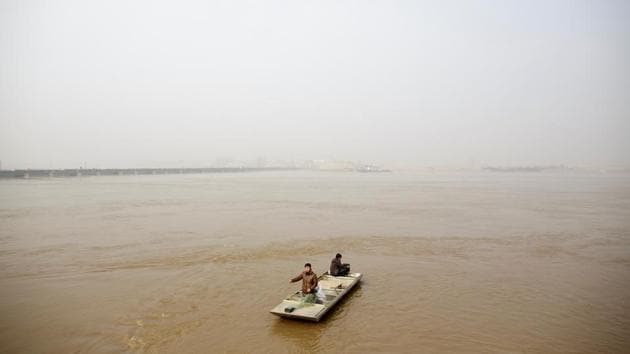
Fishermen Sun Lianxi, 32, and Sun Genxi, 44, travel down the Yellow River to cast their net on the northern outskirts of Zhengzhou. For generations, the Suns plied their fishing boats up and down the Huai and Yellow Rivers, living off their daily catch. Like their grandfather and father before them, brothers Sun Genxi and Sun Lianxi were born on a fishing boat. (Thomas Peter / REUTERS)
7/10
 View Photos in a new improved layout
Updated on May 29, 2019 9:43 AM
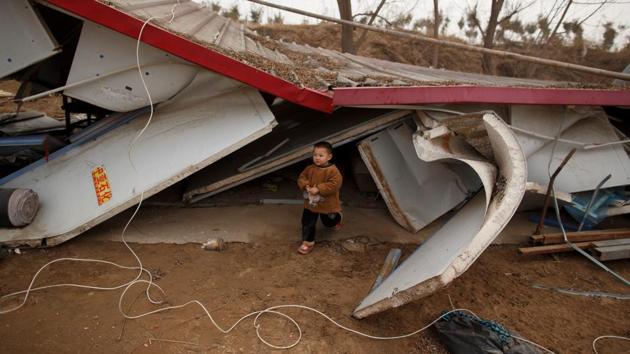
The son of 32-year-old fisherman Sun Lianxi walks among the debris of their former housing. As part of a broad-ranging environmental crackdown, local authorities in 2017 took over the houseboat in the name of minimising water pollution and overfishing. The Suns now live in tents of tarpaulin and plastic sheets by a floating bridge on the banks of the Yellow River, reduced to fishing from a small dinghy. (Thomas Peter / REUTERS)
8/10
 View Photos in a new improved layout
Updated on May 29, 2019 9:43 AM
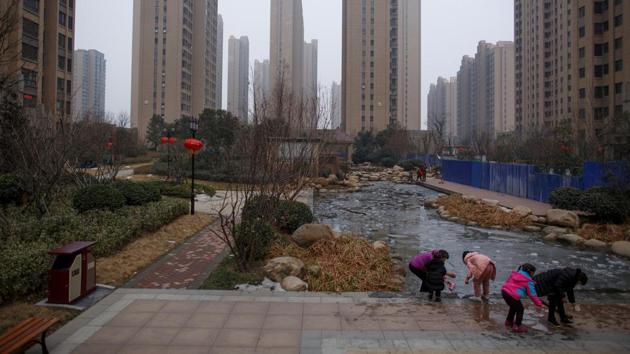
People play with ice floating at a pond in the compound of an apartment complex. After two years of breakneck growth, property markets in provincial cities like Zhengzhou finally reached a turning point in late 2018. That has presented a policy challenge for the Chinese government, which has been attempting to spread wealth beyond the country’s rich coastal regions to the interior. (Thomas Peter / REUTERS)
9/10
 View Photos in a new improved layout
Updated on May 29, 2019 9:43 AM
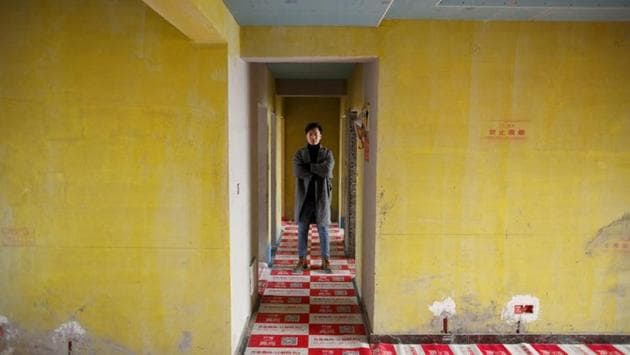
Interior designer Zhang Chenxuan in a high-rise apartment his company is fitting out. Since last year, his income has shrunk by 20-30% as orders from new home buyers fell. “Clients nowadays only want something practical and simple that saves money instead of going for the luxurious, 80% of my customers now complain that they are very poor, that they don’t have the money for proper furnishings,” he said. (Thomas Peter / REUTERS)
10/10
 View Photos in a new improved layout
Updated on May 29, 2019 9:43 AM