
 E-Paper



Empower which women? Can men be raped? Top college public speakers take stage to debate empowerment
A debate on women’s empowerment and its implications on the status of men in the society, pitched some of the city’s best student public speakers against each other


A debate on women’s empowerment and its implications on the status of men in the society, pitched some of the city’s best student public speakers against each other at the 3rd annual Daring Debates Intercollegiate Competition on Saturday.
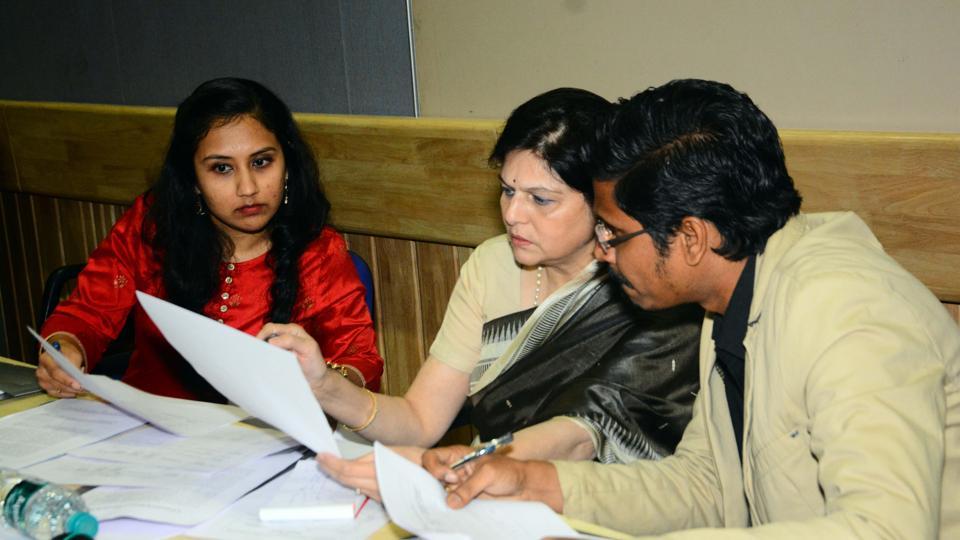
The motion was ‘Is women empowerment a dilemma for men?’. Participants brought to the podium several insights and opinions questioning gender roles, the socio-economic status of both genders, and laws and regulations to safeguard women.
The debate was organised by an international forum called Difficult Dialogues in association with the College of Engineering, Pune’s (COEP) debating society at the COEP’s mini auditorium.
During the debate, Anoushka Kundu from COEP, runner-up in the ‘against’ category said, “Empowerment of one section of society ensures holistic empowerment of all. Empowerment is not dominance that it can cause a dilemma for one section against the other. With respect to men and women, the basis of this empowerment lies in breaking gender roles which confine individuals.”
Difficult Dialogues holds its annual forums on the themes of contemporary relevance. This year, the theme was gender equality and was contested for and against by eight teams from across Pune, which included the Armed Forces Medical College (AFMC), two teams from COEP, Symbiosis College of Arts and Commerce, second and third year students of New Law College Bharati Vidyapeeth, Women’s Studies Centre of Savitribai Phule Pune University (SPPU) and Ranade Institute of Journalism and Mass communication.
Speaking for the motion, winner of the ‘for’ category, Advay Aundhekar from AFMC said, “I am a feminist myself, and I am not against empowerment. But, the problem lies in the implementation of laws that we have. For instance, dowry harassment and rape are non-bailable and cognisable offences, which is good, but the loopholes in these provisions should not allow any room for exploitation of the other. Also, in India, the definition of rape is compromising, as only women can be raped and not men, which is factually incorrect. Provisions in the law should exist to prevent its misuse.”
Taking the discourse to a new and more nuanced level, Shubhangani Jain, from Women’s Studies Centre, SPPU and winner of the ‘against’ category, said, “Empowerment is different for different individuals, depending on the social and economic class, caste and gender they belong to. The dilemma for one section while empowering the other, in this respect while empowering women, comes when the latter challenges the authority of the former. To understand the motion which has several open-ended strands, we need to first question and understand what men are we actually speaking of when considering the dilemma; and which women are we actually considering here?”
The contestants were judged by Pratima Kirloskar, Kirloskar Brothers Limited as chief judge; senior journalist Gururatna Sontakke and professional Bharatanatyam dancer and lecturer of economics Shweta Bhagat.