
 E-Paper



Pune’s first sero survey reports 51.5% seroprevalence of antibodies against Sar-Cov-2 virus
The sero surveillance had 1,664 respondents (all above 18 years) from the city’s 35 lakh residents

 Prefer HTon Google


At least 51.5 per cent residents from five highly-affected areas in Pune have seroprevalence of antibodies against Sars-Cov-2 virus which causes the Covid-19 infection, data from the first sero survey, released on Monday, shows.
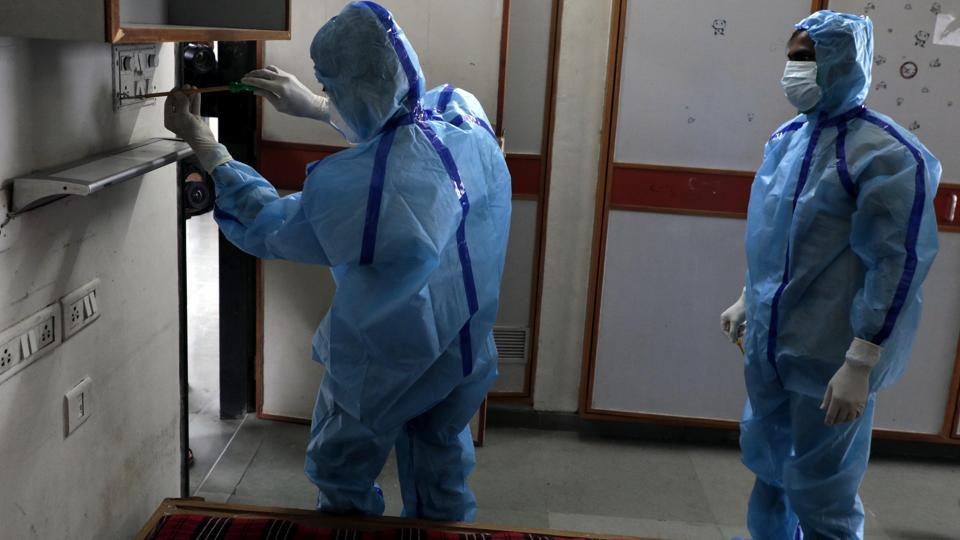
The sero surveillance had 1,664 respondents (all above 18 years) from the city’s 35 lakh residents. Sero surveys are being conducted to detect how many people have developed immunoglobulin (IgG) antibodies to the coronavirus disease and to gauge the extent of infection through random sampling.
According to the findings, an extensive spread of the infection -ranging between 36.1% and 65.4%- in five areas of the city, has been found. Of the five sampled areas (wards), Lohiyanagar (Kasewadi) in Bhavani peth accounted for the highest 65.4 per cent of seropositivity. Navi peth (Parvati) accounted for 56.7%; Yerawada 56.6%, Rasta peth 45.7% while Kasba peth (Somwar peth) stood at 36.1%.
Pune divisional commissioner Saurabh Rao said that the first survey was not comprehensive and two more sero surveys will be conducted with a larger sample size. One will be conducted by BJ Medical College focused on Pune city and another for PCMC area will be undertaken by DY Patil College.
The first sero survey was conducted by the Indian Institute of Science Education and Research (IISER) in collaboration with Pune Municipal Corporation (PMC); Savitribai Phule Pune University (SPPU); Translational Health Science and Technology Institute (THSTI), Faridabad; Christian Medical College (CMC), Vellore and funded by Persistent Foundation.
Dr Aurnab Ghose, associate professor, IISER, said that 52.8 per cent men and 50.1 per cent of women were found to have seroprevalence of antibodies, as per the report. He added that blood samples were collected from people who were asymptomatic or symptomatic, but undetected from high-incidence wards of PMC and collective population of these five wards stands at 3.66 lakh.
The study stated that 51.5% of the people tested did not know that they were infected and so, most in the city could now be infected without them realising it. While Delhi’s sero survey prevalence was 23% which was conducted in early July, Mumbai showed a prevalence of 36.5% when surveyed in July.
The city survey states that while there is no difference in infection between genders, or age groups, more number of people living in slums were infected as compared to those living in bungalows. Also, those living in congested homes were highly prone to be infected as against those living in spacious homes. About 62.3% of those tested and who shared a toilet, were found with antibodies as compared to the 45.3% of those tested with an independent toilet.
“This study does not prove that those with antibodies are immune to the virus. For that we need a separate study which is more expensive and time consuming. The study definitely proves that the spread of the virus is across all socio-economic strata. Serological testing for antibodies against Sars-Cov-2 virus in a representative sample population can estimate the cumulative incidence of infection in the population,” said Dr Aurnab Ghose from IISER who was part of the study.
The study will now help the administration take necessary steps to contain the spread, said Rao. “This study will help us draw measures to reduce the spread of the virus. Pune city’s testing has been ramped up and contact tracing is completed in two-three days,” he said.
However, according to Dr Subhash Salunkhe, chairman, Communicable Diseases Prevention and Control Technical Committee, despite such high prevalence of antibodies, the number of cases keep rising, which means that we cannot depend on herd immunity now.
“Why is it that if 51% of the population was infected once that we keep reporting more number of cases? Clearly, antibodies do not guarantee herd immunity. We need to focus more on case fatality now for which our aim should be senior citizens with comorbidities. We should put them on institutional quarantine before they develop any complications. The new drugs are supportive drugs, not curative. Contact tracing, home quarantine and institutional quarantine needs to continue,” said Salunkhe.


