
 E-Paper



Stories of survival from the city of Sangli, post the floods
For these women of the slum area in Gaon bagh, Sangli, privacy is an unaffordable luxury. They did not have an enclosed space to bathe before the floods ravaged their homes, but did afford some covering in terms of privacy. Post-floods, they are now forced to use open spaces for bathing before the sun comes up

 Prefer HTon Google


No bathing privacy for women in Gaon bagh
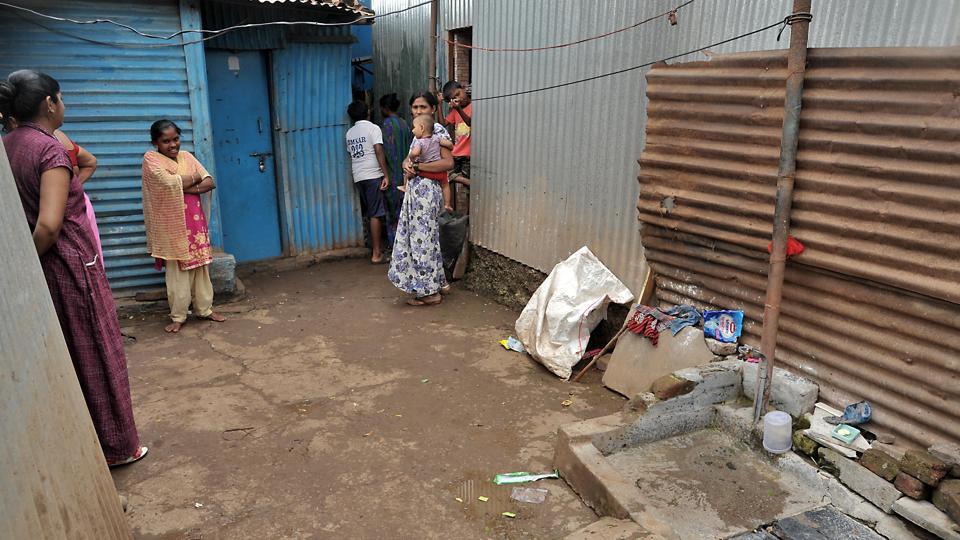
Women in the weaker economic sections of the flood-affected population of Sangli are bearing the brunt of disrupted sanitation, on month after the calamity.
For these women of the slum area in Gaon bagh, Sangli, privacy is an unaffordable luxury. They did not have an enclosed space to bathe before the floods ravaged their homes, but did afford some covering in terms of privacy. Post-floods, they are now forced to use open spaces for bathing before the sun comes up.
“We wake up as early as we can and bathe at the tap before the sun comes up. Toilets are at some distance so we walk there,” says Ashwini Somnath Javeer, 20, a resident of Gaon bagh, s one of the worst-hit areas in the floods.
In a cramped space where five houses are located in close proximity, there are two taps outside the houses closest to the road.
The tap is located near an open sewage line.
“We used to go to the open space behind the houses to bathe. It is located behind the houses and surrounded with trees so it afforded us some privacy. Now we have to quickly do our business at the tap which is on top of this open sewage line,” said Ashwini.
The sewage line and the tap are also located at the entrance of the bylane that connects the five houses. The open space at the end of the lane is filled with water and slush that has become a breeding ground for mosquitoes.
Heavy showers forced the waters inside the houses closest to the open ground. Post-floods, such is the condition of the open ground that the women prefer bathing in the open rather than going close to that piece of land.
The floors of their houses have not been dry since the first week of August. They sleep, eat and live in a soggy version of what were once their homes.
Devdasi committed to family, living one day at a time
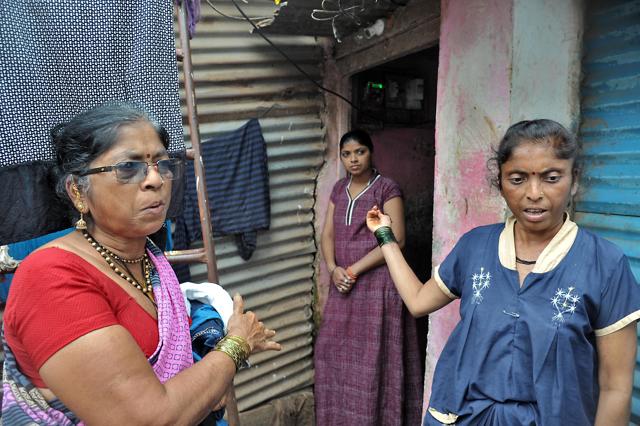
Baby Bapu Torne, in her 60s, is a Devdasi (committed to her deity) and had to be hospitalised after the water receded. She was among the many people who were living in relief camps set up in government schools in Sangalwadi.
She lives in the slum along Parshit chowk in Sangalwadi, Sangli. Torne was one among many people living in these relief camps who suffered cold, fever, vomitting and an upset stomach.
“The moment I ate the rice, I started feeling nauseaous and the next thing I remember is that I was in Appasaheb Birnale Hospital. Even before the water entered our house, I was in the hospital due to weak health. I was one of the patients who were asked to leave,” said Torne.
Torne and her neighbours rushed to government school number 23 and stayed there for 10 days after the water levels rose.
“When we got back, the water that had percolated via the floor and started coming back up againe. We had to leave. This time to another school,” said Torne.
Torne, who earns by performing a devotional dance form called Jogwa, was married to a goddess at the age of seven. She was then “given away” to a man who had four daughters with her and provided for them while living away. After he died of liver failure, Torne has been the main bread-winner in the family.
In the month of shravan, as per Marathi calendar, she earns the most. However, the month of Shravan, between July 23 and August 22, was the time of the floods.
Torne, her two daughters and their respective children, are now living one day at a time.
Ensuring the beats of the dhol ring on across the state
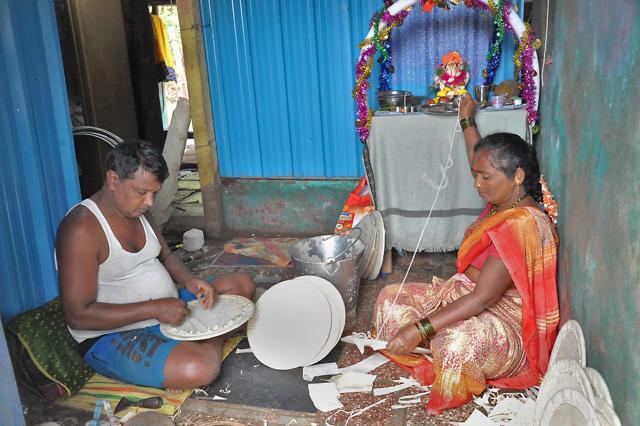
One month after flood water rushed inside their home in Gaon bagh’s Dhor gali, Subhash Appasaheb Kadam, 50, and his wife Kanchan Appasaheb Kadam, 45, sat in their living room and wove animal hide onto metal rings. This is the skin for dhols used during Ganapati festival. The sole CFL bulb in their house serves as a source of light as they pierce sheep skin with thick needles to make their product. The bulb is accompanied by the diya in front of the Ganapti idol installed in their house.
While it has been their family business, this year they are being forced to work for a shop in Miraj instead of selling their product to cusotmers.
“We are from the Dhor community. This was traditionally our community’s business - to make products out of animal hide. Until few years ago, our relatives did it. Now only we remain,” says Subhash Kadam.
Hindustan Times had visited them on August 16 and reported the loss they had suffered. An idol of Ganapti sits in their dark living room amid the pungent smell of dead animal hide that they are weaving into dhol skins.
“We are forced to make and sell products to shops this year. We lost products and raw material worth around Rs 1 lakh in the flood. We are the only ones in this area into this business - no one wants to get their hands and houses dirty ,” said Subhash Kadam.
“We picked up more animal hide on credit and started working again. How long can we wait for government help?” asked Kanchan Kadam.
The Ganapati idol in thier house was provided by an NGO. Kadam family’s Ganapti sits against a tin sheet that is standing in place of what once used to be a wall.
In space that ends within five steps, a family of four lives inside walls and flood that are still moist from the monsoon showers. That is the case with all the houses in their slum.


