
 E-Paper



What the World Cup means
Kids become players because of it, players configure their careers for it, fans situate their well-being in it. It's deliverance, it's heartbreak, it is mirage

 Prefer HTon Google


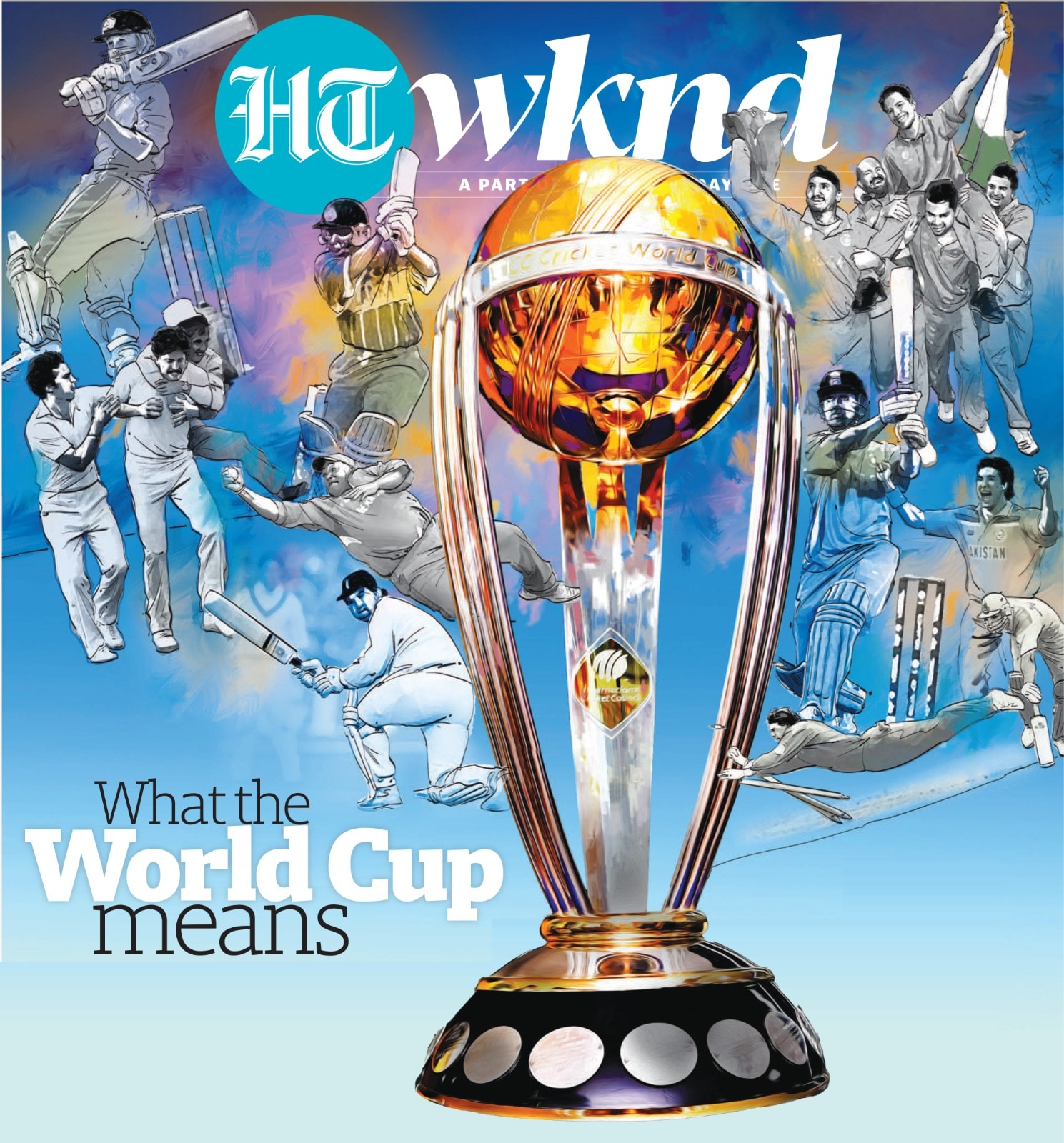
The first cricket World Cup was played over a miraculously rainless English fortnight in 1975 and concluded at 8.43pm on the summer solstice. The West Indies captain Clive Lloyd, in spotless whites, blazing maroon cap, round spectacles, big-daddy stoop, struck a breathtaking century that day. The young Viv Richards, single-fold long-sleeves flapping about, conjured up three sensational run-outs. The mighty bowling pair, Dennis Lillee and Jeff Thomson, put on a stirring last-wicket stand to inch Australia towards the target. Here a catch off a no-ball turned into an overthrow, the ball got lost in the crowd, which had sprinted into the field in their hundreds, while – and this was particularly Australian – Lillee and Thommo, kept running, two, three, all 17 left to get if they could.
To the great West Indian commentator Tony Cozier, remembering the event four decades later in The Cricket Monthly, “the most vivid [memories] are not so much the outstanding matches and individual performances, as plentiful as they were, as the typically joyous, uninhibited celebrations of thousands of immigrant West Indians at Lord’s and The Oval, in the very heart of London’s Caribbean community.”
For West Indians, who only really become a nation for the sake of cricket, those scenes of jubilation, as Cozier knew too well, were something deeper than love of a good fete. They must have felt destiny-making. They were, in the World Cup’s first shot, what the World Cup means.
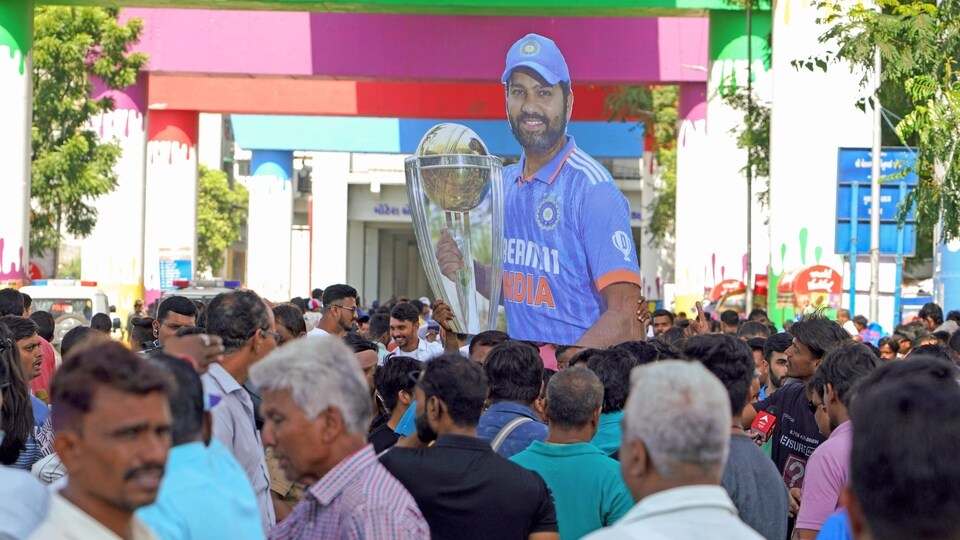
We can say this with some confidence because that same heady feeling accompanies, even now, India’s triumph in 1983, whose memories have survived Ranveer Singh’s prosthetic teeth, Pakistan’s in 1992, Sri Lanka’s in 1996. You can taste it in the extraordinary street celebrations across the country on the intervening night of April 2 and 3, 2011, compiled on the X account “thegoat_msd”. The World Cup: kids become players because of it, players configure their careers for it, fans situate their emotional well-being in it. It is deliverance, it is heartbreak, it is mirage, it is parliamentary inquiries, future prime-ministerships, free air travel for life, riots, stoned houses, burnt effigies, heart attacks, it is the best of times papering over the worst of times.
In the closing pages of his brilliant account of the 1996 tournament, War Minus the Shooting, Mike Marqusee, reveling in Sri Lanka’s triumph, paused on the chauvinism that greeted it. On a replica-trophy tour, the players travelled the island “receiving benedictions from the bhikkhus (Buddhist monks) who had engineered the most violent anti-Tamil flare-ups in the recent past”; the tour never went out to the north or the east, Tamil areas. “Many of those I spoke to in Colombo feared that the nation whose triumph was being celebrated was the Sinhala nation, not the multi-ethnic, devolved nation-state which they sought to build.” One interlocutor told him the public euphoria was “a response to the restoration of pride. But it will not last for ever. They will wake up one morning soon and have to face the same intractable dilemmas.”
A fortnight ago, I innocuously asked a young assistant in a physiotherapy clinic whether he had watched Jawan. “Main Musalmano ke picture nahin dekhta [I don’t watch the films of Muslims],” came the response. Although everything in the air should have prepared me, I was nevertheless left stunned by his matter-of-factness. He was keen on cricket, however, and if his sensibilities were offended by Mohammad Siraj winning India the Asia Cup final a few days earlier, he did not say.
Yet cricket, we have proof, is far from immune. When Mohammad Shami had a poor outing in a heavy loss to Pakistan in the 2021 T20 World Cup, he endured vile hate on social media. His captain Virat Kohli took eloquent aim at the trolls: “Attacking someone over their religion is the most, I would say, pathetic thing that a human being can do.” For all the bleed-blue type hashtagging, if the Jasprit or two Mohammads who comprise our magnificent pace attack make a costly mistake or suffer a critical off-day, they know what’s coming.
Can the fraternal beauty of team sport contend with ugliness in society? Can athletic excellence counter, to use a Kohli phrase for the Shami trolls, “the lowest level of human potential that one can operate at”? The answer is an easy no – but it can show a way.
It means something that the South Africa captain at the World Cup is Temba Bavuma, a thoughtful black African, rather than the more experienced but blithely entitled Quinton de Kock, who once felt so exercised in having to make the anti-racism gesture of taking a knee along with his team mates – in a South Africa v West Indies match, at that! – that he pulled out of the game minutes before the toss. He was soon back in the side, and thankful to Bavuma, “a flipping amazing leader”. To have them open the batting together, short and medium, right and left, black and white, means something more.
Harmony in motion is not a small thing. The England that lifted the trophy in 2019 were a side even hardened Anyone-but-Englanders could warm to. Led by a gimlet-eyed Irishman, their two spinners bearded Muslims of Pakistani descent, their gun fast bowler a cornrowed Barbadian, their opening enforcer born in South Africa, the star all-rounder in New Zealand – they were multiculti with swag.
The idea that competitors on a field will help the rest of us to a state of grace is fanciful. You could argue, as people have, that thrill-seeking only gets in the way. But then distraction might just be the most honest contention of what a World Cup means. Bangladesh’s most experienced player this tournament, Mushfiqur Rahim, once remarked that when he plays for the country he keeps in mind that “a rickshaw-puller may have given up on his day’s earning just watching our match”.
Whatever our reasons, the sights of the coming weeks – Bumrah making impossible geometry, Wood tumbling in follow-through, Williamson twirling his bat in backlift, Jadeja haring across the turf, Theekshana sliding it out five ways, Starc heat-sensing a toe, Babar holding his pose – will enthral us, some forgetting themselves, some finding themselves.


