
 E-Paper



Aditya-L1 updates: ISRO’s solar probe clicks crucial Sun images for solar radiation hazard study
SUIT observations will help assist scientists in placing tight constraints on the effects of solar radiation on Earth's climate, says ISRO.

 Prefer HTon Google


Aditya-L1 updates: The Solar Ultraviolet Imaging Telescope (SUIT) instrument on board the solar probe has successfully captured the first full-disk images of the Sun in the 200-400 nm wavelength range, announced Indian space agency on Friday.
Launched on September 2 by the Indian Space Research Organisation (ISRO), Aditya L1 is India's first space-based mission to study the Sun. Positioned in a halo orbit around the Lagrange point 1 (L1) of the Sun-Earth system, approximately 15 lakh km from Earth, the spacecraft has a unique advantage of continuously observing the Sun without interruptions. This unobstructed view allows for real-time monitoring of solar activities and their impact on space weather, marking a significant step in solar research.
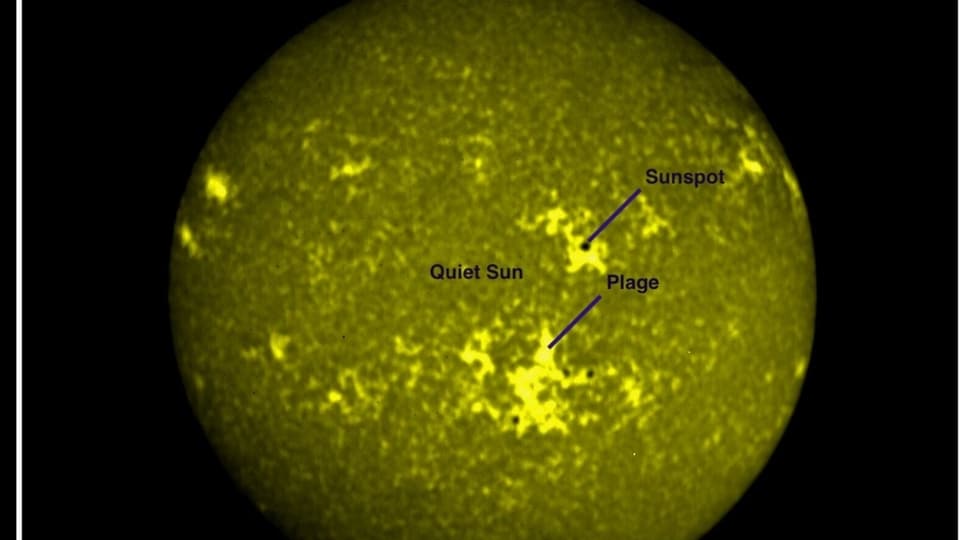
The telescope on Aditya-L1 showed scientists sunspots and different areas on the Sun. This helps them learn more about the Sun's outer layers— photosphere and chromosphere. The observations from SUIT will also help scientists understand how the Sun's magnetic atmosphere connects with each other and how solar radiation affects Earth's climate.
The SUIT payload was activated on November 20. After a successful pre-commissioning phase, the telescope recorded its initial light science images on December 6. These remarkable images, captured through eleven distinct filter, feature the Sun's first-ever full-disk representations in wavelengths spanning 200 to 400 nm, with the exclusion of Ca II h. While observatories have previously studied full disk images of the Sun in the Ca II h wavelength, this marks the first time SUIT has achieved this feat.
The payload serves a dual purpose by gathering crucial information about the solar atmosphere, particularly the lower and middle solar atmosphere. This data is vital in understanding the processes of ozone and oxygen formation and dissociation.
Additionally, it will help monitor solar explosions that pose a significant threat to technology-dependent services. Understanding the timing of these explosions enables to mitigate their effects by temporarily shutting down satellites, preventing potential damage.
The development of SUIT involved a collaborative effort under the leadership of the Inter-University Centre for Astronomy and Astrophysics (IUCAA), Pune.


