E-Paper



As Delhi turns 107, see pics of the city’s past landmarks and how they look at present

 Prefer HTon Google


On this day in 1911, King George V announced Delhi as the Capital of British India. Its status as the Capital stayed, but the city itself has changed through the years. A look...
It was on this day, back in 1911, when the King of the UK and the then-emperor of India George V and his wife, Queen Mary, had their Delhi coronation. At the same ceremony, he announced that the Capital of British India was now Delhi. The new imperial capital was shifted from Kolkata. Later, after Independence also, Delhi remained the Capital of the Republic of India.
The dynamic metropolis has undergone a lot of change. New buildings replaced expanses of green, and clean rivers that ran through the Capital are nowhere to be seen. Here are a few pictures of the city’s past that we sourced from Department of Delhi Archives to juxtapose with those of its present, clicked by our photographers.
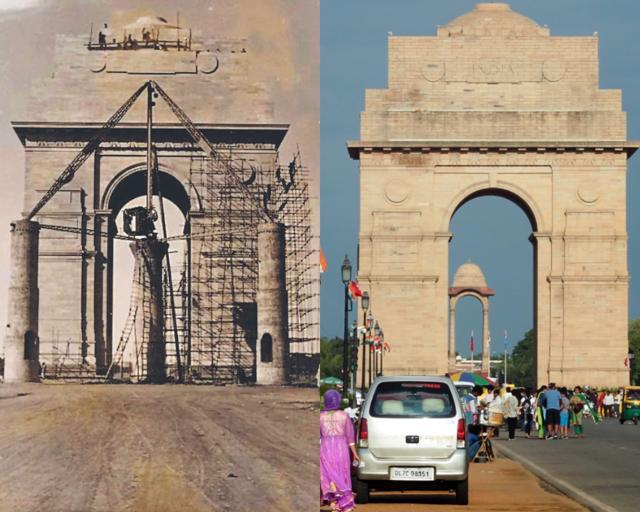
The India Gate under construction. It was constructed as a memorial for the Indian soldiers from the Raj army, who died in WWI. It has 13,300 names of servicemen inscribed on it. Left: Today, it is an iconic site and the venue for the R-Day parade as well as a popular picnic spot. (Photos: Delhi Archives and Shivam Saxena/HT)
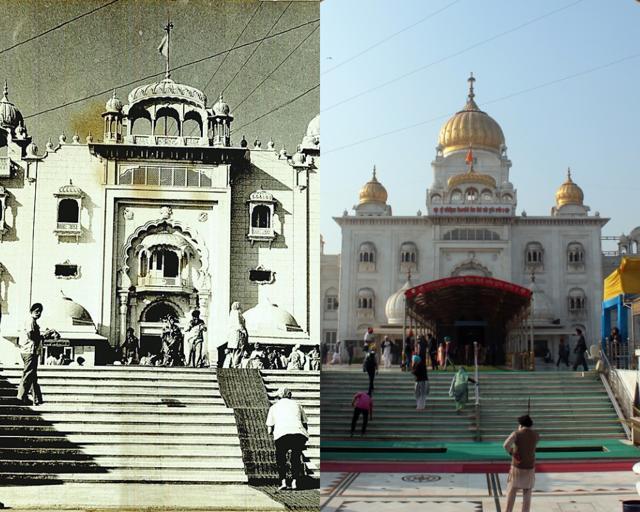
A picture of Gurudwara Bangla Sahib from the archives. It is said that in 1664, the eighth Sikh Guru, Guru Har Krishan, stayed here. The building has undergone many changes. Reportedly, in 1783, Sikh General Sardar Bhagel Singh supervised building of nine Sikh shrines in the city, including this one. The water of the sarovar here is believed to have healing properties. Left: As it stands today. (Photos: Delhi Archives and Shivam Saxena/HT)
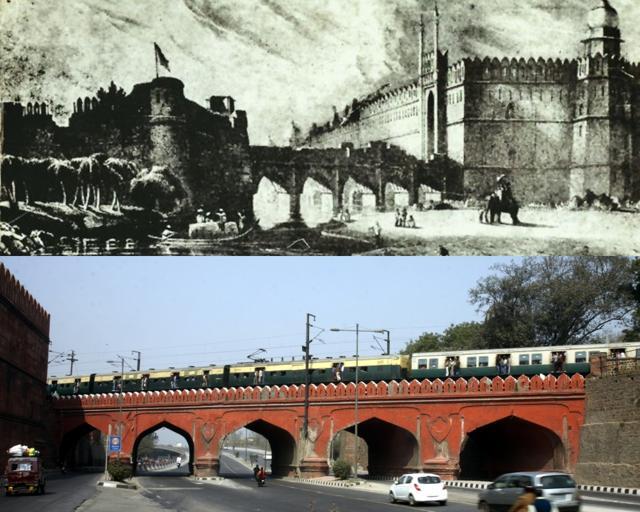
Mangi Bridge, connecting Red Fort and the Salimgarh Fort. One can spot the Yamuna flowing by. Below: The bridge, which has been restored several times, now has a railway track. (Photos: Delhi Archives and Sonu Mehta/HT)
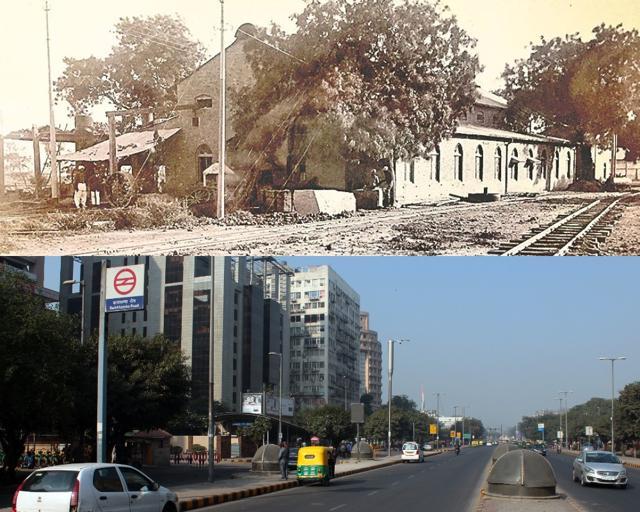
A temporary railway workshop at Barakhambha, which was built to transfer goods for the construction of iconic buildings such as the India Gate. Below: Today, the place is buzzing with activities and people. It has many corporate offices as well as a very busy metro station (Photos: Delhi Archives, Shivam Saxena/HT)
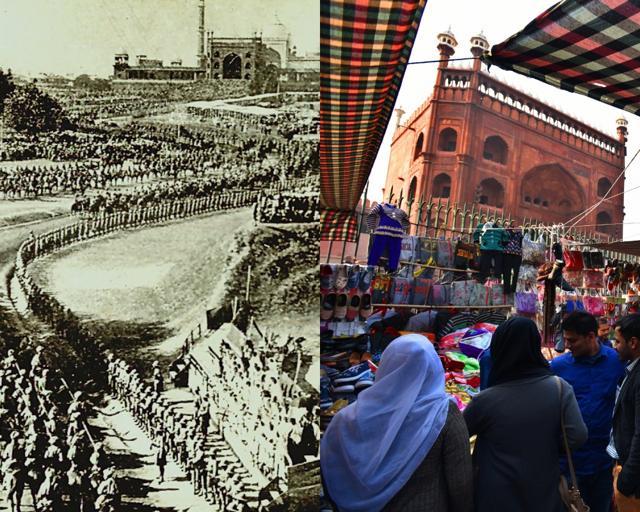
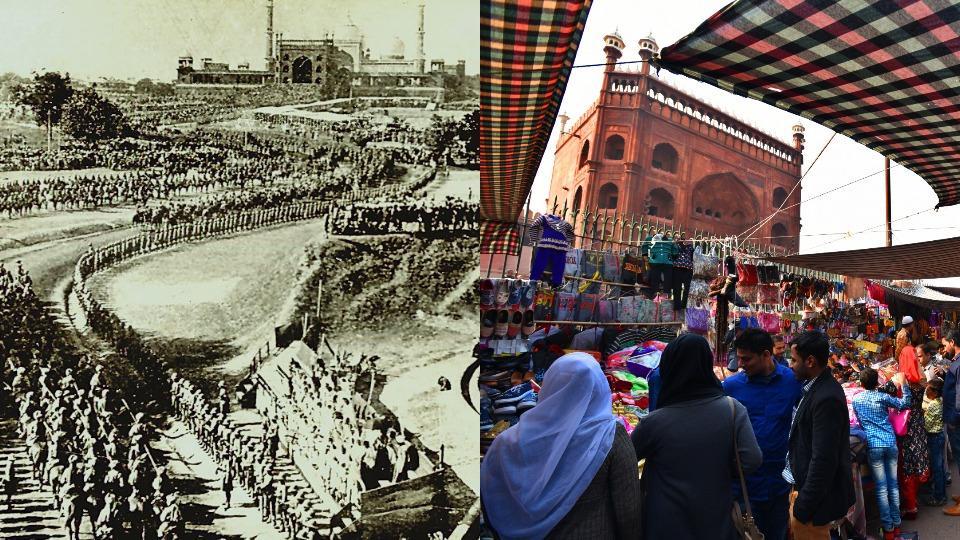
The Coronation Durbar; the picture was taken on the day of the coronation itself. Seen here is the royal procession, heading towards the Jama Masjid. Left: A recent picture of the vicinity of the mosque, which is dotted with shops and is a popular wholesale market. (Photos: Delhi Archives and Raj K Raj/HT)