
 E-Paper



78 years ago, it began: Here are some of the key moments of the World War 2
Adolf Hitler’s Germany attacked Poland on September 1, 1939, starting the deadliest war of the time.


Seventy-eight years ago, Adolf Hitler’s Germany attacked Poland on September 1, 1939, starting what was going to be the one of the deadliest wars in the history of mankind.
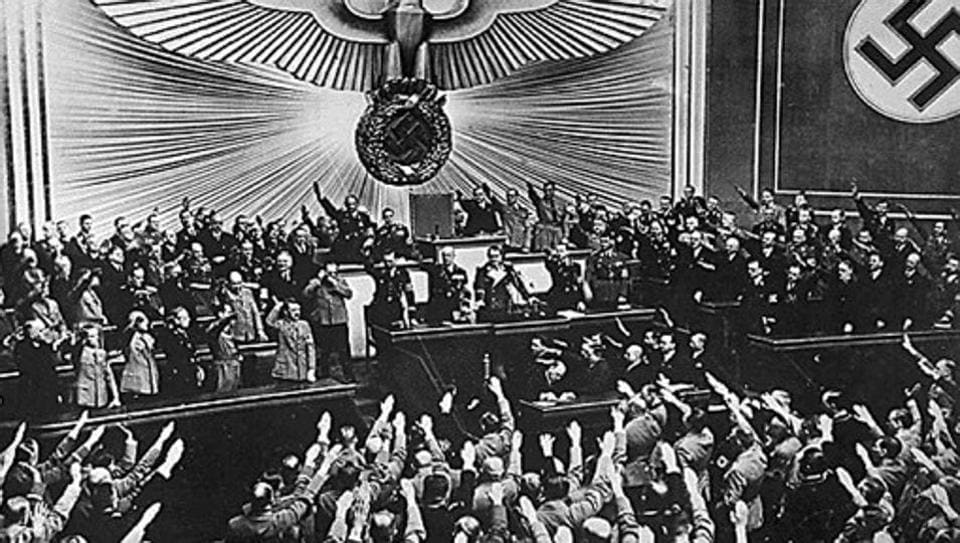
Here are some of the key moments of the World War 2:
Blitzkrieg
German term for ‘lightning war’ was a military tactic used by Hitler’s army. In 1940, the Wehrmacht unleashed blitzkrieg on Netherlands, Belgium and France, on May 10. The Allies were taken aback by the German war machine setback and the setback forced Britain prime minister Neville Chamberlain to resign. He was replaced by Winston Churchill.
Thousands of British and allied troops who were sandwiched between the sea and German soldiers were evacuated from France. The daring evacuation at ‘Dunkirk’ is this year’s much celebrated Christopher Nolan war movie.
Invasion of USSR
Hitler’s invasion of Russia pushed the Allies and the Soviet Union into an unlikely alliance. On June 22, 1941, millions of German troops marched into the Soviet Union in ‘Operation Barbarossa’.
This was a key moment in World War 2 that contributed to Nazi Germany’s eventual loss as it forced Hitler’s troops to fight a two-front war with powerful enemies.
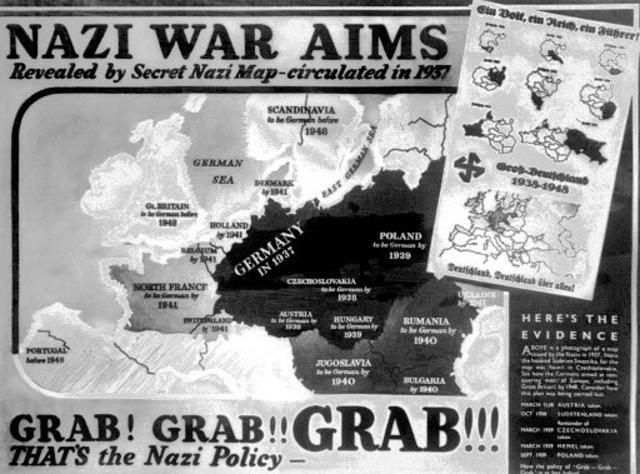
Stalingrad
Although the invasion of USSR began in 1941, it was the defeat in battle of Stalingrad that is considered crucial to the Nazi forces’ morale.
Soviet Union’s rough terrain was site of the bloodiest battle in the World War 2. Owing to its name, both Hitler and Stalin were determined to claim victory in the city that carried Volga river. Stalin had famously ordered his army to take “not one step back”. Nearly two million people were killed, injured and captured in the battle and civilians caught in the crossfire. In February of 1943, the Red Army stubbed the Nazi offensive, dealing a blow to Hitler’s Germany.
Pearl Harbour
In a massive surprise attack, 360 Japanese planes bombed Pearl Harbour in Hawaii on December 7, 1941. It turned out to be a boon for Britain and France as the strike forced US, then led by president Franklin D Roosevelt, to join the World War 2 against the Axis powers.
Italy surrenders
Allied advance into in 1943 Italy proved to be detrimental to the Axis alliance. After deposing dictator Benito Mussolini, the Italian government tried to change sides. The secret armstice and left Germany to take up the mantle of defence in the Mediterrannean country.
D-Day
On June 6,1944, Allied forces launched the largest seaborne invasion of Normandy to liberate northwestern Europe from Nazi control.
Allies suffered huge casualties in the Battle of Normandy, which lasted till August. The men landed under heavy gunfire, the shores were mined and there were other obstacles such as metal tripods and barbed wires. Code-named ‘Operation Overload’, it is said the Normandy landings were the beginning of the end of World War 2.
Liberation of Auschwitz
Auschwitz -- one of the most barbaric concentration camps where Jews, prisoners of war and dissidents were systematically killed by the anti-Semitic Germany -- was liberated on January 27, 1945. Some 1.1 million people, most of them European Jews, perished in five years in Auschwitz before it was liberated by the Soviet forces.
Hitler is dead
As Berlin was ransacked by the Red Army, Adolf Hitler -- after marrying his wife Eva Braun -- commited suicide April 30, 1945 in the crumbling capital of Germany. Their bodies were burnt and hastily buried after the couple committed suicide by eating cyanide at the bunker where they were hiding.

Hiroshima, Nagasaki
The deadly war finally ended after the US dropped atomic bombs on Japanese cities of Hiroshima and Nagasaki in August, 1945. The two bombings killed over a lakh but scores were injured -- for many, it ran through generations -- due to the toxic radioactive material used in nuclear weapons.